, to see if you have full access to this publication.
Edited Book No access
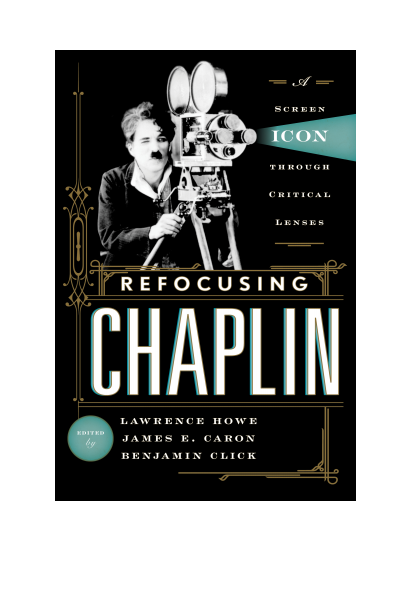
Refocusing Chaplin
A Screen Icon through Critical Lenses
Editors:
| |
Publisher:
2013
Summary
Widely recognized in his character of the Tramp, Charlie Chaplin transcended the role of actor to become screenwriter, director, composer, producer, and finally studio head. The subject of numerous biographical studies, Chaplin has been examined as both myth and man, but these treatments fail to adequately address the often-overlooked complexity of his filmmaking.
Refocusing Chaplin: A Screen Icon through Critical Lenses features essays that examine the actor and director through various theoretical perspectives—including Marxism, feminism, gender studies, deconstruction, psychoanalytic criticism, new historicism, performance studies, and cultural criticism. Complementing this range of intellectual inquiry is the wide reach of films discussed, from The Circus (1928), The Gold Rush (1925), and City Lights (1931) to Modern Times (1936), The Great Dictator (1940), Monsieur Verdoux (1947), and Limelight (1952). Shorter films, such as “The Pawnshop” (1916), “The Rink” (1916), and “A Dog’s Life” (1918) are also examined.
These essays analyze the tensions between the carefully constructed worlds of Chaplin’s films and their cultural contexts. The varied approaches and range of materials in this volume not only comprehensively assess the screen icon but also foster a conversation that exemplifies the best of intellectual exchange. Refocusing Chaplin provides a unique view into the work of one of cinema’s most important and influential artists.
Search publication
Bibliographic data
Edition
1/2013
Copyright Year
2013
ISBN-Print
978-0-8108-9225-5
ISBN-Online
978-0-8108-9226-2
Publisher
Rowman & Littlefield, Lanham
Language
English
Pages
229
Product Type
Edited Book
Table of contents
ChapterPages
Contents No access
Preface No access
Acknowledgments No access
Introduction No access
1 Chaplin’s “Charlie” as Merleau-Ponty’s Phenomenological Everyman No access Pages 1 - 24
2 Chaplin and the Static Image No access Pages 25 - 44
3 A Heart of Gold No access Pages 45 - 60
4 American Masculinity and the Gendered Humor of Chaplin’s Little Tramp No access Pages 61 - 82
5 In the Shadow of Machines No access Pages 83 - 104
6 Deconstruction and the Tramp No access Pages 105 - 120
7 Chaplin’s Presence No access Pages 121 - 140
8 The Paradox of the “Dictator” No access Pages 141 - 162
9 Charles Chaplin Sings a Silent Requiem No access Pages 163 - 186
10 Chaplin’s Sound Statement on Silence No access Pages 187 - 212
Bibliography No access Pages 213 - 220
Index No access Pages 221 - 226
About the Contributors No access Pages 227 - 229
Similar publications
from the topics "Bildung allgemein"
Edited Book Full access
Christoph T. Burmeister, Thorsten Hertel, Sophia Richter