, to see if you have full access to this publication.
Edited Book No access
Forging Military Identity in Culturally Pluralistic Societies
Quasi-Ethnicity
Authors/Editors:
|
Publisher:
2015
Summary
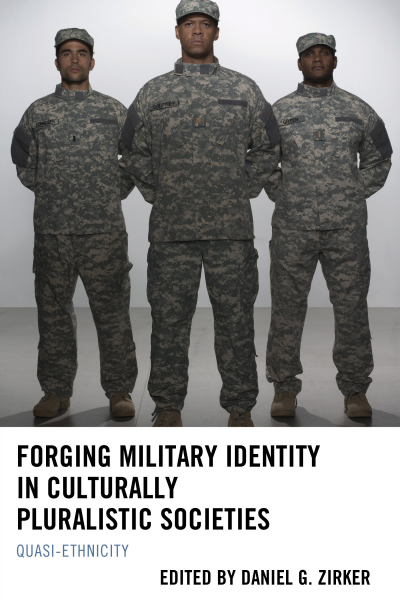
Ethno-politics has become a major force in the post-Cold War era. The fundamental challenge to military establishments in deeply plural societies is the formation of institutional unity from diverse ethnic groups. This edited volume examines seven case studies of countries that have attempted, with varying degrees of success, to develop, or to begin to develop, within their military establishments a single “quasi-ethnic” military identity to effect unity within their ranks and attenuate the deep and often violent ethnic divisions that otherwise would pertain. The volume compares contrasting outcomes in two African regions: West Africa with the contrasting cases of Guinea and Nigeria and East Africa with the cases of Tanzania, Uganda and Kenya. It also examines the very different cases of Algeria and Suriname. In most of these cases, the emergence of a single, unified, quasi-ethnic identity is in its earliest stages, although rapid global change points to the likelihood that this pattern will prevail.
Keywords
Search publication
Bibliographic data
Edition
1/2015
Copyright Year
2015
ISBN-Print
978-1-4985-0743-1
ISBN-Online
978-1-4985-0744-8
Publisher
Lexington, Lanham
Language
English
Pages
136
Product Type
Edited Book
Table of contents
ChapterPages
Contents No access
Foreword No access
Acknowledgements No access
1 Introduction No access Pages 1 - 16
2 The Army and Politics in Guinea No access Pages 17 - 34
3 Military Identity in Nigeria No access Pages 35 - 52
4 Tanzania and Uganda: Contrasting Similarities No access Pages 53 - 68
5 Ethnopolitics and the Military in Kenya No access Pages 69 - 88
6 Political Ethnicity and the Military in Algeria No access Pages 89 - 110
7 Forging a Military Identity in Suriname No access Pages 111 - 122