, to see if you have full access to this publication.
Edited Book No access
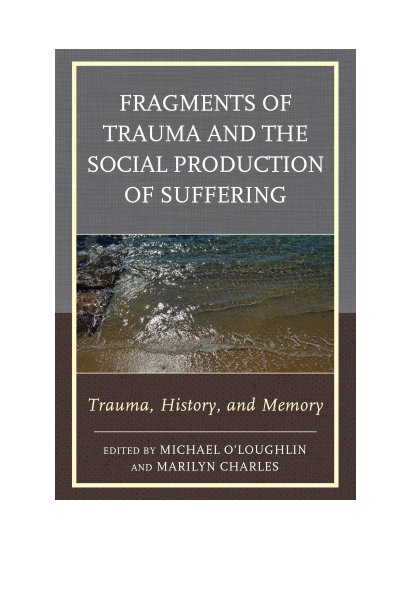
Fragments of Trauma and the Social Production of Suffering
Trauma, History, and Memory
Editors:
|
Publisher:
2014
Summary
Fragments of Trauma and the Social Production of Suffering: Trauma, History, and Memory offers a kaleidoscope of perspectives that highlight the problem of traumatic memory. Because trauma fragments memory, storytelling is impeded by what is unknowable and what is unspeakable. Each of the contributors tackles the problem of narrativizing memory that is constructed from fragments that have been passed along the generations. When trauma is cultural as well as personal, it becomes even more invisible, as each generation’s attempts at coping push the pain further below the surface. Consequently, that pain becomes increasingly ineffable, haunting succeeding generations. In each story the contributors offer, there emerges the theme of difference, a difference that turns back on itself and makes an accusation. Themes of knowing and unknowing show the terrible toll that trauma takes when there is no one with whom the trauma can be acknowledged and worked through. In the face of utter lack of recognition, what might be known together becomes hidden. Our failure to speak to these unaspirated truths becomes a betrayal of self and also of others. In the case of intergenerational and cultural trauma, we betray not only our ancestors but also the future generations to come. In the face of unacknowledged trauma, this book reveals that we are confronted with the perennial choice of speaking or becoming complicit in our silence.
Keywords
Search publication
Bibliographic data
Copyright Year
2014
ISBN-Print
978-1-4422-3185-6
ISBN-Online
978-1-4422-3186-3
Publisher
Rowman & Littlefield, Lanham
Language
English
Pages
331
Product Type
Edited Book
Table of contents
ChapterPages
Contents No access
Acknowledgements No access
Fragments of Trauma No access
Chapter One: Trauma, Fragmentation, Memory, and Identity No access
Chapter Two: Healing Transgressions of Tapu No access
Chapter Three: Black Maids-White Madams and the Ghosts in the Nurseries of Post-Apartheid South Africa No access
Chapter Four: The Lifelong Impact of Institutional Childhood Abuse No access
Chapter Five: Django Unchanged No access
Chapter Six: Trauma and Resilience among a Stolen Generation of Indigenous People No access
Chapter Seven: The Subtle Trauma No access
Chapter Eight: Life after “Death” No access
Chapter Nine: Sounding Home No access
Chapter Ten: A Good Little Group No access
Chapter Eleven: “There’s no trust at all, in anything” No access
Chapter Twelve: Addressing Trauma and Identity in Teacher Education Spaces No access
Chapter Thirteen: Making Sense of the Senseless No access
Chapter Fourteen: To Unchain Haunting Blood Memories No access
Chapter Fifteen: “Thinking beyond Our Means” No access