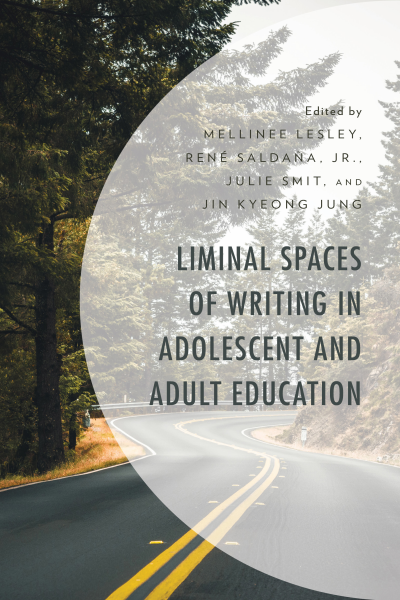
Liminal Spaces of Writing in Adolescent and Adult Education
- Editors:
- | | |
- Publisher:
- 2022
Summary
Liminal Spaces of Writing in Adolescent and Adult Education addresses the persistent gap in writing reform at the middle, secondary, and post-secondary level. Through an examination of “useful” and “liminal” writing, the book explores the intellectual and creative space where structured expectations verge with individual imagination in writing. The premise of the book is built around a multiplicity of ways to invite adolescent and adult students to enter into states of liminality where they are encouraged to experiment with style, form, genre, and voice. Through research featuring the perspectives of adolescents, classroom teachers, teacher educators, graduate students, and literacy researchers, the book offers numerous insights into fostering a liminal and useful approach to writing instruction. Each author takes the reader through a journey of finding the liminal as teachers, writers, and researchers. Taken together, this tapestry of perspectives puts forth the argument that liminal moments are necessary caveats to explore in order to cultivate fully actualized writing where students are in control of structures and traditional writing expectations but also free to imagine new ways of breaking with conventions and being as writers. Thus, the book argues liminal writing is critical in bringing about sustained writing reform.
Keywords
Search publication
Bibliographic data
- Edition
- 1/2022
- Copyright Year
- 2022
- ISBN-Print
- 978-1-6669-0400-0
- ISBN-Online
- 978-1-6669-0401-7
- Publisher
- Lexington, Lanham
- Language
- English
- Pages
- 200
- Product Type
- Edited Book
Table of contents
- Dedication No access
- Contents No access
- References No access
- Mellinee Lesley No access
- Julie Smit No access
- Jin Kyeong Jung No access
- René Saldaña, Jr. No access
- Conclusion No access
- Reference No access
- Theoretical Perspectives No access
- Method No access
- Materials and Procedure No access
- Organization of the Chapter No access
- Studies No access
- Studies No access
- Studies No access
- Studies No access
- Studies No access
- Studies No access
- Studies No access
- Studies No access
- Classroom Instruction Implications No access
- Research Implications No access
- Policy Implications No access
- Conclusion No access
- References No access
- Scribes Returning to Writing No access
- The Self to Be Seen and Remembered No access
- Creating Assignments and Projects No access
- Prompts for E-mails, Micro-Essays, Reading Logs, and Other Planned Writings No access
- References No access
- Participant Background—Shelby No access
- Shelby: I Don’t have a Grade-Level Team for Support No access
- Participant Background—Richard No access
- Richard: How Long does This have to Be? No access
- Discussion No access
- References No access
- An Introduction in Two Voices No access
- Literature Review No access
- Methodology No access
- A Conclusion in Two Voices No access
- References No access
- Introduction No access
- Family Literacy and Literacy Legacy No access
- Functional Illiteracy No access
- Entering a Liminal Space: Autoethnography as Inquiry No access
- Literacy Legacies: The Liminal Spaces of Family Literacy No access
- Discussion No access
- Significance No access
- References No access
- Introduction No access
- Multilingual Adolescents No access
- Multilingual Adolescent Writers and Digital Composing No access
- My Liminal State No access
- Opening Up the Liminal Space No access
- It Is Okay to Be Liminal No access
- Conclusion No access
- Acknowledgement No access
- References No access
- The Problem in My Classroom No access
- Learning from My Students No access
- My Action Research No access
- Connecting Video Games and Literacy No access
- One Year Later No access
- Implications for the Classroom No access
- References No access
- Reference No access
- 105 Interview Assignment No access
- Pre-epiphany No access
- Moment of Epiphany No access
- Total Objectivity No access
- Allowing Vulnerability No access
- Cathartic Writing No access
- Affective and Cognitive No access
- My Voice No access
- References No access
- Perspectives No access
- Purpose of the Study No access
- Theoretical Framework No access
- Research Methods No access
- The Story No access
- The Interpretive System Surrounding Daisy’s Story No access
- Coda No access
- Discussion No access
- Educational Implications No access
- References No access
- Background No access
- Malik No access
- Jacinda No access
- Darius No access
- Meadow No access
- Andre No access
- Others No access
- Themes No access
- Time Wasted No access
- Extending Knowledge No access
- Discussion No access
- References No access
- Chapter 12: “Places so far that I Could Only Dream”: An Interview with Cameron James No access Pages 181 - 190
- Index No access Pages 191 - 194
- About the Contributors No access Pages 195 - 200