, to see if you have full access to this publication.
Monograph No access
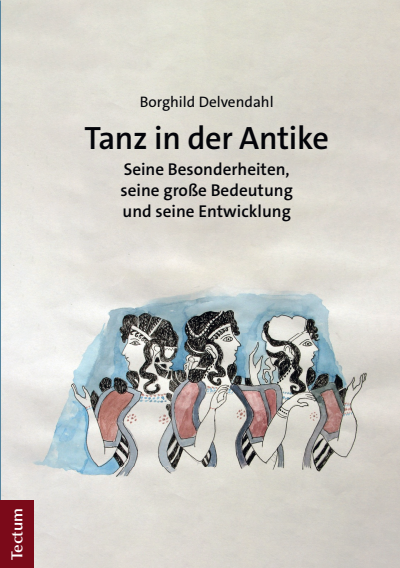
Tanz in der Antike
Seine Besonderheiten, seine große Bedeutung und seine Entwicklung
Authors:
Publisher:
2025
Summary
The uniqueness of dance in ancient Greece has been underestimated until now. This book shows how dance permeated all areas of life and ultimately led to the emergence of democracy. Everyone had to learn to dance, not only as a sport, but also as an exercise in musicality, poetry and aesthe-tics. The aim was not to dance solo, but to dance in a group, which fostered a sense of community and the worship of the gods. This so-called choral dance was used on almost every occasion: processions, festivals, competitions, sacrifices, even at the first Olympic Games. The choir sang, danced and accompanied theatre performances. In this way, myths and traditions were kept alive through dance.
Keywords
Search publication
Bibliographic data
Edition
1/2025
Copyright Year
2025
ISBN-Print
978-3-68900-283-1
ISBN-Online
978-3-68900-284-8
Publisher
Tectum, Baden-Baden
Language
German
Pages
226
Product Type
Monograph
Table of contents
ChapterPages
Titelei/Inhaltsverzeichnis No access Pages I - X
1. Einleitung No access Pages 1 - 2
2. Der menschliche Tanz No access Pages 3 - 4
3. Tanz der Kulturvölker No access Pages 5 - 10
4. Mimetik im Tanz No access Pages 11 - 12
5. Der mimetische Körper im Tanz No access Pages 13 - 22
6.1. Schwerpunkte der Arbeit No access
6.2. Phora, Schema, Deixis No access
7.1. Kreta No access
7.2. Gymnopädien No access
7.3. Kulttänze No access
8.1. Waffentanz No access
8.2. Symposien als Erziehungsmittel für die Jugend No access
8.3. Musikalische Erziehung No access
9.1. Kultische Prozessionen Pompé No access
9.2. Theoria No access
9.3. Pythaiden No access
9.4. Zusammenfassung Prozessionen No access
10. Sakrale Räume No access Pages 81 - 82
11. Agora: politisches Zentrum und Tanzplatz No access Pages 83 - 88
12. Tanz, Ritual und Fest (komos) No access Pages 89 - 96
13.1 Dithyrambos No access
13.2. Ablauf der Dionysien No access
13.3. Dionysische Tänze No access
14. Epiphanie in der griechischen Antike No access Pages 109 - 110
15. Parthenien No access Pages 111 - 112
16.1 Panhellenische Spiele No access
16.2 Die Olympischen Spiele No access
16.3. Die Pythischen Spiele No access
17. Volkstänze auf dem griechischen Festland No access Pages 121 - 122
18.1. Geometrische Zeit (ab 1500 v. Chr.) No access
18.2. Schwarzfigurige Vasenmalerei (7.–5. Jht. v. Chr.) No access
18.3. Rotfigurige Vasen No access
19.1. Der Chor No access
19.2. Tanz und Poesie No access
19.3. Mousike No access
20.1. Der Chor im attischen Drama No access
20.2. Warum war die griechische Tragödie als dramatische Gattung so erfolgreich? No access
20.3. Aufführungsbedingungen für die Tragödie No access
21. Satyrspiel No access Pages 177 - 186
22.1. Alte Komödie No access
22.2. Mittlere Komödie (»mese«) No access
22.3. Neue Komödie (»nea«) No access
23. Zusammenfassung No access Pages 197 - 208
24. Literaturverzeichnis No access Pages 209 - 220
25. Abbildungsverzeichnis No access Pages 221 - 224
26. Danksagung No access Pages 225 - 226
Similar publications
from the topics "Kulturgeschichte & Kulturwissenschaft"