, to see if you have full access to this publication.
Monograph No access
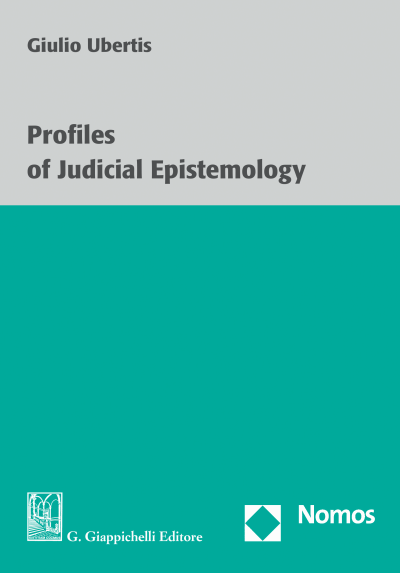
Profiles of Judicial Epistemology
- Authors:
- Publisher:
- 2018
Summary
Angewandte rechtswissenschaftliche Methoden erlangen ihre Anerkennung und Gültigkeit letztlich vor Gericht. Zugleich besteht die Notwendigkeit eines Rückbezugs in der zeitgenössischen philosophischen und wissenschaftlichen Debatte. Die Darstellung dieser Wechselwirkung ist die Inspiration für den vorliegenden Band. Er zeigt auf, was „juristische Wahrheit“ für die Gerechtigkeit leistet. Der gerichtliche Prozess ist dabei der typische Ort für die Verbalisierung von Erfahrungen. Dort wird das semantische Konzept der Wahrheit aufgrund seiner erkenntnistheoretischen Neutralität angewandt: bei der Rekonstruktion eines strittigen Sachverhalts, dem dialektischen Begriff des Beweises oder dem Finden eines „gerechten“ Urteils.
Search publication
Bibliographic data
- Edition
- 1/2018
- Copyright Year
- 2018
- ISBN-Print
- 978-3-8487-5118-1
- ISBN-Online
- 978-3-7489-0697-1
- Publisher
- Nomos, Baden-Baden
- Language
- English
- Pages
- 156
- Product Type
- Monograph
Table of contents
ChapterPages
- Titelei/Inhaltsverzeichnis No access Pages I - XIII
- Judicial truth No access
- The illusion of “objective judicial knowledge” No access
- Argumentative and demonstrative conceptions of the evidence No access
- The epistemological neutrality of the process: a) the proceedings as a verbalisation of experience No access
- b) the semantic conception of truth and factual reconstruction No access
- The “logic of judgment”: a brief historical explanation No access
- Continued: terminological issues No access
- Context of decision and context of justification No access
- Context of inquiry and judicial epistemology No access
- Procedure as the science of limitation of power in the administration of justice and procedural systems No access
- Peculiarities of criminal procedure: a) preliminary considerations No access
- b) the adversarial and inquisitorial systems No access
- c) the criminal procedure system and polity No access
- d) mixed systems No access
- Due process (criminal, civil and administrative) No access
- Changes to the regulatory framework of the code of criminal procedure in force No access
- Thema probandum and evidentiary subject (or theme) No access
- Profiles (external and internal) of the dialectical conception of evidence and evidentiary relativism No access
- The (juridical and epistemological) principle of the adversary system (audiatur et altera pars) No access
- Equality of arms No access
- Naturalness of the judge No access
- The dialectical relationship between quaestio facti and quaestio iuris No access
- The Court of cassation as judge of legitimacy No access
- Components of the evidentiary sequence No access
- Common sense generalisations No access
- Known facts No access
- Distinction between logical and scientific laws and common sense generalisation No access
- The sterile nomenclature function of traditional evidentiary classification No access
- The epistemological importance of the distinction between representative evidence and critical evidence No access
- Evidence in a narrow sense and circumstantial evidence (or rebuttable presumption) No access
- Circumstantial evidence (even with regard to precautionary measures) and suspicion No access
- The proof No access
- The evaluation of secondary facts and inference from item to outcome of evidence No access
- Overall evaluation of evidence (and the specific functions of evidence and proof) No access
- Evidentiary proceedings No access
- Legal evidentiary rules: generalities No access
- Methodological neutrality of the judge and the principle of trial acquisition (as well as burden of proof) No access
- Evidentiary verisimilitude, pertinence and relevance No access
- Continued: evidentiary relevance for epistemological fitness and “new scientific evidence” No access
- The rules of evidentiary acquisition No access
- The right to evidence No access
- Atypical or unnamed evidence No access
- The rules of evidentiary evaluation No access
- The free conviction of the judge (and adjudication rules) No access
- The evaluation of circumstantial evidence (and rebuttable presumption) No access
- The evaluation of State’s evidence No access
- The rule of “beyond any reasonable doubt” No access
- AUTHORS’ INDEX No access Pages 143 - 148
- ANALYTICAL INDEX No access Pages 149 - 156