, to see if you have full access to this publication.
Monograph No access
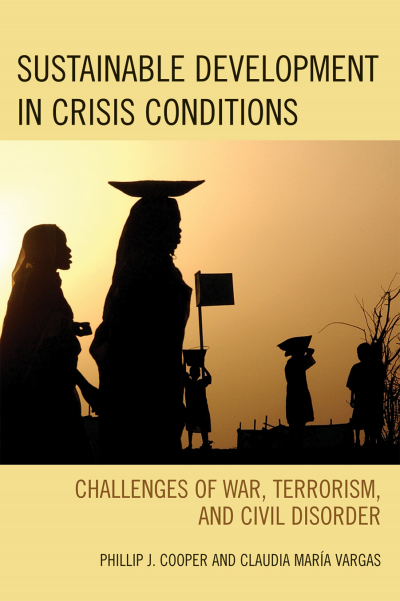
Sustainable Development in Crisis Conditions
Challenges of War, Terrorism, and Civil Disorder
Authors:
|
Publisher:
2007
Summary
In the midst of great crisis, it is difficult to contemplate the future. In recent decades, determining what kind of future to imagine has been an ongoing challenge for millions of people around the world who have been subjected to war, terrorism, and civil disorder. While destruction of the environment has long been part of warfare, it has become increasingly important as environmental pressures have intensified in our time. Focusing on the challenges and issues that arise for those contemplating a way forward in the wake of catastrophic upheavals, Sustainable Development in Crisis Conditions takes a broad-based and integrative approach. What emerges is that the post-WWII reconstruction or nation-building perspectives are inadequate and inappropriate to most of the contemporary post-conflict challenges—a successful response requires a sustainable development approach, and Sustainable Development in Crisis Conditions is a preliminary exploration of this complex subject.
Search publication
Bibliographic data
Edition
1/2007
Copyright Year
2007
ISBN-Print
978-0-7425-3133-8
ISBN-Online
978-1-4616-1874-4
Publisher
Rowman & Littlefield, Lanham
Language
English
Pages
347
Product Type
Monograph
Table of contents
ChapterPages
Contents No access
Preface No access
Acknowledgments No access
1 War, Terror, and Civil Disorder in Today's World No access Pages 1 - 42
2 Environmental, Social, and Economic Warfare: Deliberate Destruction, Collateral Damage, or Something More Complex? No access Pages 43 - 126
3 People and Other Creatures on the Move No access Pages 127 - 200
4 Traumatic Stress: Its Features and Long-Term Challenges No access Pages 201 - 266
5 Demobilization: Looking Past Disaster No access Pages 267 - 312