, to see if you have full access to this publication.
Edited Book No access
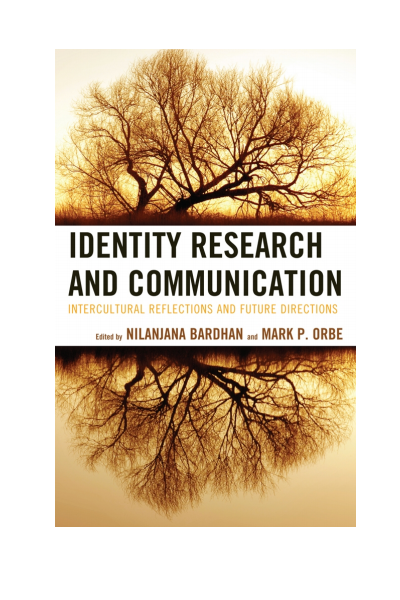
Identity Research and Communication
Intercultural Reflections and Future Directions
Editors:
|
Publisher:
2012
Summary
The concept of identity has steadily emerged in importance in the field of intercultural communication, especially over the last two decades. In a transnational world marked by complex connectivity as well as enduring differences and power inequities, it is imperative to understand and continuously theorize how we perceive the self in relation to the cultural other. Such understandings play a central role in how we negotiate relationships, build alliances, promote peace, and strive for social justice across cultural differences in various contexts.
Identity Research in Intercultural Communication, edited by Nilanjana Bardhan and Mark P. Orbe, is unique in scope because it brings together a vast range of positions on identity scholarship under one umbrella. It tracks the state of identity research in the field and includes cutting-edge theoretical essays (some supported by empirical data), and queries what kinds of theoretical, methodological, praxiological and pedagogical boundaries researchers should be pushing in the future. This collection’s primary and qualitative focus is on more recent concepts related to identity that have emerged in scholarship such as power, privilege, intersectionality, critical selfhood, hybridity, diaspora, cosmopolitanism, queer theory, globalization and transnationalism, immigration, gendered and sexual politics, self-reflexivity, positionality, agency, ethics, dialogue and dialectics, and more. The essays are critical/interpretive, postmodern, postcolonial and performative in perspective, and they strike a balance between U.S. and transnational views on identity. This volume is an essential text for scholars, educators, students, and intercultural consultants and trainers.
Search publication
Bibliographic data
Edition
1/2012
Copyright Year
2012
ISBN-Print
978-0-7391-7304-6
ISBN-Online
978-0-7391-7305-3
Publisher
Lexington, Lanham
Language
English
Pages
292
Product Type
Edited Book
Table of contents
ChapterPages
Contents No access
Acknowledgments No access
Foreword No access
Introduction No access
Chapter One: Performative Pedagogy as a Pedagogy of Interruption No access
Chapter Two: Doing Intersectionality No access
Chapter Three: Understanding Identity Through Dialogue No access
Chapter Four: (Academic) Families of Choice No access
Chapter Five: Cultural Reentry No access
Chapter Six: Performing Home/Storying Selves No access
Chapter Seven: Landscaping the Rootless No access
Chapter Eight: Cultural Matter as Political Matter No access
Chapter Nine: Understanding Immigration and Communication Contextually and Interpersonally No access
Chapter Ten: Postcolonial Migrant Identities and the Case for Strategic Hybridity No access
Chapter Eleven: Researching Biracial/Multiracial Identity Negotiation No access
Chapter Twelve: Rethinking Identities Within Globalization Through Chinese American Literature No access
Chapter Thirteen: (Re)Thinking Conceptualizations of Caribbean Immigrant Identity Performances No access
Chapter Fourteen: Navigating the Politics of Identity/Identities and Exploring the Promise of Critical Love No access
Chapter Fifteen: (Un)covering the Gay Interculturalist No access
Chapter Sixteen: Praxis-Oriented Autoethnography No access