, to see if you have full access to this publication.
Monograph No access
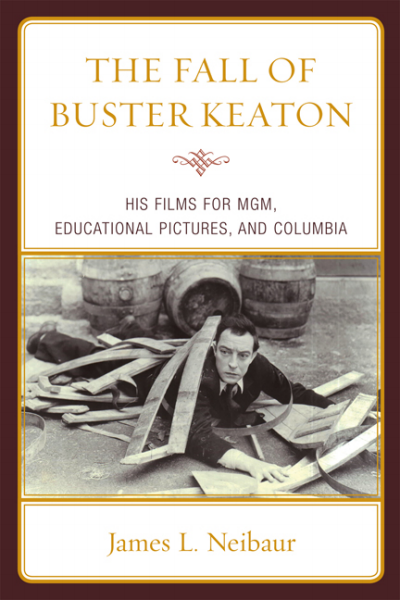
The Fall of Buster Keaton
His Films for MGM, Educational Pictures, and Columbia
Authors:
Publisher:
2010
Summary
Born into a family of vaudevillians, Buster Keaton made his first film appearance in 1917 at the age of 21. By the early 1920s, he had established himself as one of the geniuses of silent cinema with such films as Sherlock, Jr. and The Navigator and his 1925 work, The General, placed at number 18 in the American Film Institute's poll of the 100 greatest features, the highest ranked silent film on the survey. But with the advent of sound in the late 1920s, silent stars like Keaton began to fall out of favor and the great comedian's career began to decline.
In The Fall of Buster Keaton, James Neibaur assesses Keaton's work during the talking picture era, especially those made at MGM, Educational, and Columbia studios. While giving some attention to the early part of Keaton's career, Neibaur focuses on Keaton's contract work with the three studios, as well as his subsequent work as a gagman, supporting player, and television pitchman. The book also recounts the resurgence of interest in Keaton's silent work, which resulted in a lifetime achievement Oscar and worldwide recognition before his death in 1966. This fascinating account of an artist's struggle and triumph during the more challenging period of his career will be of interest to anyone wanting to learn about one of film's most influential performers.
Search publication
Bibliographic data
Edition
1/2010
Copyright Year
2010
ISBN-Print
978-0-8108-7682-8
ISBN-Online
978-0-8108-7683-5
Publisher
Rowman & Littlefield, Lanham
Language
English
Pages
228
Product Type
Monograph
Table of contents
ChapterPages
Contents No access
Acknowledgments No access
Introduction No access
Ch01. The Rise of Buster Keaton No access Pages 1 - 10
Ch02. M-G-M No access Pages 11 - 74
Ch03. The Florida Project No access Pages 75 - 78
Ch04. Educational Pictures No access Pages 79 - 128
Ch05. Back at M-G-M No access Pages 129 - 134
Ch06. Columbia Pictures No access Pages 135 - 174
Ch07. Supporting Appearancesin the 1940s and ’50s No access Pages 175 - 182
Ch08. Buster Keaton on Television No access Pages 183 - 190
Ch09. The Industrial Films No access Pages 191 - 194
Ch10. Keaton in the 1960s No access Pages 195 - 206
Afterword No access Pages 207 - 210
Appendix No access Pages 211 - 212
Select Annotated Bibliography No access Pages 213 - 216