, to see if you have full access to this publication.
Edited Book No access
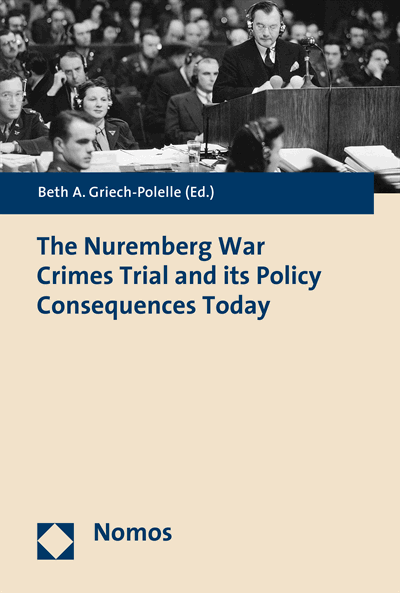
The Nuremberg War Crimes Trial and its Policy Consequences Today
Editors:
Publisher:
2009
Summary
Gegen Ende des Zweiten Weltkrieges mussten die führenden Politiker der Welt entscheiden, was mit mutmaßlichen Kriegsverbrechern geschehen sollte. Im Jahr 1945 wurde erstmals ein Internationales Militärtribunal (International Military Tribunal, IMT) eingerichtet, um die strafrechtliche Verfolgung von Kriegsverbrechen zu demonstrieren. Dreizehn Beiträge untersuchen sowohl die kurzfristigen Effekte des Nürnberger Prozesses gegen die Hauptkriegsverbrecher als auch aktuelle Auswirkungen z. B. auf den Internationalen Strafgerichtshof. Die Aufsätze enthalten Analysen von sowjetischen Untersuchungen über Naziverbrechen während des Krieges, Analysen der Reaktion der deutschen Öffentlichkeit auf die Prozesse und die unmittelbare Wirkung der Nürnberger Prozesse auf die Prozesse in Tokio und Österreich nach 1945.
Weitere Themen sind Auswirkungen auf die „Alien Tort Statute” und Menschenrechtsverfahren, die Ethik der „selektiven Gerechtigkeit“ und die aktuellen Konflikte der amerikanischen Rechts- und Verfassungsorgane mit dem Internationalen Strafgerichtshof.
Internationale Wissenschaftler belegen in diesem von Dr. Beth A. Griech-Polelle (Deutsche Geschichte und Holocaust Studien, Bowling Green State University, Ohio) herausgegebenen Sammelband sowohl die kurzfristigen als auch die aktuellen Auswirkungen des Nürnberger Prozesses gegen die Hauptkriegsverbrecher auf das internationale Völkerrecht.
Search publication
Bibliographic data
Edition
1/2009
Copyright Year
2009
ISBN-Print
978-3-8329-3906-9
ISBN-Online
978-3-8452-1412-2
Publisher
Nomos, Baden-Baden
Language
English
Pages
208
Product Type
Edited Book
Table of contents
ChapterPages
Titelei/Inhaltsverzeichnis No access Pages 1 - 5
Preface: The Spirit of Nuremberg–Idealism No access Pages 6 - 12
Authors:
Introduction: The Legacy of Nuremberg No access Pages 12 - 18
Authors:
On the Way to Nuremberg: The Soviet Commission for the Investigation of Nazi War Crimes No access Pages 18 - 32
Authors:
German Participation in the Nuremberg Trials and Its Implications for Today No access Pages 32 - 42
Authors:
The Appropriation by German Courts in French-Occupied Baden of Control Council Law No. 10’s Definition of Crimes against Humanity in the Prosecution of Nazi-Era Defendants 1946–1951 No access Pages 42 - 54
Authors:
“Violation of Human Dignity” and Other Crimes against Humanity in Austrian War Crimes Trials No access Pages 54 - 62
Authors:
Brother, Black Sheep, or Bastard? Situating the Tokyo War Crimes Trial in the Nuremberg Legacy 1946–1948 No access Pages 62 - 76
Authors:
The Nuremberg Trials and American Jurisprudence: The Decline of Legal Realism, the Revival of Natural Law, and the Development of Legal Process Theory No access Pages 76 - 96
Authors:
Nuremberg’s Legacy Continues: The Influence of the Nuremberg Trials on Human Rights Litigation in U.S. Courts under the Alien Tort Statute No access Pages 96 - 114
Authors:
The International Criminal Court and the Ethics of Selective Justice No access Pages 114 - 130
Authors:
Addressing the Major Legal, Political, and Practical Obstacles Facing Hybrid Tribunals in Post-Conflict Situations: Learning from Past Experience and Lessons for the Future No access Pages 130 - 156
Authors:
The International Criminal Court’s Antagonism to the United States Constitution and Our Need for President Bush to Articulate an Acceptable Alternative No access Pages 156 - 166
Authors:
When Lawyers Are War Criminals No access Pages 166 - 174
Authors:
Hiding Behind a Mantle of Terrorism No access Pages 174 - 186
Authors:
United States Military Law of War Doctrine: Making the ICC Irrelevant to the Ground Combat Forces of the United States in the Early Twenty-First Century No access Pages 186 - 196
Authors:
Contributors No access Pages 196 - 200
Index No access Pages 200 - 208
Similar publications
from the topics "Allgemeine Grundlagen des Rechts & Rechtsgeschichte"