, to see if you have full access to this publication.
Monograph No access
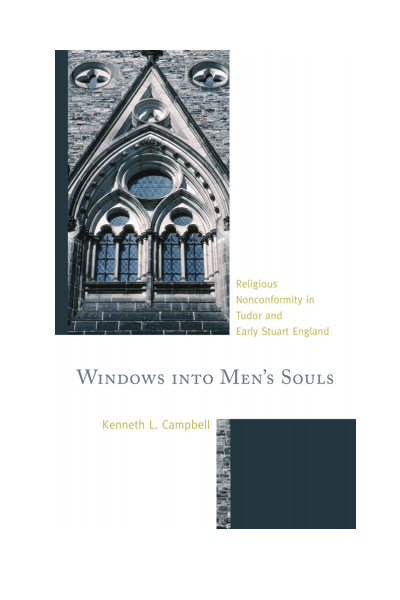
Windows into Men's Souls
Religious Nonconformity in Tudor and Early Stuart England
Authors:
Publisher:
2012
Summary
Windows into Men’s Souls uses the works of John Robinson, Thomas Helwys, and John Smyth to examine the concept of religious nonconformity that was inherent in the English Reformation. Kenneth Campbell frames the primary works and historical development of various groups and individuals as examples of a general impulse toward religious nonconformity during the sixteenth and early seventeenth centuries. During this time, religious nonconformity became an integral part of English culture and society, shaped by a historical experience that led to rebellion and civil war. The issues that English thinkers wrestled with during this period led to profound insights on both Christianity and on religious toleration that continue to shape Anglo-American and Western religious culture to the present day. This is the story of courageous people—Catholics and Protestants, Separatists and non-Separatists—who ignored, defied, or challenged their government to pursue their own version of religious truth in an age of religious intolerance that valued conformity at all costs.
Keywords
Search publication
Bibliographic data
Edition
1/2012
Copyright Year
2012
ISBN-Print
978-0-7391-6819-6
ISBN-Online
978-0-7391-6820-2
Publisher
Lexington, Lanham
Language
English
Pages
225
Product Type
Monograph
Table of contents
ChapterPages
Contents No access
Acknowledgments No access
Introduction No access Pages 1 - 6
1 The Problem of Religious Identity No access Pages 7 - 22
2 The Origins of Religious Nonconformity in England No access Pages 23 - 56
3 The Concept of Religious Truth and Religious Nonconformity No access Pages 57 - 86
4 Separatism in Elizabethan and Early Stuart England No access Pages 87 - 110
5 Religious Dissent in the Reign of James I No access Pages 111 - 134
6 Internationalism and English Religion No access Pages 135 - 158
7 Arminianism and the English Separatists No access Pages 159 - 182