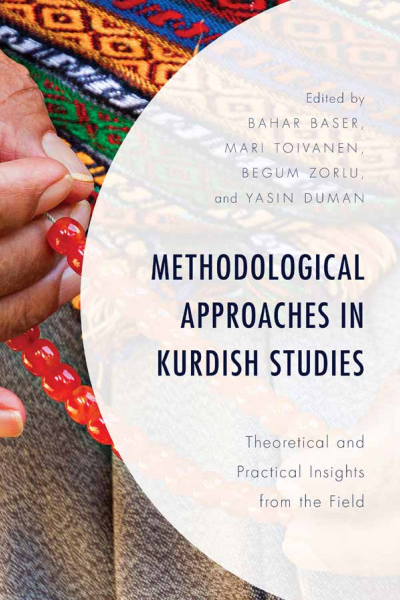
Methodological Approaches in Kurdish Studies
Theoretical and Practical Insights from the Field- Editors:
- | | |
- Publisher:
- 2018
Summary
This edited volume presents thirteen contributions that reflect upon the practical, ethical, theoretical and methodological challenges that researchers face when conducting fieldwork in settings that are characterized with deteriorating security situations, increasing state control and conflicting inter-ethnic relations. More precisely, they shed light to the intricacies of conducting fieldwork on highly politicized and sensitive topics in the region of Kurdistan in Iraq, Syria and Turkey as well as among Kurdish diaspora members in Europe.
This volume is multidisciplinary in its focus and approach. It includes contributions from scholars from various disciplinary backgrounds, ranging from sociology and political science to social psychology and anthropology. The complexity of security situations, and the atmospheres of distrust and suspicion have led the contributors to be creative and to adapt their research methods in ways that at times transcend disciplinary boundaries and conventions. Relatedly, the contributions also open the often-considered Pandora’s box of discussing the failures in what is often a “messy” research field, and how to adopt one’s methods to rapidly changing political circumstances. This necessitates greater reflexivity in existing power relations of the surrounding context and how those affect not only the interaction situations between the researcher and the participants, but also raise questions for the overall research process, concerning namely social justice, representation and knowledge production. The contributions unravel this by unpacking positionalities beyond ethnicities, discussing how gendered and other positionalities are constructed in fieldwork interactions and by illustrating how the surrounding structures of power and dominance are present in every-day fieldwork.
What differentiates this book from the existing literature is that it is the first academic endeavor that solely focuses on methodological reflections aimed to the field of Kurdish Studies. It offers a comprehensive and multidisciplinary account of scholars’ fieldwork experiences in the Kurdish regions and as such, it is also of value to scholars conducting or about to conduct fieldwork in conflict regions elsewhere.
Keywords
Search publication
Bibliographic data
- Edition
- 1/2018
- Copyright Year
- 2018
- ISBN-Print
- 978-1-4985-7521-8
- ISBN-Online
- 978-1-4985-7522-5
- Publisher
- Lexington, Lanham
- Language
- English
- Pages
- 254
- Product Type
- Edited Book
Table of contents
- Contents No access
- Introduction No access
- From Securitization Theory to Critical Ethnography No access
- Practical Tools for an Ethnographer No access
- Pursuing Critical Ethnography in Kurdish Studies No access
- Concluding Thoughts No access
- Notes No access
- Bibliography No access
- The Problem No access
- The Rural and the Village No access
- Conclusions: Methodological Propositions No access
- Notes No access
- Bibliography No access
- Multisited Methodology: Why do Online-Offline Research? No access
- How Do We Distinguish Meaningful Data? No access
- The Insider-Outsider Dialectic No access
- Ethical Considerations No access
- Conclusions No access
- Notes No access
- Bibliography No access
- The Return of History to the Social Sciences: Studying Historical Sources from an Ethnographic Angle No access
- The Challenges of Doing a Transnational History through the Kurds No access
- Overcoming Challenges through Parallel Practices of Archiving, Critique, and Triangulation No access
- Conclusion No access
- Notes No access
- Bibliography No access
- Troubled terrain No access
- Boundary work No access
- Hegemony from the Margins No access
- Conclusion No access
- Note No access
- Bibliography No access
- Subalternity and the Kurds in Turkey No access
- Working with the Subaltern No access
- Positioning Myself: Who Am I? No access
- Working in a Dangerous Field, or “Who Are You?” No access
- Conclusion No access
- Note No access
- Bibliography No access
- Insider’s Burden No access
- Changing Positionalities at the Times of Uncertainties No access
- When Site Becomes Definitive No access
- Multiplicity of Insiderness No access
- Conclusion No access
- Notes No access
- Bibliography No access
- Outsiderness No access
- The Sampling Process: Whom We Did and Did Not Interview? No access
- The Challenges of the Interview Process No access
- Communicating across Political, Cultural, and Linguistic Cleavages No access
- Conclusion No access
- Notes No access
- Bibliography No access
- The Omnipresence of the PKK No access
- The Elephant in the Room No access
- Avoiding Complicity in the Criminalization of the Kurdish Movement No access
- The Researcher as an Ally? No access
- The “Terrorist Box” No access
- Conclusion No access
- Notes No access
- Bibliography No access
- Research Question and Methodology: Values and Queries No access
- The Familiar Pendulum: Researcher as an Insider versus Outsider No access
- Power Relations in the Field: But Whose Power? No access
- “I Do Have Kurdish friends” versus “She’s Turkish but Good” No access
- Herstory of the Field No access
- Who Is This “Researcher”? No access
- Concluding Remarks No access
- Notes No access
- Bibliography No access
- The Kurdish-Turkish Conflict No access
- Social Identity and Self-Categorization No access
- Multiple Identities and Navigating the Insider-Outside Line No access
- Privilege and Intersectionality No access
- Perspectives of Kurdish Participants No access
- Conclusion No access
- Notes No access
- Bibliography No access
- Locating the Field Site in Times of Crisis No access
- Reflecting on Fieldwork Processes No access
- (Re)learning How to Be Kurdish No access
- Becoming a Kurdish Anomaly No access
- Shaping Methodology throughout Fieldwork No access
- Conclusion No access
- Notes No access
- Bibliography No access
- Studying Violence No access
- Revolutionary Violence as Fun? No access
- Embedded Research? No access
- Crossing Conflict Lines No access
- Institutional Difficulties and Freelance Research No access
- Becoming a Terrorist? No access
- Conclusion No access
- Notes No access
- Bibliography No access
- Conclusion No access Pages 235 - 244
- Index No access Pages 245 - 250
- About the Contributors No access Pages 251 - 254