, to see if you have full access to this publication.
Monograph No access
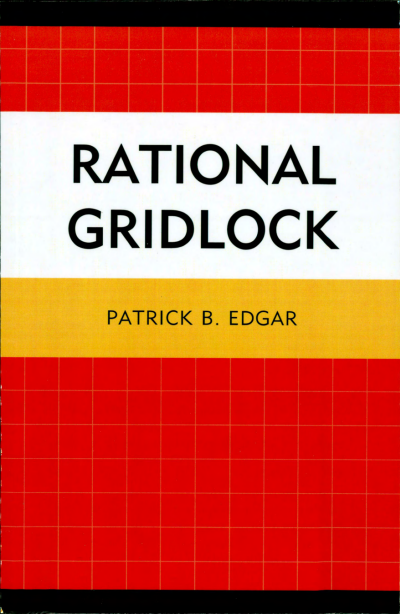
Rational Gridlock
Authors:
Publisher:
2011
Summary
The citizens of the United States love to hate their own government, and much of the disdain is particularly directed at the bureaucrats. Part of the problem is contained within the idea of bureaucracy itself. Most government agencies operate under a rational system which results in the 'victory of process over outcome.' Rational Gridlock describes how this rationality undermines our ability to solve problems or to gain the confidence of the general public. The author offers suggestions of how we can change the bureaucratic environment into one that appreciates the creative abilities of all its members, without the false premise of operating government like a business. Drawing upon the ideas found in an unexpected source, Chaos Theory, leaders in the public sector are called to a more interactive, sensible set of strategies. No matter how skilled public administrators may be, they cannot expect to be admired by the public until the respect is mutual.
Search publication
Bibliographic data
Edition
1/2011
Copyright Year
2011
ISBN-Print
978-0-7618-5165-3
ISBN-Online
978-0-7618-5166-0
Publisher
Hamilton Books, Lanham
Language
English
Pages
169
Product Type
Monograph
Table of contents
ChapterPages
Contents No access
List of Figures and Tables No access
Preface No access
Chapter 1: Public Disconnectedness No access Pages 1 - 14
Chapter 2: Overview of the Rational Model and Its Influence on Administrative Strategies No access Pages 15 - 30
Chapter 3: The Organizational Level No access Pages 31 - 48
Chapter 4: Moving to Outcome-Based Strategies No access Pages 49 - 68
Chapter 5: Locus of Control, Procedures, and Human Service Outcomes No access Pages 69 - 84
Chapter 6: Outcome-Based Models and Public Administration No access Pages 85 - 98
Chapter7: The Human Sacrifices to Rationalism: The Decay of Community, Responsibility, and Reason No access Pages 99 - 118
Chapter 8: Various Attempts at Reform Within Rationalism No access Pages 119 - 132
Chapter 9: An Emerging Paradigm: Chaos Theory No access Pages 133 - 148
Chapter 10: Applying the New Paradigm No access Pages 149 - 164