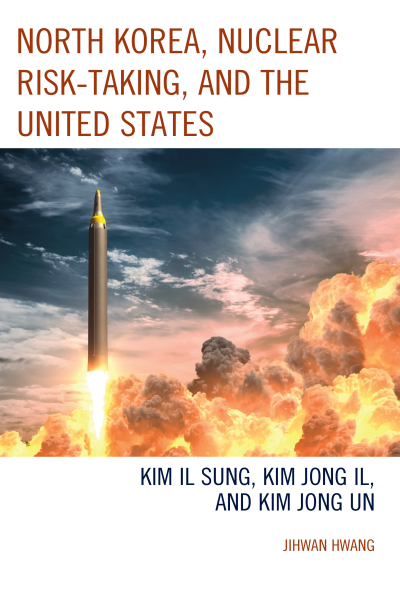
North Korea, Nuclear Risk-Taking, and the United States
Kim Il Sung, Kim Jong Il, and Kim Jong Un- Authors:
- Publisher:
- 2023
Summary
Jihwan Hwang analyzes Pyongyang’s nuclear policy changes over the last three decades under Kim Il Sung, Kim Jong Il and Kim Jong Un. Why did a weaker North Korea take the risk of standing up against the much stronger U.S. with its nuclear weapons program, even escalating the crisis to the point of a war? Later, why did North Korea change its course of action amid the crisis even though the security environment remained essentially the same? Hwang draws on the main tenets of prospect theory in international relations and argues that Pyongyang becomes either risk-acceptant or risk-averse toward the U.S., depending on the situation it faces. When Pyongyang perceived the status quo to be deteriorating, it framed its situation as a loss and chose a risk-acceptant of confrontation to restore the status quo. Equally, when Pyongyang perceived the situation to be improving, it chose a risk-averse engagement in the domain of gain. In contrast, when Pyongyang perceived an extreme loss such as military confrontation against the United States, it would rather choose a risk-averse policy to avoid the catastrophic outcome of war. The issues of risk are central to an understanding of Pyongyang’s nuclear policy decision-making.
Keywords
Search publication
Bibliographic data
- Edition
- 1/2023
- Copyright Year
- 2023
- ISBN-Print
- 978-1-7936-5026-9
- ISBN-Online
- 978-1-7936-5027-6
- Publisher
- Lexington, Lanham
- Language
- English
- Pages
- 206
- Product Type
- Monograph
Table of contents
- List of Tables No access
- Acknowledgments No access
- Pyongyang’s Policy Changes No access
- Pyongyang’s Initial Framing No access
- Policy Question No access
- Definition of Risk No access
- Within-Case Method No access
- Case Study of the North Korean Nuclear Crisis No access
- Causal Mechanism No access
- Three Leaders and Multiple Observations No access
- Outline of the Book No access
- Notes No access
- Determined to Seek Nuclear Deterrence No access
- Pursuing Expansionist Ambitions No access
- Resolving Security Concerns No access
- Criticism No access
- Reciprocal Behavior No access
- Pyongyang’s Changed Nature No access
- Criticism No access
- Domestic Political Structure No access
- History and Culture No access
- Criticism No access
- Explanation by Prospect Theory No access
- Points of Agreement No access
- Points of Disagreement No access
- Where Does This Book Go from Here? No access
- Notes No access
- Reference Dependence No access
- Risk-Taking Tendency: Risk-Aversion versus Risk-Acceptance No access
- Loss-Aversion No access
- Shifts of Reference No access
- Probability Weighting Function and the Certainty Effect No access
- Framing and Evaluation No access
- Prospect Theory, Weaker States, and Foreign Policy No access
- Strategic Interaction No access
- Domestic–International Interactions No access
- Weaker States No access
- Dynamic Change in Framing No access
- Loss-Aversion and Status Quo Bias in the International Domain No access
- Catastrophic Outcome and Preference Reversal No access
- Domestic Loss-Aversion and International Risk-Taking No access
- Summary No access
- Notes No access
- Pyongyang’s Situation during the Cold War No access
- Pyongyang’s Perception during the Cold War No access
- The Soviet Union No access
- China No access
- North Korea’s Economic Situation No access
- Pyongyang’s External Perception No access
- Confronting the United States with a Nuclear Program No access
- Engaging the United States No access
- Relative Riskiness of Two Policy Options No access
- Pyongyang’s Policy Decision No access
- UN Sanctions No access
- U.S. Military Strikes No access
- Change of Pyongyang’s Perception and Risk-Taking Attitude No access
- From Confrontation to Engagement No access
- Domestic Stability No access
- Leadership Succession No access
- Domestic Politics and Foreign Policy No access
- Summary No access
- Notes No access
- The Agreed Framework No access
- Improving Relations between Pyongyang and Washington No access
- Implementation of the Agreed Framework No access
- Missile Moratorium No access
- Reaching out to Washington No access
- Avoiding Losses and Seeking Gains No access
- Pyongyang’s Increasing Threat Perception No access
- The Bush Administration’s Perception of North Korea No access
- September 11 and the “Axis of Evil” No access
- Pyongyang’s Nuclear Policy: From Engagement to Restraint No access
- The Kelly Visit and the Highly Enriched Uranium (HEU) Program No access
- Pyongyang’s Subsequent Perception of the United States No access
- Pyongyang Changes Its Course of Action: From Restraint to Confrontation No access
- The Iraq War No access
- Six-Party Talks No access
- Deepening Crisis No access
- Pyongyang’s Nuclear Policy: Deepening Nuclear Confrontation No access
- The Six-Party Talks Agreements and U.S. Policy toward North Korea No access
- The Obama Administration and Pyongyang’s Perception No access
- Pyongyang’s Nuclear Policy: Conducting Two Nuclear Tests amid Six-Party Talks No access
- Food Crisis and “Arduous March”: Seeking Help and Saving the Regime No access
- Regime Stability under Kim Jong Il No access
- Leadership Succession to Kim Jong Un No access
- Summary No access
- Notes No access
- China and Kim Jong Un Regime No access
- The Obama Administration and Kim Jong Un Regime No access
- Pyongyang’s Threat Perception No access
- Byungjin and Nuclear Tests No access
- Acquiring Nuclear Deterrence Capability No access
- Self-Confidence in Nuclear Deterrence Capability No access
- The Trump Administration and “America First” No access
- The Panmunjom Declaration for Peace, Prosperity, and Unification of the Korean Peninsula No access
- Trump-Kim Summit in Singapore No access
- Pyongyang Joint Declaration of September 2018 No access
- Between Denuclearization and Peace Regime No access
- Pyongyang’s Perception at Hanoi and After No access
- Pyongyang’s Foreign Policy: Returning to Confrontation No access
- COVID-19 and the Kim Jong Un Regime No access
- Summary No access
- Notes No access
- Competing Explanations No access
- The Current North Korean Nuclear Crisis No access
- Implications for Other Cases No access
- Theoretical Implications No access
- Note No access
- Bibliography No access Pages 187 - 200
- Index No access Pages 201 - 204
- About the Author No access Pages 205 - 206