, to see if you have full access to this publication.
Monograph No access
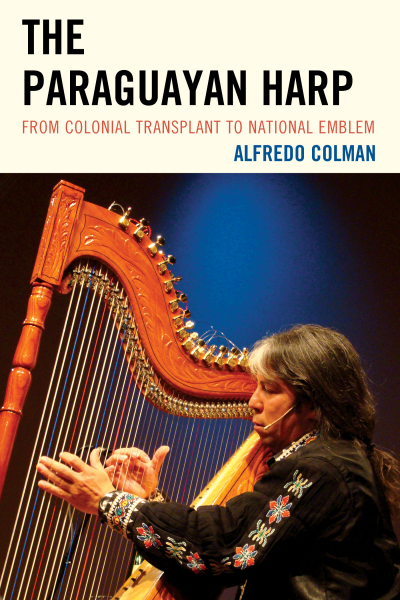
The Paraguayan Harp
From Colonial Transplant to National Emblem
Authors:
Publisher:
2015
Summary
How did a music instrument transplated to South America by colonial Jesuit missionaries earn the official designation as Paraguay's cultural national symbol? This ethnomusicological and organological study of the Paraguayan diatonic harp in the twentieth century tells its story as an emblematic national musical instrument.
First used liturgically by Jesuit missions in colonial times, the transplanted European diatonic harp was transformed and adopted into the folk music vocabulary of Paraguay and the Río de la Plata region. Following the commercial success of Paraguayan harpist Félix Pérez Cardozo in the 1930s in Argentina, the instrument's symbolic value as an icon of social, cultural, and national identity was articulated in local traditions such as popular folk music festivals. It received designation of arpa paraguaya (Paraguayan harp) and, in 2010, official recognition as simbolo de la cultura nacional (cultural national symbol).
The author's fieldwork in Paraguay and continuous contact with composers, educators, festival organizers, harp performers, researchers, and festival organizers have provided unique insights into the development of the Paraguayan harp tradition as a cultural icon of the nation.
Search publication
Bibliographic data
Edition
1/2015
Copyright Year
2015
ISBN-Print
978-0-7391-9819-3
ISBN-Online
978-0-7391-9820-9
Publisher
Lexington, Lanham
Language
English
Pages
186
Product Type
Monograph
Table of contents
ChapterPages
Contents No access
Preface No access
Acknowledgments No access
Chapter 1. A Personal Note No access Pages 1 - 16
Chapter 2. A Musical Instrument, a Symbol of Identity No access Pages 17 - 30
Chapter 3. The Setting No access Pages 31 - 42
Chapter 4. Harps, Harpists, and Luthiers No access Pages 43 - 62
Chapter 5. The Music of the Paraguayan Harp No access Pages 63 - 82
Chapter 6. Traditional Music and the Discourses Surrounding Cultural Performances No access Pages 83 - 122