, to see if you have full access to this publication.
Monograph No access
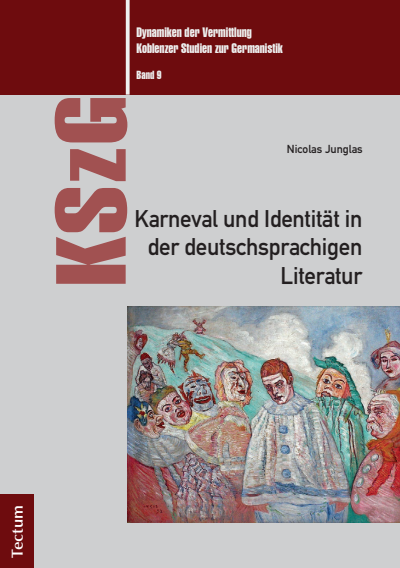
Karneval und Identität in der deutschsprachigen Literatur
- Authors:
- Series:
- Dynamiken der Vermittlung: Koblenzer Studien zur Germanistik, Volume 9
- Publisher:
- 2023
Summary
The question of the role of carnival in German-language literature has not been discussed in detail until now. Against the background that carnival customs are a cultural phenomenon of a universal nature, however, an investigation of this subject was long overdue. The work spans a time span of 500 years and takes a close look at the - largely - canonised literature. The role of the jester and the function of masquerading are given special consideration, as both reflect the identity-forming quality inherent in carnival. In the medium of carnival - according to a core thesis of the work - the ego crises of literary characters are negotiated, including potential solutions.
Keywords
Search publication
Bibliographic data
- Copyright Year
- 2023
- ISBN-Print
- 978-3-8288-4898-6
- ISBN-Online
- 978-3-8288-5025-5
- Publisher
- Tectum, Baden-Baden
- Series
- Dynamiken der Vermittlung: Koblenzer Studien zur Germanistik
- Volume
- 9
- Language
- German
- Pages
- 510
- Product Type
- Monograph
Table of contents
ChapterPages
- Titelei/Inhaltsverzeichnis No access Pages I - XVI
- Einleitung No access Pages 1 - 10
- 1.1 Die Werdung des Subjekts – ein historischer Abriss No access
- 1.2 Humor und Subjekt No access
- 1.3 Subjekt und Identität No access
- 1.4 Zwischenfazit No access
- 2.1 Die mittelalterliche Lachkultur nach Bachtin No access
- 2.2 Die Diabolisierung der Fastnacht No access
- 2.3 Der Narr No access
- 2.4 Die Praxis des Maskierens No access
- 2.5 Zwischenfazit No access
- 3.1 Das Fastnachtsspiel – eine literarische Gattung zwischen den Epochen No access
- 3.2 Zur Geschichte des Andernacher Karnevals No access
- 3.3 Matthäus Creutz – ein Andernacher Bürger im Zeitalter der Renaissance No access
- 3.4 Das Fastnachtsspiel von 1552 No access
- 3.5 Zwischenfazit No access
- 4.1 Johann Wolfgang von Goethe: Das Römische Carneval (1789) No access
- 4.2.1 Die Theatralisierung der Politik No access
- 4.2.2 Die literarische Figur des Fiesko zu Genua No access
- 4.3.1 Der Geisterseher als Wegbereiter des Kriminalromans No access
- 4.3.2 Der Prinz – ein deformierter Charakter par excellence No access
- 4.4 Zwischenfazit No access
- Exkurs: Heinrich von Kleist: Der Findling (1811) No access
- 5.1 Die Commedia dell’arte – Intermedialität bei E.T.A. Hoffmann No access
- 5.2 Das Konzept der romantischen Ironie und der Ironie bei Hoffmann No access
- 5.3 Zwischenfazit No access
- 6.1 Der Vormärz – ein historischer Abriss No access
- 6.2.1 Georg Büchner: Der Hessische Landbote (1834) No access
- 6.2.2.1 Valerio – das fleischgewordene Wortspiel? No access
- 6.2.2.2 Der Narr als Teil-Identität des Prinzen No access
- 6.3.1 Heinrich Heine: Aus den Memoiren des Herren von Schnabelewopski (1834) No access
- 6.3.2 Heinrich Heine: Deutschland. Ein Wintermärchen (1844) No access
- 6.4.1 Karneval als Politikum No access
- 6.4.2.1 Zur Theorie der Satire No access
- 6.4.2.2 Ludwig Kalisch: Quai-tse No access
- 6.4.3.1 Der Quellenkorpus No access
- 6.4.3.2 Quantifizierendes Verfahren No access
- 6.4.3.3 Phase 1 (1841–1842) No access
- 6.4.3.4 Phase 2 (1843–1845) No access
- 6.4.3.5 Phase 3 (1846–1848) No access
- 6.4.3.6 Ausblick No access
- 6.5 Zwischenfazit No access
- 7.1.1 Thomas Mann: Der Bajazzo (1897) No access
- 7.1.2.1 Der katholische Held – Darstellung des Anderen No access
- 7.1.2.2 Die Bekenntnisse – Schelmenroman oder Bildungsroman? No access
- 7.1.2.3 Felix Krull – ein multiples Ich No access
- 7.2.1.1 »Im Anfang war das Wort« – zur Bedeutung der Exposition in Schnitzlers Traumnovelle No access
- 7.2.1.2 Die Maske als Dingsymbol verborgener Triebe No access
- 7.2.1.3 Das Grundmotiv der Opposition als Sinnbild der Ich-Spaltung No access
- 7.3.1.1 Der Steppenwolf als musikalische Komposition No access
- 7.3.1.2 Das Spiegelsymbol in Hesses Steppenwolf No access
- 7.3.1.3 Humor als Vehikel zur Wiedergeburt No access
- 7.4 Zwischenfazit No access
- 8.1 Erich Kästner und die Innere Emigration No access
- 8.2.1 Das Epische Theater und seine Strategie der Verfremdung No access
- 8.2.2 Karnevalisierung in Brechts Leben des Galilei No access
- 8.3 Zwischenfazit No access
- Exkurs: Carl Zuckmayer: Fastnachtsbeichte (1959) No access
- 9.1.1 Deutschland im Zeitalter der ›zweiten Restauration‹ No access
- 9.1.2.1 Hans Schnier – Clown oder Marionette? No access
- 9.1.2.2 Der Clown als Utopist No access
- 9.2.1 Karnevalistische Tradition im ostdeutschen Staat? No access
- 9.2.2.1 Literarische Rezeption in der DDR No access
- 9.2.2.2 Die Filmerzählung nach Christa und Gerhard Wolf (1973) No access
- 9.3 Zwischenfazit No access
- Fazit No access Pages 461 - 472
- Literaturverzeichnis No access Pages 473 - 506
- Abbildungsnachweis No access Pages 507 - 510