, to see if you have full access to this publication.
Edited Book No access
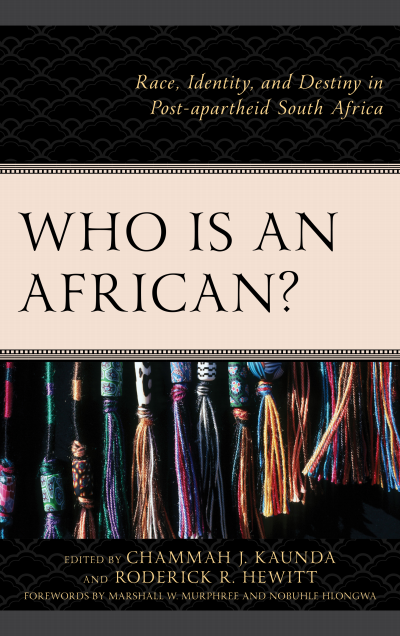
Who Is an African?
Race, Identity, and Destiny in Post-apartheid South Africa
Editors:
|
Publisher:
2018
Summary
The subject of race and identity is a burning issue which continues to occupy the attention not only of South Africans but also the wider residents of the continent of Africa and those who are Africans in the Diaspora. The outburst of xenophobic attacks against foreigners mostly of Black African origins in some communities of Kwa-Zulu Natal and areas of Johannesburg during 2008 and 2015 has raised questions about the social cohesion of South African society linked to unresolved structural identity issues bequeathed by the nation’s past colonial and apartheid legacy. This publication argues that there is an embedded schizophrenic identity crisis within the society that requires scholarly interrogation. The chapters assemble scholarly voices from different ethnic groups that examine the central research question of this study: Who is an African? Within the wider Southern African context, identity and ethnicity politics are framing nationalist economic policies and are impacting on social cohesion within many countries. Writing from different social and racial locations the authors have critically engaged with the central question and offer some important insights that can serve as a resource for all nations grappling with issues of race, ethnicity, identity constructed politics, and social cohesion.
Keywords
Search publication
Bibliographic data
Edition
1/2018
Copyright Year
2018
ISBN-Print
978-1-9787-0054-3
ISBN-Online
978-1-9787-0055-0
Publisher
Lexington, Lanham
Language
English
Pages
312
Product Type
Edited Book
Table of contents
ChapterPages
Contents No access
List of Figures No access
List of Tables No access
Foreword No access
Foreword No access
Acknowledgments No access
Introduction. Who Is an African? No access
Chapter 1. The Changing Salience of Race: Discrimination and Diversity in South Africa No access
Chapter 2. Cracking the Skull of Racism in South Africa Post-1994 No access
Chapter 3. Black Solidarity Impaled: The Cause of Afrophobia No access
Chapter 4. Race, Place, and Indian Identities in Contemporary South Africa No access
Chapter 5. Liberating Identifications: Being Black Conscious, Being Nonracial, Being African No access
Chapter 6. Umuntu Akalahlwa: An Exploration of an African Ethics No access
Chapter 7. “I Am Born of a People Who Would Not Tolerate Oppression”: The Role of Indian Women’s Movements in Social Transformation No access
Chapter 8. Identity Construction of African Women in the Midst of Land Dispossession No access
Chapter 9. Reenacting “Destiny”: Masculinity and Afrikaner Identity in “Religious” Post-Apartheid South Africa No access
Chapter 10. “Some LGBTIQs Are More Unequal than Others”: Determinants of LGBTIQ Marginality in South Africa No access
Chapter 11. Rituals of Female Solidarity: The Role of Imbusa in Promoting Social Cohesion among Married Women in Pietermaritzburg, South Africa No access
Chapter 12. “Sing unto the LORD aNew Song” (Psalm 98:1): Aspects of the Afrikaans Punk-Rock Group Fokofpolisiekar’s Musical Spirituality as Rearticulated Aspects of the 1978 Afrikaans Psalm–en Gesangboek No access
Chapter 13. Rastafari Perspectives on African Identities: Lucky Dube’s “Different Colours /One People” in Conversation with Peter Tosh’s “I Am an African” No access
Chapter 14. On Locating Islam and African Muslim Identity within Africana/Islamica Existential Thought:A Preview No access
Chapter 15. Urban Immigrant Pentecostal Missiology: The Case of an Immigrant Zambian Pentecostal Pastor in South Africa No access
Chapter 16. Why Read the West: Messianicity and Canonicity within aPostcolonial South African Context No access
Selected Bibliography No access Pages 289 - 304
Index No access Pages 305 - 306
About the Editors and Contributors No access Pages 307 - 312