, to see if you have full access to this publication.
Monograph No access
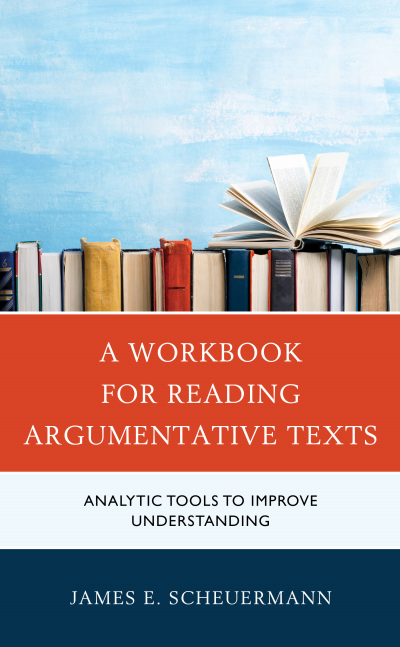
A Workbook for Reading Argumentative Texts
Analytic Tools to Improve Understanding
Authors:
Publisher:
2022
Summary
This Workbook is a collection of exercises and case studies designed to serve as a companion to Reading Argumentative Texts: Analytic Tools to Improve Understanding. The exercises and case studies track each of the chapters of Reading and provide opportunities for students to hone their skills at using the analytic tools presented in Reading, and to acquire additional analytic tools and concepts. These tools are illustrated through the analysis of complete essays from the mass media, speeches, a sermon, and passages from academic works.
The approach is flexible and practical and avoids academic jargon and specific theories of argumentation. As is the case with Reading, this Workbook is grounded in two principles. First, that the meaning of an argumentative text is to be found in the statements that constitute the argument itself, in other statements that are more or less directly related to the argument, and in the structure and context of the text. Accordingly, while this book discusses the analysis of arguments, argument-types, and errors in argumentation (fallacies), it focuses equally on the other sources of meaning of a text. Second, there is no single, authoritative reading of an argumentative text.
The interplay of these two premises informs the view that analyzing and understanding an argumentative text is an art and that, within certain well-defined parameters, there are “better” and “worse” readings of a text and not “right” or “wrong” readings.
The principal sources of meaning discussed include: (1) the structure of the text (and so the book examines six types of introductions and teaches how to outline and summarize), (2) key sentences, phrases, and words in a text (so the book discusses ambiguity, the difference between factual and normative statements, irony, and rhetoric), (3) context (intellectual, social, political, cultural, and physical context), and (4) the logical connections between terms in an argument (including the four different types of arguments, fallacies, and the distinction between necessary and sufficient conditions).
The book is designed to be used in late high school or early college critical reading, critical thinking, rhetoric, or writing courses.
Keywords
Search publication
Bibliographic data
Edition
1/2022
Copyright Year
2022
ISBN-Print
978-1-4758-6473-1
ISBN-Online
978-1-4758-6475-5
Publisher
Rowman & Littlefield, Lanham
Language
English
Pages
142
Product Type
Monograph
Table of contents
ChapterPages
Contents No access
Preface No access
1. Introduction No access Pages 1 - 4
2. Reading Is Not a Spectator Sport No access Pages 5 - 6
3. Why Are You Reading? No access Pages 7 - 10
4. Arguments No access Pages 11 - 18
5. Every Person Has a Skeleton, Every Argument Has a Structure No access Pages 19 - 24
6. What Does the Skeleton Look Like? No access Pages 25 - 32
7. Ambiguity and Nonliteral Uses of Language No access Pages 33 - 44
8. Context Imparts Meaning No access Pages 45 - 58
9. The ABCs of Logic No access Pages 59 - 68
Appendix A No access Pages 69 - 110
Appendix B No access Pages 111 - 114
Appendix C No access Pages 115 - 124
Appendix D No access Pages 125 - 126
Appendix E No access Pages 127 - 136
Appendix F No access Pages 137 - 140
About the Author No access Pages 141 - 142
Similar publications
from the topics "Bildung allgemein"
Edited Book Full access
Christoph T. Burmeister, Thorsten Hertel, Sophia Richter