, to see if you have full access to this publication.
Monograph No access
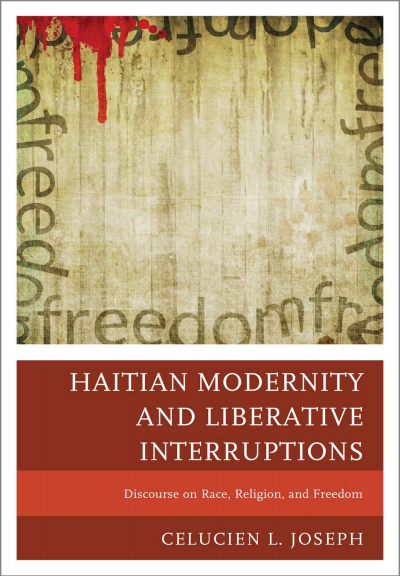
Haitian Modernity and Liberative Interruptions
Discourse on Race, Religion, and Freedom
Authors:
Publisher:
2013
Summary
Haitian Modernity and Liberative Interruptions investigates the intersections of history, literature, race, religion, decolonization, and freedom that led to the founding of the postcolonial state of Haiti in 1804. Particular attention is given to the place of religion in the Haitian Revolution, as well as to the interpretation and representation of this singular event in the work of Frederick Douglass and Langston Hughes. This book not only examines the multiple legacies and the problems of Enlightenment modernity, imperial colonialism, Western racism, and hegemony, but also studies their complex relationships with the institutions of slavery, religion, and Black freedom. Topics range from Makandal’s postcolonial religious imagination to Boukman’s liberation theology to Langston Hughes’ discussion of the role of prophetic religion in the Haitian Revolution. Haitian Modernity and Liberative Interruptions also compares Du Bois’s theory of double consciousness with Fanon’s theory of decolonization and revolutionary humanism.
Keywords
Search publication
Bibliographic data
Edition
1/2013
Copyright Year
2013
ISBN-Print
978-0-7618-6256-7
ISBN-Online
978-0-7618-6257-4
Publisher
Hamilton Books, Lanham
Language
English
Pages
171
Product Type
Monograph
Table of contents
ChapterPages
Contents No access
Preface No access
Acknowledgements No access
Introduction: Interpreting and Engaging the Haitian Revolution No access
1 An Appraisal of Recent Scholarship on the Haitian Revolution No access Pages 1 - 26
2 The Rhetoric of Prayer: Dutty Boukman, the Discourse of “Freedom from Below,” and the Politics of God No access Pages 27 - 48
3 Prophetic Religion, Violence, and Black Freedom: Reading Makandal’s Project of Black Liberation through A Fanonian Postcolonial Lens of Decolonization and Theory of Revolutionary Humanism No access Pages 49 - 82
4 “A City Upon a Hill”: Haiti, Religion, and Race: Frederick Douglass’ Freedom Discourse and the Significance of the Haitian Revolution as a Freedom Event in Modernity No access Pages 83 - 114
5 The Spirit of Revolution, the Spirit of Black Freedom: The Representation of the Haitian Revolution and the Function of Black Religion in Langston Hughes’ Emperor of Haiti No access Pages 115 - 144