, to see if you have full access to this publication.
Monograph No access
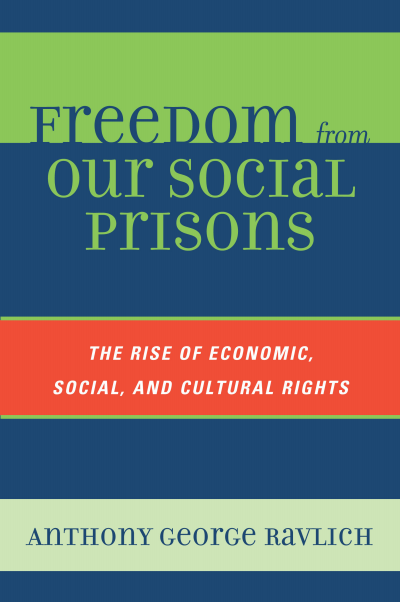
Freedom from Our Social Prisons
The Rise of Economic, Social, and Cultural Rights
Authors:
Publisher:
2008
Summary
The purpose of this book is to provide a belief system to empower people using the democratic system and human rights law. This author contends that neo-liberalism has created a large underclass and has impinged upon the right to development for those who do not fit into the 'neo-liberal square'. Economic, social, and cultural rights, which have been rising in importance within the United Nations and have been denied to many, can be implemented using the core minimum obligations as defined by the General Comments of the United Nations Committee on Economic, Social and Cultural Rights. This will go a long way toward civilizing neo-liberalism. Core minimum obligations such as ensuring basic shelter and housing and essential primary health care only amount to 'top-down' provisions. This book argues that people are most likely to become aware of their human rights if these rights are taught using a more elementary, 'bottom-up' approach. Consequently human rights education should also be regarded as a core minimum obligation especially given that the people of the world have been deliberately kept ignorant of what constitutes basic human rights. Human rights education will enable people to decide through the democratic process whether they want to see economic, social and cultural rights included in domestic human rights law.
Search publication
Bibliographic data
Edition
1/2008
Copyright Year
2008
ISBN-Print
978-0-7391-2286-0
ISBN-Online
978-0-7391-4043-7
Publisher
Lexington, Lanham
Language
English
Pages
256
Product Type
Monograph
Table of contents
ChapterPages
Contents No access
Preface No access
Acknowledgments No access
Chapter 1. The Rise of Economic, Social, and Cultural Rights No access Pages 1 - 24
Chapter 2. Political Tolerance and Core Minimum Obligations No access Pages 25 - 44
Chapter 3. The Politics of Human Rights and the Liberal Oligarchy No access Pages 45 - 70
Chapter 4. The History of Economic, Social, and Cultural Rights and the Most Disadvantaged No access Pages 71 - 112
Chapter 5. Lack of Will for Social Justice for the Most Disadvantaged at the UN No access Pages 113 - 160