, to see if you have full access to this publication.
Edited Book No access
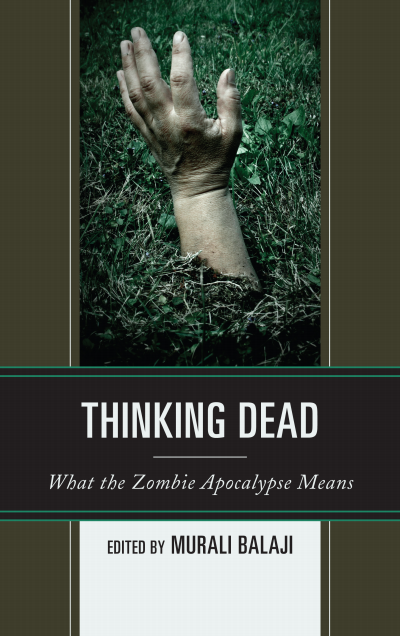
Thinking Dead
What the Zombie Apocalypse Means
Editors:
Publisher:
2013
Summary
Zombies are everywhere these days. We are consuming zombies as much as they are said to be consuming us in mediated apocalyptic scenarios on popular television shows, video game franchises and movies. The “zombie industry” generates billions a year through media texts and other cultural manifestations (zombie races and zombie-themed parks, to name a few). Zombies, like vampires, werewolves, witches and wizards, have become both big dollars for cultural producers and the subject of audience fascination and fetishization. With popular television shows such as AMC’s The Walking Dead (based on the popular graphic novel) and movie franchises such as the ones pioneered by George Romero, global fascination with zombies does not show signs of diminishing.
In The Thinking Dead: What the Zombie Apocalypse Means, edited by Murali Balaji, scholars ask why our culture has becomes so fascinated by the zombie apocalypse. Essays address this question from a range of theoretical perspectives that tie our consumption of zombies to larger narratives of race, gender, sexuality, politics, economics and the end of the world. Thinking Dead brings together an array of media and cultural studies scholars whose contributions to understanding our obsession with zombies will far outlast the current trends of zombie popularity.
Keywords
Search publication
Bibliographic data
Edition
1/2013
Copyright Year
2013
ISBN-Print
978-0-7391-8382-3
ISBN-Online
978-0-7391-8383-0
Publisher
Lexington, Lanham
Language
English
Pages
248
Product Type
Edited Book
Table of contents
ChapterPages
Table of Contents No access
Acknowledgments No access
Thinking Dead: Our Obsession with the Undead and Its Implications No access
Chapter One: Perfect Strangers: The Zombie Imaginary and the Logic of Representation No access
Chapter Two: The Social Dead: How Our Zombie Baggage Threatens to Drag Us into the Crypts of Our Past No access
Chapter Three: “Fight the Dead, Fear the Living”: Zombie Apocalypse, Libertarian Paradise? No access
Chapter Four: Simulating the Zombie Apocalypse in Popular Culture and Media No access
Chapter Five: Return to Darkness: Representations of Africa in Resident Evil 5 No access
Chapter Six: Same as It Ever Was: Savior Narratives and the Logics of Survival in The Walking Dead No access
Chapter Seven: The Zombie Media Monster’s Evolution to Empty Undead Signifier No access
Chapter Eight: Gothic Monster and Chinese Cultural Identity: Analysis of The Note of Ghoul No access
Chapter Nine: Zombies and the Modern American Family: Surviving the Destruction of Traditional Society in Zombieland (2009) No access
Chapter Ten: Leave It All Behind: The Post-Apocalyptical Renunciation of Technology in The Walking Dead No access
Chapter Eleven: Space Junk and the Second Event: The Cosmic Meaning of the Zombie Apocalypse No access
Chapter Twelve: The Necropolitics of the Apocalypse: Queer Zombies in the Cinema of Bruce LaBruce No access
Chapter Thirteen: XXXombies: Economies of Desire and Disgust No access
Chapter Fourteen: The Heart-Throb Zombie: Teen Movies and Summit Entertainment’s Construction of Warm Bodies No access
Chapter Fifteen: Eating the Dead: AMC’s Use of Synergy to Cultivate Zombie Consumption No access