, to see if you have full access to this publication.
Monograph No access
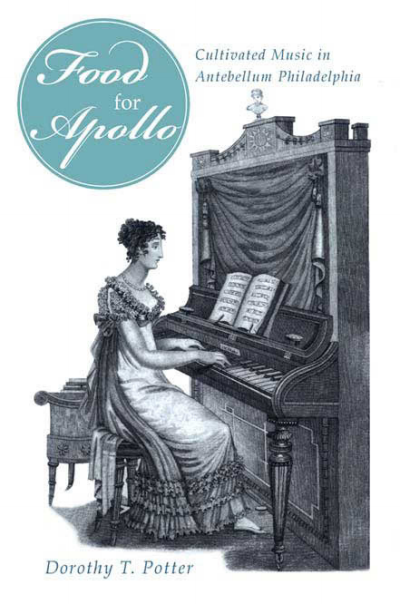
'Food for Apollo'
Cultivated Music in Antebellum Philadelphia
Authors:
Publisher:
2011
Summary
Food for Apollo:' Cultivated Music in Antebellum Philadelphia by Dorothy Potter, describes and evaluates the growth and scope of cultivated music in that city, from the early eighteenth-century to the advent of the Civil War. In many works dealing with American culture, discussion of music's influence is limited to a few significant performances or persons, or ignored altogether. The study of music's role in cultural history is fairly recent, compared to literature, art, and architecture. Whether vernacular or based on European models, a more thorough understanding of music should include attention to related subjects. This book examines concert and theatre performances, music publishing, pre-1861 manufacture of pianos, and British and American literature which promoted music, informing readers about individuals such as Wolfgang Amadeus Mozart, whose works and fame generated interest on both sides of the Atlantic. Though initially hindered by the Society of Friends' opposition to entertainments of all sorts, numbers of non-Quakers supported dancing, concerts, and drama by the 1740s; this interest accelerated after the Revolution, with the building of some of America's earliest theatres, and over time, Musical Fund Hall, the Academy of Music, and other venues. Emigrant musicians, notably Alexander Reinagle, introduced new works by contemporary Europeans such as Franz Joseph Haydn, Mozart, C.P. E. Bach, and many others, in concerts blended with favorite tunes, like the 'President's March.'. Later in the nineteenth century, Philadelphia's noted African-American composer and band leader Francis Johnson, continued the tradition of mixing classical and vernacular works in his popular promenade concerts. As they advertised and shipped their music to an ever-growing market, post-Revolutionary emigrant music publishers, including Benjamin Carr and his family, George Willig, and George Blake, created successful businesses that influenced American taste far beyond Philadelphia. While many of their imprints were vernacular pieces of all sorts, pirated European music adapted for amateur pianists, many of whom were women, formed a substantial part of their stock. Mozart's music was frequently republished or adapted for domestic entertainments, particularly as waltzes and songs from his operas.