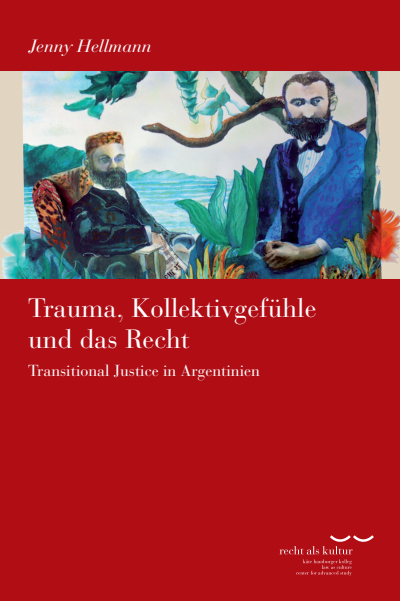
Trauma, Kollektivgefühle und das Recht
Transitional Justice in Argentinien- Authors:
- Series:
- Recht als Kultur, Volume 29
- Publisher:
- 2022
Summary
Emotions permeate social life in all its areas. This also applies to law, especially in the context of human rights and the reappraisal of state injustice. The author examines the emotive permeation of law in the context of transitional justice using the recent criminal justice process of dealing with the dictatorship's past in Argentina. The focus is on collective emotional dynamics that have unfolded in the social and legal reappraisal in the field of tension between effervescent collective feelings, the rational logics of law, and its nonetheless "sacred" aura. The starting point for the empirical examination is the documentary film "Algo mío - Argentina's Stolen Children," which has won several awards and is included with the book. It expresses the ambivalences of an emotive theory of the transitory criminal process in impressive images and captivating stories.
Keywords
Search publication
Bibliographic data
- Copyright Year
- 2022
- ISBN-Print
- 978-3-465-04605-9
- ISBN-Online
- 978-3-465-14605-6
- Publisher
- Klostermann, Frankfurt am Main
- Series
- Recht als Kultur
- Volume
- 29
- Language
- German
- Pages
- 244
- Product Type
- Monograph
Table of contents
- Titelei/Inhaltsverzeichnis No access Pages 1 - 8
- W. Gephart: Vorwort: Das Drama kollektiver Gefühle im Recht No access Pages 9 - 14
- Danksagung No access Pages 15 - 16
- 1. Emotionen im Gerichtssaal No access
- 2. Forschungsfrage und Kapitelstruktur No access
- 3.1 Methode und Material No access
- 3.2.1 Gefühle und Subjektivität in der Arbeit über Emotionen No access
- 3.2.2 Das Gefühl des Augenblicks einfangen No access
- 3.3 Freud und Melancholie in der argentinischen Emotionskultur No access
- 1.1 Der Emotionsbegriff aus psychologischer Perspektive No access
- 1.2 Emotionssoziologie von den Klassikern zum »emotional turn« No access
- 1.3.1 Sozialkonstruktivistische und positivistische Perspektiven No access
- 1.3.2 Emotionen als Vermittler zwischen Struktur und Handeln, Normativität und Rationalität No access
- 1.4.1 Gefühle verstehen und ausdrücken, teilen und heilen No access
- 1.4.2 Zur emotiven Wirkung von Narrativen No access
- 2.1 Die emotive Basis des Normativen und die Gefühle des Kollektivbewusstseins No access
- 2.2.1 Rituale und Symbole in Les formes elementaires de la vie religieuse No access
- 2.2.2 Randal Collins’ Interaction Ritual Chains No access
- 2.2.3 Emotionales Klima und Emotionskulturen No access
- 2.3 Emotionen in Organisationen und sozialen Bewegungen No access
- 2.4 Kollektive Emotionsdynamiken: Empirischer Zugang No access
- 3.1 Der Traumabegriff aus soziokultureller Perspektive No access
- 3.2 Das kulturelle Trauma als soziales Konstrukt No access
- 3.3 Kollektives und kulturelles Gedächtnis No access
- 4.1 Rationalität und das Recht, Gefühle und Gerechtigkeit No access
- 4.2 Recht als Kultur No access
- 4.3.1 Die Definition des Verbrechens No access
- 4.3.2 Die Strafe als leidenschaftliche Reaktion No access
- 4.4 Transitional Justice – zwischen Versöhnung und Gerechtigkeit No access
- 5. Resümee: Emotive Dynamiken zwischen Trauma und Transitional Justice No access
- 1.1 Das Junta-Narrativ: Beschützer im Krieg gegen die Subversion No access
- 1.2 Nunca más: Das Narrativ der Wahrheitskommission No access
- 1.3 »Memoria, verdad y justicia«: Narrative der Menschenrechtsbewegung No access
- 1.4 Die »Teoría de los dos demonios«: Politik zwischen Aufarbeitung und Amnestie No access
- 1.5 Deutungsmacht im Traumaprozess No access
- 2.1 Psychoanalytische »Gefahr« No access
- 2.2 Für und wider die Menschlichkeit No access
- 2.3 Muttergefühle und Familienbande No access
- 2.4 Die Schutzpflicht des Staates No access
- 3.1 Die weißen Kopftücher der politischen Mutterschaft No access
- 3.2 Repräsentationen der Abwesenheit No access
- 3.3.1 Escraches No access
- 3.3.2 Die Wahrheitsprozesse und Verfahren gegen die Verantwortlichen von Kindesraub No access
- 4. Resümee: Dauerhafte Efferveszenz und die Identität der Gerechtigkeit No access
- 1.1 Aufhebung der Amnestie No access
- 1.2 Strafverfahren im Rahmen der argentinischen Gerichtsbarkeit No access
- 1.3 Staatliche Maßnahmen zur Unterstützung der Prozesse No access
- 2.1 Der Stoff des Dramas: Die Anklage und das kulturelle Trauma No access
- 2.2 Regieanweisungen aus der Verfahrensordnung und die Besetzung der Rollen No access
- 2.3 Die symbolische Bedeutung des Gerichtssaals No access
- 3.1.1 Auftakt mit kollektiven Gefühlsausbrüchen No access
- 3.1.2 Auftritt der Richter – die Aushandlung gefühlter Autorität und Verfahrensformalität No access
- 3.2.1 Das geteilte Leid der »testigo-víctimas« No access
- 3.2.2 Die Anklage: »querellas« und Staatsanwaltschaft No access
- 3.2.3 Die Angeklagten No access
- 3.2.4 Die Verteidigung No access
- 3.3.1 Richter ohne Roben No access
- 3.3.2 Kruzifix versus Kopftuch No access
- 3.3.3 Symbolik einer Siegesfeier der Gerechtigkeit No access
- 3.4 Das Urteil als Austarierung emotiver Spannungen in der Wahrheit des Rechts No access
- 4.1 Berichterstattung und Übertragung aus dem Gerichtssaal No access
- 4.2 Exkurs: Algo mío und der Fall Hilario No access
- 5. Resümee: Den Kreislauf der Gefühle schließen? No access
- V. Fazit und Ausblick No access Pages 219 - 222
- Literatur No access Pages 223 - 242
- Abbildungsverzeichnis No access Pages 243 - 244