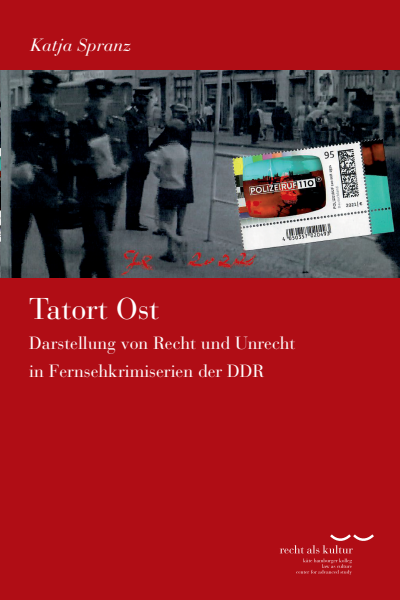
Tatort Ost
Darstellung von Recht und Unrecht in Fernsehkrimiserien der DDR- Authors:
- Series:
- Recht als Kultur, Volume 32
- Publisher:
- 2022
Summary
Der Staatsanwalt hat das Wort and "Polizeiruf 110", the popular crime series of the GDR, are meticulously evaluated: The author introduces us into the depictions of everyday life in the GDR they created and leads us through the dominant chains of motifs of the grand narrative of the superior socialist society, in which, for example, "the "intellectual" and the "misunderstood artist" become potentially dangerous figures. It is the incidentals and omissions that tell us more than the manifest criminal history, as long as we employ the analytical category of law in critically reading the self-descriptions of a society. This is where the real narrator exposes himself: an almost mythical figure, namely a GDR society that relentlessly reveals its own weaknesses to itself.
Keywords
Search publication
Bibliographic data
- Copyright Year
- 2022
- ISBN-Print
- 978-3-465-04610-3
- ISBN-Online
- 978-3-465-14610-0
- Publisher
- Klostermann, Frankfurt am Main
- Series
- Recht als Kultur
- Volume
- 32
- Language
- German
- Pages
- 302
- Product Type
- Monograph
Table of contents
- Titelei/Inhaltsverzeichnis No access Pages 1 - 8
- Werner Gephart: Vorwort: Wer hat eigentlich das »grand récit«der DDR geschrieben? No access Pages 9 - 13
- Danksagung No access Pages 14 - 14
- Einleitung No access Pages 15 - 18
- 1.1 Klassische Kulturkonzepte No access
- 1.2 Die identitätsbildende Funktion des Rechts No access
- 1.3 Fernsehen als politisches Machtinstrument in der DDR No access
- 1.4 Zwischenfazit No access
- 2.1 Kriminologie und Kriminalistik in der DDR No access
- 2.2 Sozialismus, rechtsfeindliche soziale Ordnungsidee No access
- 2.3 Die Staatsmacht: individuelle Sünde und gesellschaftliche Verantwortung No access
- 2.4 Rechtsprechung: Zuchthaus und Gefängnis als »ultima ratio«? No access
- 2.5 Männer- und Frauenbild im Rechtssystem der DDR No access
- 3.1 Methodologische Vorbemerkungen No access
- a) Vertextung No access
- b) Realitätsebenen No access
- c) Interpretation des Filmmaterials No access
- 3.3 Inhaltsanalyse als Textbeschreibung, Aspekte der Repräsentation und Narration No access
- 3.4 Analysekategorien der Serienfolgen No access
- 3.5 Materialität: Veränderung in der Objektwelt No access
- 4.1.1 Aspekte der Produktion und Distribution der Krimiserien No access
- 4.1.2 Fernsehöffentlichkeit als Ort medialer Teilhabe: Zur Popularität von Blaulicht, Der Staatsanwalt hat das Wort und Polizeiruf 110 No access
- 4.2.1 Suspense (bekannte Mittel) No access
- a) Die Ermittler … und die Ermittlerin No access
- b) Der Staatsanwalt No access
- 4.3.2 Die Täter und ihre Opfer No access
- 4.4.1 Gesellschaftliche Gerichte No access
- 4.4.2 Schädigung sozialistischen Eigentums No access
- 4.4.3 Erpressung No access
- 4.4.4 Kindstötung No access
- 4.4.5 Rowdytum und Asozialität No access
- 4.4.6 Arbeitsplatzbindung No access
- 4.5.1 Erzählte Räume jenseits des DDR-Alltags No access
- 4.5.2 Privater vs. öffentlicher Raum No access
- 4.5.3 Topografie des banalen Verbrechens im Sozialismus No access
- 4.6 Erzählungen am Rande No access
- 4.7.1 Wohnungsnot No access
- 4.7.2 Mangelwirtschaft No access
- 4.7.3 Alkoholmissbrauch No access
- 5.1 Die Stasi-Akte: Das Schweigen No access
- 5.2 Die Republikflucht No access
- 5.3 Rechtsradikale Straftaten No access
- 6.1 Inhalt No access
- 6.2 Form und Erzählstruktur No access
- 6.3 Die Nachbarin No access
- 6.4 Die Filmkritiken No access
- 6.5 Die Sonate vom guten Menschen No access
- 6.6 Der gute Stasi-Mann No access
- 6.7 Die Frau No access
- 6.8 Das 3. Strafrechtsänderungsgesetz von 1979 No access
- Zusammenfassung und Interpretation der Ergebnisse: Die DDR als Protagonistin der Serien No access Pages 263 - 268
- Literaturverzeichnis No access Pages 269 - 294
- Anhang: Filmliste No access Pages 295 - 302