, to see if you have full access to this publication.
Monograph No access
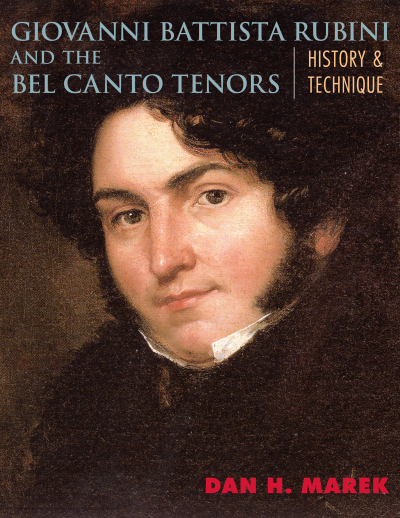
Giovanni Battista Rubini and the Bel Canto Tenors
History and Technique
Authors:
Publisher:
2013
Summary
Giovanni Battista Rubini (1794-1854) was a legendary tenor and the first 19th-century non-castrati male singer to become an international star of opera. The previous two centuries had been the era of the castrati, with tenors and basses relegated to character and supporting roles in the operas of their time. Rubini stood apart because he not only matched the castrati in coloratura and pathos, but he also had an extraordinarily high voice. With Rubini’s rise, and in his wake, several tenors came to sing roles written specifically for them by Rossini, Bellini, Donizetti, and many other lesser-known bel canto composers. Signaling the end of the dominance of castrati on stage, this period would last some 40 years until the advent of Grand Opera, Wagner, and Verdi and the appearance of the first so-called High C from the chest by Gilbert-Louis Duprez in 1837. Since then, the accepted tenor sound has followed the tradition epitomized by Enrico Caruso and, in our own era, Luciano Pavarotti and Placido Domingo.
Many composers, conductor, and performers would come to regard bel canto dramatic operas as decorative and vapid until Maria Callas and Tulio Serafin demonstrated the heights this genre of opera could reach. However, opera directors and opera performers of late who have expressed an interest in reviving selected masterpieces from the bel canto tradition have found themselves confronted with the problem of locating tenors versed in the vocal techniques necessary to carry the high tessituras. In Giovanni Battista Rubini and the Bel Canto Tenors: History and Technique, Dan H. Marek explores the extraordinary life of Rubini in order to frame this special period in the history of opera and connect the technique of the castrati who were among Rubini’s instructors. Drawing on the work of Berton Coffin, Marek offers long-sought answers to the challenges presented by high tessitura of bel canto operas for tenors. To further assist working singers, Giovanni Battista Rubini and the Bel Canto Tenors includes over 60 pages of exercises written by Rubini himself before 1840, which Marek, for the first time ever has adapted to acoustical phonetics.
Professional singers, teachers and their students, vocal coaches, and opera conductors will find this work indispensable as the only English-language work on high tessitura for tenor and soprano singing.
Search publication
Bibliographic data
Edition
1/2013
Copyright Year
2013
ISBN-Print
978-0-8108-8667-4
ISBN-Online
978-0-8108-8668-1
Publisher
Rowman & Littlefield, Lanham
Language
English
Pages
420
Product Type
Monograph
Table of contents
ChapterPages
Contents No access
List of Exercises No access
List of Musical Examples No access
List of Illustrations No access
Acknowledgments No access
Preface No access
Ch01. Antiquity to the A Cappella Period, 1474–1640 No access
Ch02. The Baroque Tenor No access
Ch03. Gluck, the Hautes-Contre, and the French Style No access
Ch04. Opera Buffa, Mozart, and the Lyric Tenor No access
Ch05. Opera Seria in Evolution No access
Ch06. Rossini’s Naples: The Cradle of the Bel Canto Tenor No access
Ch07. Da Capo, 1794–1814 No access
Ch08. Rubini in Naples, 1815–1823 No access
Ch09. Vienna, Paris, and International Celebrity, 1824–1826 No access
Ch10. Return to the San Carlo, 1826–1827 No access
Ch11. 143La Scala, Theater am Kärntnertor, and San Carlo, 1827–1828 No access
Ch12. Addio alla Scala; Vienna; Anna Bolena, 1828–1830 No access
Ch13. Elvino in London and Paris, 1831–1832 No access
Ch14. I Puritani and the “Puritani Quartet,” 1833–1835 No access
Ch15. Operas and Concerts in London and Paris, 1836–1839 No access
Ch16. Farewell to Paris; Touring, 1840–1841 No access
Ch17. Return to London, Provincial Tour, Liszt/Rubini Tour, 1842 No access
Ch18. Berlin, Moscow, and St. Petersburg, 1843–1844 No access
Ch19. Rubini Retires, 1845 No access
Ch20. Requiescat in Pace, 1846–1854 No access
Ch21. The Twin Branches of Bel Canto No access
Ch22. Appoggio: Mastery of the Breath No access
Ch23. The Attack No access
Ch24. Historical Ideas about Registration through Garcia II No access
Ch25. Acoustical Phonetics and the Vowel Register No access
Ch26. Special Vocal Technique for “Rubini” Tenors No access
Appendix I. Twelve Lessons in Modern Singing—for Tenor or Soprano No access Pages 305 - 376
Appendix II. Rubini’s Operatic Repertoire by Year of First Performance No access Pages 377 - 382
Appendix III. Chronology of Rubini’s Concert Performances No access Pages 383 - 394
Bibliography No access Pages 395 - 404
Name Index No access Pages 405 - 414
Subject Index No access Pages 415 - 418
About the Author No access Pages 419 - 420
Similar publications
from the topics "Bildung allgemein"
Edited Book Full access
Christoph T. Burmeister, Thorsten Hertel, Sophia Richter