, to see if you have full access to this publication.
Monograph No access
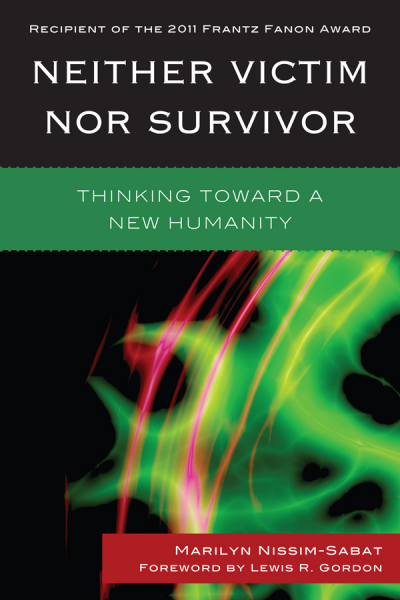
Neither Victim nor Survivor
Thinking toward a New Humanity
Authors:
Publisher:
2009
Summary
In Neither Victim nor Survivor: Thinking toward a New Humanity, Marilyn Nissim-Sabat offers a comprehensive critique of the interrelated concepts of 'victim' and 'survivor' as they have been ideologically distorted in Western thought. Framed by the phenomenological perspective of Edmund Husserl, Nissim-Sabat carries out her argument through an intense engagement with current scholarly work on Toni Morrison's Beloved, Sophocles' Antigone, akrasia, psychoanalysis, critical race theory, feminist philosophy of science, and Marxism. Nissim-Sabat ultimately proposes that a new consciousness, enabled by the phenomenological attitude, of the way in which ideological distortion of the concepts of 'victim' and 'survivor' helps to perpetuate victimization will empower us to find ways to end victimization and its anti-human consequences. The book's interdisciplinary approach will make it appealing to a broad range of students and scholars alike.
Search publication
Bibliographic data
Edition
1/2009
Copyright Year
2009
ISBN-Print
978-0-7391-2822-0
ISBN-Online
978-0-7391-3928-8
Publisher
Lexington, Lanham
Language
English
Pages
208
Product Type
Monograph
Table of contents
ChapterPages
Contents No access
Foreword No access
Acknowledgments No access
Introduction No access
Chapter 01. What is a Victim? No access Pages 1 - 20
Chapter 02. Freud, Gender, and the Epigenesis of Morality: A Critique No access Pages 21 - 42
Chapter 03. The Crisis in Psychoanalysis: Resolution through Husserlian Phenomenology and Feminism No access Pages 43 - 80
Chapter 04. Addictions, Akrasia, and Self Psychology: A Socratic and Psychoanalytic View of Akrasia as Victim Blaming No access Pages 81 - 96
Chapter 05. Fanon, Phenomenology, and the Decentering of Philosophy: Lewis R. Gordon’s Her Majesty’s Other Children: Sketches of Racism from a Neocolonial Age No access Pages 97 - 110
Chapter 06. Race and Culture: Victim Blaming in Psychology, Psychiatry, and Psychoanalysis No access Pages 111 - 128
Chapter 07. Autonomy, Empathy, and Transcendence in Sophocles’ Antigone: A Phenomenological Perspective, with an Epilogue: On Lacan’s Antigone No access Pages 129 - 162
Chapter 08. Neither Victim nor Survivor Be: Who is Beloved’s Baby? No access Pages 163 - 194