, to see if you have full access to this publication.
Monograph No access
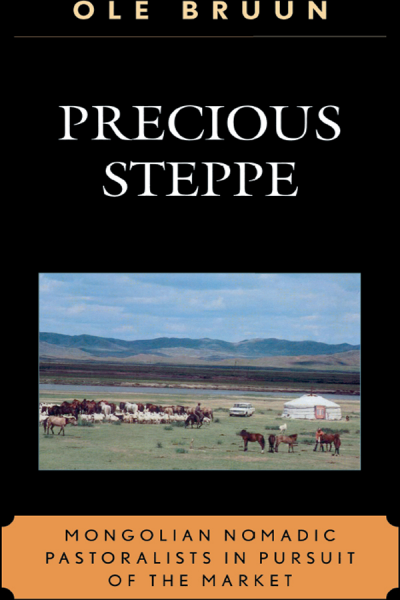
Precious Steppe
Mongolian Nomadic Pastoralists in Pursuit of the Market
Authors:
Publisher:
2006
Summary
Ole Bruun focuses on a community of nomadic livestock herders in present-day Mongolia. He depicts their transition from a contained, Soviet-era collective to modern times and addresses the most essential conditions for their continued survival and prosperity in the age of the market: the adaptability of their own culture and working strategies, government policy, and international attention. By studying the nomadic practice of animal husbandry in the context of family farms, Bruun points out the similarity to the peasant economy defined by the Russian agricultural economist Alexander Chayanov nearly a century ago. In both economies, the labor-consumer balance and life-cycle variations commonly set the term for economic strategies, yet the pastoral economy involves a highly specialized form of agriculture in which the scale of exchange determines wealth and lifestyle. In a vast territory such as Mongolia, infrastructure, social benefits, and other means of state support are crucial to prevent herders from sliding into a subsistence orientation, eventually leading to poverty.
Search publication
Bibliographic data
Edition
1/2006
Copyright Year
2006
ISBN-Print
978-0-7391-1115-4
ISBN-Online
978-0-7391-5951-4
Publisher
Lexington, Lanham
Language
English
Pages
251
Product Type
Monograph
Table of contents
ChapterPages
Table of Contents No access
A Brief Introduction No access
1. Khotont Sum in Recent Mongolian History No access Pages 1 - 24
2. Khotont People and their Herds No access Pages 25 - 50
3. Cycles of Movement and Work No access Pages 51 - 90
4. Social Organization and Family Life No access Pages 91 - 120
5. The Politics of Buddhist Revival No access Pages 121 - 142
6. Time and Tradition on the Steppe No access Pages 143 - 166
7. Nomads in the City No access Pages 167 - 188
8. Development: Adjustment or Change? No access Pages 189 - 218
9. Herders, State Formation, and the Chinese Connection No access Pages 219 - 238
Mongolian Common Terms Used in the Text No access Pages 239 - 240