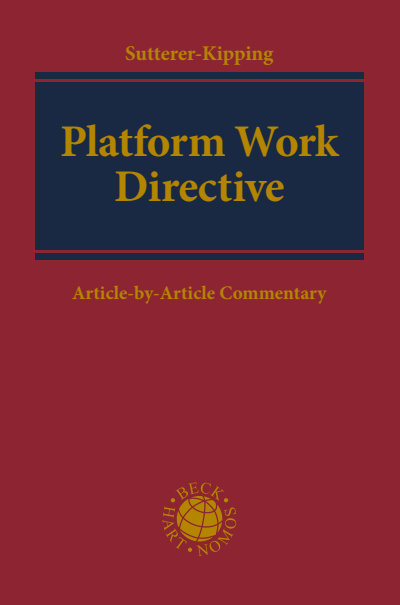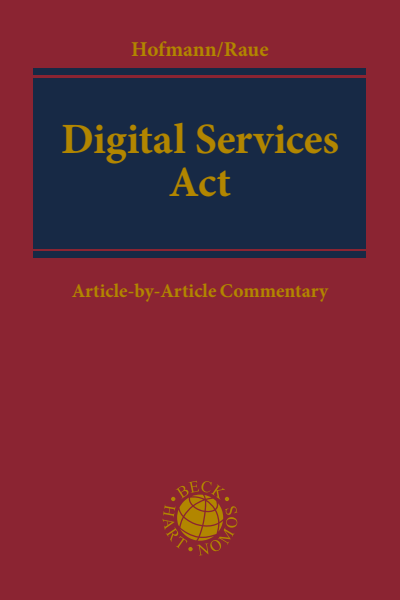
Digital Services Act: DSA
Article-by-Article Commentary- Editors:
- |
- Publisher:
- 2024
Summary
The Digital Services Act (DSA) creates a completely new European legal framework for digital services. This will have far-reaching consequences for both providers and (commercial) users of digital services. The new CommentaryThe article-by-article commentary is "straight to the point" on the far-reaching provisions of the Regulation, which primarily relate to dealing with illegal content on the internet. The structures and objectives of the regulation are systematically and comprehensibly described, embedded in the context and explained in terms of EU law. It also develops strategic recommendations for the online companies concerned, which are now subject to numerous obligations. The autorsAkadR a.Z. Dr. Max Dregelies | Dr. Karina Grisse, LL.M. (Edinburgh) | Prof. Dr. Franz Hofmann, LL.M. (Cambridge) | Jun.-Prof. Dr. Katharina Kaesling, LL.M. (College of Europe) | Prof. Dr. Christoph Krönke | Prof. Dr. Sarah Legner | Prof. Dr. Nikolaus Marsch, D.I.A.P. (ENA) | Daniela Petermair, LL.M. (WU), B.Sc. (WU) | Prof. Dr. Timo Rademacher, M.Jur. (Oxford) | Prof. Dr. Benjamin Raue
Keywords
Search publication
Bibliographic data
- Edition
- 1/2025
- Copyright Year
- 2024
- ISBN-Print
- 978-3-8487-8616-9
- ISBN-Online
- 978-3-7489-3147-8
- Publisher
- Nomos, Baden-Baden
- Language
- English
- Pages
- 1253
- Product Type
- Comment
Table of contents
- Titelei/Inhaltsverzeichnis No access Pages II - XXI
- Authors: |
- 1. Regulatory task No access
- 2. Directive 2000/31/EC as an obsolete provision No access
- 3. Ambitions of a law on digital services No access
- 1. Realisation of the internal market No access
- 2. Regulation of platforms No access
- 3. Consumer and user protection No access
- 4. Legal certainty No access
- 1. General remarks No access
- 2. Liability for illegal third-party content No access
- 3. Responsibility for the design of the service No access
- IV. Digital Services Act as a general part of internet law No access
- 1. Law enforcement on the internet No access
- 2. Regulation of systemic risks No access
- 3. Transparency and accountability requirements No access
- 4. Prohibitions and obligations to act No access
- 5. Supervisory mechanisms No access
- I. Preliminary works No access
- II. Legislative procedure No access
- III. Entry into force and application No access
- I. Structure No access
- II. Chapter I: General provisions No access
- III. Chapter II: Liability exemption No access
- IV. Chapter III: Diligence obligations No access
- V. Chapter IV: Supervision and enforcement No access
- VI. Chapter V: Final provisions No access
- I. General No access
- II. Cross-sectional regulation No access
- III. Public law No access
- IV. Private law No access
- V. Criminal law No access
- 1. Liability law No access
- 2. Algorithmic law enforcement No access
- 3. Transparency obligations No access
- 4. Fundamental rights application No access
- 5. Self-regulation No access
- 6. Regulatory law No access
- 7. Law by design No access
- I. Relationship to other legal acts of Union law No access
- 1. General No access
- 2. Conflicting national provisions No access
- III. International aspects No access
- Authors:
- I. Regulation of digital services No access
- 1. Objectives of the DSA (Art. 1(1)) No access
- 2. Regulatory complexes (Art. 1(2)) No access
- 3. Direct application No access
- III. Legislative procedure No access
- I. Promotion of innovation No access
- II. Consumer protection No access
- III. Protection of society as a whole No access
- I. General remarks No access
- II. Continuity with the Directive 2000/31/EC No access
- III. No full immunity No access
- I. General remarks No access
- II. Transparency obligations, duties to act and prohibitions depending on the type, functionality and size of the intermediary No access
- III. Consequences of the diligence obligations No access
- I. General remarks No access
- II. Public enforcement No access
- I. Full harmonisation No access
- 1. National latitude No access
- 2. Other regulatory objectives No access
- III. Relationship of the DSA to other legal acts of the Union No access
- Authors:
- I. Overview No access
- II. Legislative procedure No access
- I. Overview No access
- II. Intermediary service No access
- III. Recipients of the service in the Union No access
- 1. Offer services in the Union No access
- a) Establishment in the Union No access
- b) Factual connection to the Union No access
- V. Continued validity of Art. 3 Directive 2000/31/EC No access
- I. Service providers outside the definition of Art. 3 point (g) No access
- 1. Other services No access
- 2. Requirements for the mediated products or services No access
- 3. Integral part of an overall service No access
- 1. Collision cases No access
- 2. List of legal acts affected No access
- 1. General remarks No access
- 2. Individual questions No access
- 1. General remarks No access
- 2. Individual questions No access
- 1. Overview No access
- 2. Relationship to the InfoSoc Directive 2001/29/EC No access
- 3. Relationship to Art. 17 CDSM Directive (EU) 2019/790 No access
- 4. Relationship to the Directive 2004/48/EC No access
- 1. General remarks No access
- 2. Individual questions No access
- VI. Regulation on precursors for explosives No access
- 1. General remarks No access
- 2. Individual questions No access
- 1. General remarks No access
- 2. Relationship to European unfair competition law No access
- IX. Data protection law No access
- X. Judicial cooperation in civil matters and private international law No access
- XI. Judicial cooperation in criminal matters No access
- XII. Appointment of representatives for the purpose of gathering evidence in criminal proceedings No access
- E. Other legal acts regulating digital services No access
- Authors:
- A. General remarks Franz Hofmann No access
- I. Overview No access
- 1. Service No access
- 2. Remuneration No access
- 3. Service provided at a distance No access
- 4. Service provided by electronic means No access
- 5. Service provided at the individual request of a recipient No access
- 6. Not an integral part of an overall service No access
- III. Individual cases No access
- I. Overview No access
- II. Individual requirements No access
- III. Miscellaneous No access
- 1. Consumer definitions in Union law No access
- 2. Standards of direct consumer relevance No access
- 3. Consumer model No access
- II. Legislative procedure No access
- 1. Natural person No access
- 2. Purpose of activity No access
- IV. Individual cases No access
- E. Offering services in the Union/Substantial connection (Art. 3 point (d) and (e)) No access
- F. Trader (Art. 3 point (f)) No access
- 1. Information society services No access
- 2. Intermediary role of the services No access
- 3. Platform functions No access
- II. Mere conduit No access
- III. Caching No access
- IV. Hosting No access
- 1. Enumerative list of intemediary services No access
- a) Search engines as intermediary service No access
- b) Search engines no intermediary services No access
- 3. Special case of hyperlinks No access
- 4. Traditional intermediaries No access
- I. Overview No access
- 1. Infringing content No access
- a) Cross-jurisdictional approach No access
- b) Legal provision No access
- 3. Illegal content online and offline No access
- III. Legal contents No access
- I. Overview No access
- 1. Platform activities No access
- 2. Ancillary feature or insignificant main feature No access
- 3. Abuse provison No access
- I. Overview No access
- 1. Intermediary service No access
- 2. Search function No access
- 3. Detection function No access
- I. Overview No access
- II. Distinctions No access
- 1. Provision of information No access
- 2. Public No access
- 3. At the request of the recipient of the service No access
- I. Overview No access
- 1. Contract between trader and consumer No access
- 2. Without simultaneous physical presence No access
- 3. Organised distance sales or service-provision scheme No access
- 4. Exclusive use of means of distance communication No access
- III. Individual cases No access
- M. Online interface (Art. 3 point (m)) No access
- I. Overview No access
- II. Details No access
- I. Overview No access
- II. Details No access
- I. Overview No access
- II. Details No access
- I. Overview No access
- II. Details No access
- I. Overview No access
- 1. Information No access
- 2. Message of a legal or natural person No access
- 3. Display on the online interface of an online platform No access
- 4. Remuneration No access
- 5. Presentation No access
- I. Overview No access
- 1. Automated functioning No access
- 2. Usage by an online platform No access
- 3. Effect of the recommender system No access
- I. Overview No access
- II. Individual requirements No access
- I. Overview No access
- II. Details No access
- V. Persons with disabilities (Art. 3 point (v)) No access
- I. Overview No access
- 1. Form of communication No access
- 2. Sales promotion or promotion of the image of a business No access
- 3. Negative criteria No access
- X. Turnover (Art. 3 point (x)) No access
- Authors:
- I. Liability privileges as part of the liability constitution on the internet No access
- II. Continuity with the Directive 2000/31/EC No access
- III. Horizontal regulatory approach No access
- 1. Liability for illegal third-party content No access
- 2. Liability for own content No access
- 3. Criteria for distinction No access
- 4. Requirement of distinction No access
- 1. Balancing conflicting interests No access
- 2. Diversity of dogmatic constructions No access
- 1. Duties to assist No access
- 2. Risk-increasing behaviour No access
- IV. Privatisation of law enforcement No access
- 1. Infringer No access
- 2. Realisation of rights on the internet No access
- 3. Active and passive recipients of the service No access
- 4. Intermediaries No access
- 5. General remarks No access
- 1. Promotion of new business models No access
- 2. Effective judicial review No access
- 3. User rights No access
- 4. Conclusion No access
- aa) Overview No access
- bb) Case law No access
- cc) Art. 17 CDSM Directive (EU) 2019/790 No access
- b) Data protection law No access
- c) Unfair competition law No access
- d) Trademark law No access
- aa) Requirements under Union law No access
- bb) National implementation No access
- b) Art. 18 Directive 2000/31/EC No access
- c) Further No access
- 1. Liability privileges No access
- 2. Prohibition of general monitoring obligations No access
- 3. Principle of proportionality No access
- 4. Fundamental rights No access
- 5. Other principles of Union law No access
- I. Liability privileges as a component of intermediary liability No access
- 1. Overview No access
- 2. Previous case law No access
- 3. Business models designed to infringe rights No access
- 4. Limits of application of individual liability privileges No access
- 1. Regulatory purpose No access
- 2. Horizontal regulation No access
- 3. Criticism of the liability privileges No access
- 4. Liability privileges as an expression of an overarching legal principle No access
- I. Indirect responsibility No access
- II Accessoriness and subsidiarity No access
- III. Configuring the due diligence obligations in accordance with the interests No access
- IV. Proceduralisation No access
- V. User rights No access
- VI. Technology sensitivity No access
- F. Relationship to the Directive 2000/31/EC No access
- Authors:
- I. Overview No access
- II. Purpose of the regulation No access
- III. Justification and limitation of liability No access
- IV. Relationship to the predecessor regulation No access
- V. History No access
- I. Passive role No access
- 1. Initiating the transmission No access
- 2. No selection of addressees No access
- 3. No modification or selection of information No access
- 4. Actual knowledge of illegal activities or illegal content No access
- C. Legal consequence of the liability exemption No access
- I. Transmission of information No access
- II. Providing access No access
- 1. Overview No access
- 2. Automatic, intermediate and transient storage No access
- 3. Purpose of storage No access
- I. Technical analysis and case-by-case consideration No access
- II. Service providers covered No access
- F. Rules on the justification of liability (Art. 4(3)) No access
- Authors:
- I. Overview No access
- II. Purpose of the regulation No access
- III. Justification and limitation of liability No access
- IV. Relationship to the predecessor regulation No access
- V. History of origins No access
- I. Passive role No access
- 1. No change in the information No access
- 2. Observance of the conditions for access to the information No access
- 3. Observance of the rules for updating the information No access
- 4. Interference with data collection technologies No access
- 5. Notice-and-takedown obligation No access
- C. Legal consequence of the privileged status No access
- I. Transmission of user information in a communication network No access
- 1. Automatic temporary storage No access
- 2. Temporary storage for a limited period of time No access
- III. Privileged purpose No access
- I. Technical analysis and case-by-case consideration No access
- II. Service providers covered No access
- F. Rules for the establishment of liability No access
- Authors:
- I. Overview No access
- II. Purpose of the regulation No access
- III. Justification and limitation of liability No access
- IV. Relationship to the predecessor regulation No access
- V. History No access
- I. Passive role No access
- 1. General remarks No access
- 2. Authority No access
- 3. Control No access
- 4. Individual cases No access
- III. Liability of online platforms under consumer protection law (Art. 6(3)) No access
- IV. Statutory exclusions No access
- C. Legal consequence of the privileged status No access
- 1. Hosting service No access
- a) External information No access
- b) On behalf of the recipient of the service No access
- 3. Individual cases No access
- 1. General remarks No access
- 2. Knowledge of illegality No access
- 3. Investigations on own initiative No access
- aa) Overview No access
- bb) Statement of reasons No access
- cc) Electronic location No access
- dd) Name indication No access
- ee) Declaration on the accuracy of the specifications No access
- b) Formal requirements No access
- c) Eligibility to register No access
- d) Legal consequence of proper notifications No access
- 5. Abstract knowledge No access
- III. Ought to have known No access
- 1. Overview No access
- 2. Acting expeditiously No access
- 3. Blocking or removal No access
- I. Technical analysis and case-by-case consideration No access
- II. Service providers covered No access
- I. National liability rules No access
- II. Special diligence obligations No access
- III. Liability regimes under Union law No access
- Authors:
- I. Background No access
- II. Purpose of the regulation No access
- III. Relation to previous legal framework No access
- IV. History No access
- I. Overview No access
- II. Relation to previous case law No access
- III. Modified Good Samaritan privilege No access
- I. Measures on own initiative No access
- 1. Investigations with regard to illegal content No access
- 2. Other measures with regard to illegal content No access
- a) Requirements of national and Union law No access
- b) Terms and conditions No access
- 1. Purpose and systematics No access
- a) Diligent behaviour No access
- b) Good faith No access
- D. Protection of user rights No access
- Authors:
- 1. Overview of the regulatory content No access
- 2. Background No access
- 3. Practical relevance No access
- II. Comparable regulations No access
- 1. Art. 15(1) E-Commerce Directive 2000/31/EC No access
- 2. Art. 15(2) E-Commerce Directive 2000/31/EC No access
- I. Two alternatives No access
- II. Particular cases No access
- 1. Termination of specific infringements No access
- 2. Prevention of infringements No access
- 1. Similar infringements No access
- 2. Infringements by other persons No access
- 3. National case law No access
- III. Criticism No access
- Authors:
- I. Regulatory context and object of regulation No access
- II. Regulatory purpose No access
- 1. Justification of liability No access
- 2. Procedural law including enforcement law No access
- 3. Legal acts of the Union with mechanisms for action against illegal content No access
- 4. Decisions by providers of hosting services No access
- IV. Court and authority orders versus claims No access
- 1. General remarks No access
- 2. Individual cases of court or administrative orders No access
- 3. Addressees of the regulation No access
- VI. Legislative procedure No access
- I. Introduction No access
- II. Addressees of the regulation and material scope of application No access
- 1. Obligation to provide information on the effect given to the order No access
- 2. Without undue delay No access
- 3. Information addressee No access
- 4. Relevant order No access
- 1. Enforcement of the order itself No access
- 2. Enforcement of the obligation to provide information No access
- I. General remarks No access
- 1. Specification of the legal basis No access
- 2. Statement of reasons No access
- 3. Identification of the issuing authority No access
- 4. Identification of illegal content No access
- 5. Remedies No access
- 6. Specifications of the authority to be informed No access
- III. Territorial scope No access
- IV. Language No access
- D. Exchange of information (Art. 9(3) and (4)) No access
- E. User information (Art. 9(5)) No access
- F. National civil and criminal procedural law (Art. 9(6)) No access
- Authors:
- I. Regulatory context and object of regulation No access
- II. Parallels of Art. 10 and Art. 9 No access
- III. Regulatory purpose No access
- IV. Relationship to other regulations No access
- V. Legislative procedure No access
- I. General remarks No access
- 1. Information requirements on receipt of the order and effect given to the order No access
- 2. Without undue delay No access
- 3. Information addressee No access
- 4. Relevant order No access
- I. General remarks No access
- 1. Specification of the legal ground No access
- 2. Identification of the issuing authority No access
- 3. Identification of the recipient of the service No access
- 4. Explanatory statement No access
- 5. Remedies No access
- 6. Specifications of the authority to be informed No access
- III. Limits to the provision of information No access
- IV. Language No access
- D. Exchange of information (Art. 10(3) and (4)) No access
- E. User information (Art. 10(5)) No access
- F. National civil and criminal procedural law (Art. 10(6)) No access
- Authors:
- 1. Overview of the individual diligence obligations No access
- 2. Exemption for micro and small enterprises No access
- a) Intermediary services No access
- b) Hosting services and online platforms No access
- 1. Transparency and proceduralisation of content moderation No access
- 2. Obligations towards public authorities No access
- 3. Communication and transparency No access
- 4. Consumer and user protection No access
- 1. Public or private law No access
- a) Applicable law No access
- b) Contractual obligations No access
- c) Non-contractual obligations No access
- IV. Regular evaluation of the diligence obligations No access
- I. Overview No access
- II. Balancing of interests in the services contract No access
- a) Identification of illegal content No access
- b) Obligation of initial assessment No access
- c) Transparent decision No access
- d) Hearing of the affected persons No access
- e) Reconsideration procedure No access
- f) External dispute resolution No access
- g) Legal action before state courts No access
- 2. Content contrary to terms and conditions No access
- a) Timely No access
- b) Without undue delay No access
- c) Time requirements as relative concepts No access
- d) No time limit in Art. 14 No access
- 2. Qualitative diligence requirements No access
- V. Public enforcement/competence of state courts to final decision-making No access
- VI. Involvement of civil society stakeholders No access
- C. The application of fundamental rights by intermediary services No access
- I. Oversight and enforcement by public authorities No access
- 1. Individual enforcement No access
- 2. Collective private law enforcement No access
- Authors:
- 1. Telos No access
- 2. Systematics and position within the DSA No access
- 3. Relation to other legislative acts of the EU No access
- II. Changes in the legislative process No access
- 1. Providers of intermediary services No access
- 2. Indirect obligation of the competent authorities No access
- 1. Designation of a single point of contact No access
- a) Direct, smooth, and efficient communications No access
- b) By electronic means No access
- c) Acknowledgement of the receipt of communications No access
- a) Competent authorities No access
- b) Trusted flaggers and traders No access
- c) Not: recipients of the service No access
- 4. Relating to matters covered by this Regulation No access
- 1. Publication of information (sent. 1) No access
- 2. Easily accessible and up to date (sent. 2) No access
- 1. Binding specification of the language No access
- 2. Official language of the main establishment No access
- 3. Language understood by as many Union citizens as possible No access
- 4. Agreement on the language No access
- C. Enforcement No access
- Authors:
- I. Telos No access
- 1. Norm structure No access
- 2. Position within the DSA No access
- 3. Relation to other legislative acts of the EU No access
- III. Changes in the legislative process No access
- I. Addressees: providers of intermediary services No access
- II. Communication partners: recipients of the service No access
- 1. Single point of contact No access
- 2. Designation No access
- 3. Content of the communications No access
- a) Proportionality considerations No access
- aa) By electronic means No access
- bb) Transparency in communications via chatbots No access
- cc) Not based exclusively on automated tools No access
- dd) Choice of the recipient of the service No access
- aa) Directly and rapidly No access
- bb) User-friendly No access
- cc) Efficient No access
- dd) Confirmation of receipt No access
- IV. Information on point of contact (para. 2) No access
- C. Enforcement No access
- Authors:
- I. Telos No access
- 1. Norm structure No access
- 2. Position within the DSA No access
- 3. Relation to other legislative acts of the EU No access
- III. Changes in the legislative process No access
- I. Addressees: Providers of intermediary services not established in the Union No access
- 1. To designate No access
- 2. In writing No access
- 3. Legal or natural person No access
- 4. In a Member State No access
- 5. Physical presence No access
- a) In addition to or instead of the service provider No access
- b) Competent authorities No access
- c) Competence of the legal representative No access
- 2. Sufficient resources (sent. 2) No access
- IV. Mandate vis-à-vis private parties No access
- 1. Penalties imposed by the authorities No access
- 2. Private law enforcement No access
- 1. Notification of the Digital Services Coordinator (sent. 1) No access
- 2. Publication of the designation (sent. 2) No access
- VII. Designation does not constitute an establishment in the Union (para. 5) No access
- C. Enforcement No access
- Authors:
- 1. Expression of entrepreneurial freedom No access
- 2. Obligation for transparent restrictions No access
- 3. Obligation to balance interests of all parties involved No access
- 1. Systematics of the provision No access
- a) Relation to other mechanism of the DSA No access
- b) Legal definitions No access
- a) P2B-Regulation (EU) 2019/1150 No access
- b) Terrorist Content Regulation (EU) 2021/784 No access
- c) Unfair terms Directive 93/13/EEC No access
- 4. Relationship to the assessment of terms and conditions under §§ 305 et seqq. BGB No access
- III. The application of fundamental rights by intermediary services No access
- IV. Changes in the legislative process No access
- I. Addressees: Providers of intermediary services No access
- 1. Governance of contractual relationships No access
- 2. Terms and conditions of non-contractual relationships No access
- a) Definition of content moderation (Art. 3 point (t)) No access
- b) Content-related restrictions (accessibility, visibility, demotion, demonetisation and availability) No access
- c) Personal restrictions of the account No access
- d) Service restrictions (suspension or termination of the provision of the service) No access
- a) Policies No access
- b) Procedures and rules of procedure for the internal complaint-handling system No access
- c) Measures and tools No access
- d) Information on termination rights No access
- e) Policy against misuse (Art. 23(4)) No access
- f) Parameters of the recommender system (Art. 27) No access
- 3. Obligation to update No access
- aa) Average user perspective No access
- bb) Clear and unambiguous No access
- cc) Intelligible and plain No access
- dd) User-friendly No access
- aa) Easily accessible No access
- bb) Machine-readable No access
- cc) Publicly available No access
- c) Consequences of an infringement No access
- a) Significance of the duty to inform No access
- b) Significant changes No access
- c) Information through appropriate means No access
- a) Primarily directed at minors No access
- b) Predominantly used by minors No access
- c) Explaining the conditions and restrictions No access
- a) Application and enforcement No access
- b) Design and content No access
- 2. Restrictions within the meaning of para. 1 No access
- a) Diligent No access
- b) Objective No access
- c) Proportionate No access
- d) (No) prior hearing of the recipient of the service necessary No access
- 4. Taking into account the rights and legitimate interests of all parties involved No access
- aa) Significance of the platform No access
- bb) Relevance to fundamental rights in terms of content No access
- cc) Significance of the specific measure No access
- aa) Entrepreneurial freedom No access
- bb) Freedom of expression No access
- 1. Addressees: very large online platforms and very large online search engines No access
- 2. Summary of the terms and conditions (para. 5) No access
- 3. Publication of the terms and conditions in the official languages of the Member States addressed (para. 6) No access
- C. Enforcement No access
- Authors:
- 1. Telos No access
- a) Systematics and position within the DSA No access
- b) Relationship with other EU legal acts No access
- c) Relationship with national legislation No access
- II. Changes in the legislative process No access
- I. Norm addressees No access
- aa) Clear and easily comprehensible No access
- bb) Language No access
- cc) Publicly available, in an easily accessible manner No access
- dd) Machine-readable No access
- b) Frequency: at least once a year No access
- aa) Content moderation No access
- bb) In the relevant period No access
- a) Orders received (point (a)) No access
- b) Number of reports made according to Art. 16 (point (b)) No access
- c) Moderation at the providers’ own initiative (point (c)) No access
- d) Complaint practice (point (d)) No access
- e) Use of automated means for content moderation (point (e)) No access
- III. Exemption for micro or small enterprises (para. 2) No access
- IV. Implementing acts of the Commission (para. 3) No access
- C. Enforcement No access
- Authors:
- 1. Telos No access
- a) Norm structure No access
- b) Position within the DSA No access
- aa) CDSM Directive (EU) 2019/790 No access
- bb) Regulation (EU) 2021/784 addressing the dissemination of terrorist content online No access
- d) Relationship to provisions of Member State law No access
- II. Changes in the legislative process No access
- I. Addressees: providers of hosting services No access
- a) Standing No access
- aa) Specific items of information No access
- bb) Presence on the service No access
- cc) Illegal content No access
- aa) Easy to access and user-friendly No access
- bb) Submission by electronic means No access
- a) Sufficiently substantiated explanation (point (a)) No access
- b) Indication of the electronic location (point (b)) No access
- c) Name and e-mail address of the notifying party (point (c)) No access
- d) Confirmation of accuracy and completeness (point (d)) No access
- e) Identification as trusted flagger No access
- f) Optional other specifications No access
- 3. Confirmation of receipt of the notice (para. 4) No access
- a) Notices according to Art. 16 No access
- aa) Illegality of the information No access
- bb) Identification by diligent provider of hosting services No access
- cc) Without detailed legal examination No access
- aa) Legal nature No access
- bb) Knowledge or awareness No access
- cc) Time of knowledge No access
- aa) For the purposes of Art. 6 No access
- bb) Extension to other provisions No access
- 1. Obligation to process (para. 6) No access
- a) Illegal information present ‘on their services’ No access
- aa) Without undue delay No access
- (1) Nature of the content No access
- (2) Urgency No access
- (3) Circumstances of the individual case No access
- (4) Specification through codes of conduct No access
- cc) Priority processing of notices of trusted flaggers (Art. 22(1)) No access
- aa) Objective No access
- bb) Diligent No access
- cc) Non-arbitrary No access
- dd) Margin of appreciation No access
- (1) Manifestly illegal content No access
- (2) Illegality identified by judgment No access
- d) No prior hearing of the recipient of the service No access
- a) Disable access No access
- b) Removal of content No access
- c) Right of choice of the provider of hosting services No access
- d) Territorial scope of the remedy No access
- e) Other restrictions No access
- 4. Reaction to unfounded notice No access
- 5. The use of automated means (para. 6 sent. 2) No access
- a) To the notifying party (para. 5) No access
- b) To the recipient of the service affected (Art. 17) No access
- 7. Evaluation of the action mechanism No access
- C. Enforcement No access
- Authors:
- 1. Telos No access
- a) Systematics of the provision No access
- aa) Definitions No access
- bb) Relationship to other provisions of the DSA No access
- aa) P2B-Regulation (EU) 2019/1150 No access
- bb) Regulation (EU) 2021/784 No access
- cc) Art. 17 CDSM Directive (EU) 2019/790 No access
- d) Relationship to provisions of German law No access
- II. Changes in the legislative process No access
- 1. Provider of hosting services No access
- 2. Access service providers No access
- 3. Caching service providers No access
- II. Scope of application: illegal content and content contrary to terms and conditions No access
- 1. Provision of the statement of reasons No access
- a) Active recipients No access
- b) Passive recipients No access
- a) Restriction of the visibility (point (a)) No access
- b) Restriction of monetisation of content (point (b)) No access
- c) Suspension or termination of the provision of the service (point (c)) No access
- d) Suspension or termination of the account (point (d)) No access
- 1. Lack of relevant electronic contact details (para. 2 subpara. 1 sent. 1) No access
- 2. Deceptive, high-volume commercial content (para. 2 subpara. 2) No access
- 3. Orders according to Art. 9 (para. 5) No access
- 4. Exceptions for the prevention, identification, detection, or prosecution of criminal offences No access
- 1. Measures taken (point (a)) No access
- 2. Facts and circumstances (point (b)) No access
- 3. Use of automated means (point (c)) No access
- a) Legal ground (point (d)) No access
- b) Terms and conditions (point (e)) No access
- 5. Redress available (point (f)) No access
- 1. Electronic provision No access
- 2. Precise and specific (paras. 1, 4) No access
- 3. Clear and easily comprehensible (paras. 1, 4 sent. 1) No access
- 4. Time (para. 2 subpara. 1 sent. 2) No access
- VII. Enforcement No access
- Authors:
- 1. Telos No access
- a) Relationship to the GDPR No access
- b) Relationship to § 3a of former NetzDG No access
- c) Relationship to the Austrian KoPl-G (Communications Platforms Act) No access
- II. Fundamental rights concerns No access
- 1. Predecessing regulations No access
- 2. Changes in the legislative process No access
- I. Addressees: providers of hosting services No access
- a) Criminal offence No access
- aa) Threat No access
- bb) To life No access
- cc) To the safety of a person No access
- dd) A person or persons No access
- ee) Offences specified in Directive 2011/36/EU, Directive 2011/93/EU and Directive (EU) 2017/541 No access
- c) Realisation stage of the criminal offence No access
- d) Criminal offence committed by a recipient of the service? No access
- a) Awareness of information No access
- b) Suspicion No access
- 1. Notification of the suspicion No access
- 2. Provision of information No access
- a) Law enforcement or judicial authorities No access
- aa) Member State No access
- bb) Place where the offence takes place No access
- cc) The residence or location of the suspect or victim No access
- c) Member State concerned identifiable (para. 1) No access
- d) Member State concerned not identifiable (para. 2) No access
- IV. Information of the person concerned No access
- V. Enforcement No access
- Authors:
- 1. Telos No access
- a) Norm structure No access
- b) Position within the DSA No access
- II. Changes in the legislative process No access
- I. Addressees: Providers of online platforms No access
- 1. Micro or small enterprises within the meaning of the SME recommendation No access
- 2 Applicability of Art. 24(3) No access
- 3. Transition period after loss of status No access
- 4. Voluntary compliance No access
- III. Counter-exception for very large online platforms (para. 2) No access
- Authors:
- 1. Telos No access
- a) Systematics of the provision No access
- aa) Relationship to other provisions of the DSA No access
- bb) Legal definitions No access
- cc) References to the provision No access
- aa) P2B-Regulation (EU) 2019/1150 No access
- bb) Regulation (EU) 2021/784 No access
- cc) CDSM Directive (EU) 2019/790 No access
- d) Relationship to provisions of German law No access
- II. Changes in the legislative process No access
- I. Addressees: providers of online platforms No access
- a) Provision of system (para. 1) No access
- aa) Effective (para. 1) No access
- bb) Easy to access and user-friendly (para. 3) No access
- cc) Enabling sufficiently precise and adequately substantiated complaints (para. 3) No access
- aa) Recipient of the service No access
- bb) Notifying party No access
- b) Time period for appeal No access
- aa) Electronic No access
- bb) Language No access
- cc) No specification of legal provisions or legal explanations necessary (rec. 58) No access
- d) Acknowledgement of receipt No access
- e) Free of charge No access
- a) Notifying Party No access
- aa) Removal, disabling access to or restricting visibility of the information (point (a)) No access
- bb) Suspension or termination of the provision (of the service) (point (b)) No access
- cc) Suspension or termination of recipient of the service’s account (point (c)) No access
- dd) Suspension, termination, or other restriction of monetisation (point (d)) No access
- 1. Submission via internal complaint-handling system No access
- a) Time requirements No access
- aa) Diligent No access
- bb) Non-arbitrary No access
- cc) Non-discriminatory No access
- c) (No) hearing of third parties No access
- d) Requirements for human decision makers and use of automated means (para. 6) No access
- a) Legal nature No access
- aa) In favour of the notifying party No access
- bb) In favour of the recipient of the service No access
- cc) Decision-making standard No access
- c) Complaint decision No access
- 4. Information of the complainant (para. 5) No access
- C. Enforcement No access
- Authors:
- I. Telos No access
- II. Systematics within the DSA No access
- 1. Relationship to Directive 2013/11/EU No access
- 2. Relationship to P2B-Regulation (EU) 2019/1150 No access
- 3. Relationship to CDSM Directive (EU) 2019/790 No access
- 4. Relationship to Directive 2010/13/EU No access
- 1. Obligation to participate for providers of online platforms No access
- a) Ongoing proceedings No access
- b) Resolved disputes No access
- c) Legal protection No access
- II. No binding decision (para. 2 subpara. 3) No access
- 1. Norm-based decision No access
- 2. Conflict of laws No access
- a) Resolving No access
- b) Disputes in connection with decisions under Art. 20(1) or unresolved complaints No access
- a) Recipients of the service, notifying individuals or entities No access
- b) Addressed by decisions referred to in Art. 20(1) No access
- 3. Legal representation No access
- 1. Impartial and independent (para. 3 subpara. 1 point (a)) No access
- a) Financially independent (para. 3 subpara. 1 point (a)) No access
- b) State funding (para. 6) No access
- a) Basic legal knowledge as a minimum standard No access
- b) Particular areas of illegal content No access
- c) GTC No access
- 4. Easily accessible and online submission of documents (para. 3 subpara. 1 point (d)) No access
- 5. Swift, efficient and cost-effective (para. 3 subpara. 1 point (e)) No access
- a) Certification procedure No access
- b) Application for certification No access
- c) Proof of the requirements No access
- d) Legal protection No access
- a) Naming the areas of competence (para. 3 subpara. 2 point (a)) No access
- b) Naming the possible official language (para. 3 subpara. 2 point (b)) No access
- 3. Renewal of the certificate No access
- a) Revocation after prior opportunity to react No access
- b) Investigation No access
- c) Revocation period No access
- 5. Notify to the Commission (para. 8) No access
- 6. Participation of the Member States (para. 6) No access
- 1. Cooperation in good faith (para. 2 subpara. 1) No access
- 2. Clear, fair, and publicly accessible procedural rules (para. 3 sent. 1 point f) No access
- 3. Duration (para. 4 subpara. 3) No access
- a) Reasonable fee No access
- b) Nominal fee No access
- c) The defeat of the recipient of the service, notifying individual or entity No access
- d) The supplier prevails No access
- e) Partial winning No access
- a) Number of disputes No access
- b) Outcomes of the procedures No access
- c) Average duration No access
- d) Difficulties No access
- e) Additional information (para. 4 subpara. 1 sent. 2) No access
- a) Number of disputes that each certified out-of-court dispute settlement body has received (para. 4 subpara. 2 point (a)) No access
- b) Outcomes and duration (para. 4 subpara. 2 point (b)) No access
- (c) Shortcomings or difficulties in the functioning of the bodies (para. 4 subpara. 2 point (c)) No access
- d) Identification of best practice examples (para. 4 sent. 2 point d) No access
- e) Recommendations for improvement (para. 4 subpara. 2 point (e)) No access
- 3. Information and reporting obligations of the service providers (para. 1 subpara. 2) No access
- 1. Not binding (para. 2 subpara. 3) No access
- 2. Ordinary courts (para. 1 subpara. 3) No access
- X. Directive 2013/11/EU (para. 9) No access
- Authors:
- 1. Telos No access
- a) Systematics of the provision No access
- aa) Definitions No access
- bb) References to the provision No access
- cc) Similar priority mechanism in Art. 86(2) No access
- dd) Relation to the measures against misuse (Art. 23) No access
- c) Relationship with other provisions of Union law No access
- d) Relationship to provisions of German law No access
- II. Changes in the legislative process No access
- I. Addressees: Providers of online platforms No access
- 1. Technical and organisational measures No access
- a) Illegal information No access
- b) In designated area of expertise of the trusted flaggers No access
- c) Through the mechanisms referred to in Art. 16 No access
- a) Processing and deciding without undue delay No access
- b) With priority No access
- aa) Own system of trusted flaggers No access
- bb) Processing of other notices No access
- a) Strict standards No access
- aa) Private entities No access
- bb) Public entities No access
- cc) Establishment in the EU No access
- c) Particular expertise and competence (point (a)) No access
- d) Independence from online platforms (point (b)) No access
- e) Diligent, accurate, and objective notices (point (c)) No access
- a) Applicable procedural law No access
- b) Application No access
- c) Competent coordinator No access
- d) Award of status No access
- e) Refusal of status No access
- f) Re-award of lost status No access
- a) Against a refusal of status No access
- b) Against award of status No access
- 1. Applicable procedural law No access
- 2. Competence No access
- a) Investigation on its own initiative No access
- b) Information of the digital coordinator about unreliable notifying parties (para. 6 sent. 1) No access
- c) Third party information No access
- a) Investigation after notice by the online platform (para. 6 sent. 2–3) No access
- b) Analogous application to other investigations No access
- 5. Hearing of the entity affected (para. 7 sent. 2) No access
- 6. Prior warning No access
- 7. Revocation of the status (para. 7) No access
- 8. Relationship of the suspension and revocation procedure to the measures under Art. 23 No access
- a) Trusted flaggers No access
- b) Online platform No access
- 1. Trusted flaggers (para. 3) No access
- 2. Digital Services Coordinator (para. 4) No access
- 3. Commission (para. 5) No access
- VI. Commission guidelines (para. 8) No access
- VII. Enforcement No access
- Authors:
- I. Telos No access
- II. Legal nature No access
- 1. Norm structure No access
- 2. Position within the DSA No access
- 1. Further measures against misuse set out in terms and conditions No access
- 2. Art. 22 paras. 6–7 (suspension and revocation of the status of trusted flaggers) No access
- 3. Art. 17 CDSM Directive (EU) 2019/790 No access
- 4. UrhDaG No access
- V. Relevance to fundamental rights No access
- VI. Changes in the legislative process No access
- I. Addressees: providers of online platforms No access
- 1. Provision of illegal content No access
- 2. By recipients of the service No access
- 3. Frequently and manifestly No access
- 4. Prior warning No access
- 5. Suspension for a reasonable period of time No access
- 1. Unfounded notice or complaint No access
- 2. By individuals, entities, or complainants No access
- 3. Frequently and manifestly No access
- 4. Prior warning No access
- 5. Suspension of processing for reasonable period of time No access
- a) Frequently No access
- b) Manifestly No access
- a) Corresponding application of Art. 17 paras. 2–4 No access
- b) Statement of reasons No access
- c) Qualitative requirements No access
- d) Time requirements No access
- e) Dispensability No access
- f) Redress against warning No access
- 3. Subjective requirements for misuse No access
- a) Suspension No access
- b) Reasonable period of time No access
- 5. Statement of reasons for the suspension No access
- 1. Case-by-case assessment No access
- 2. No duty to investigate and to hear the affected person No access
- 3. Timely, diligent and in an objective manner No access
- 4. Automated decision-making No access
- aa) Absolute number (point (a)) No access
- bb) Relative proportion (point (b)) No access
- cc) Within a given time frame No access
- b) Gravity and consequences (point (c)) No access
- c) Intentions (point (d)) No access
- VI. Inclusion of misuse policy in terms and conditions (para. 4) No access
- VII. Enforcement No access
- Authors:
- 1. Telos No access
- a) Systematics and position within the DSA No access
- b) Relationship with other EU legal acts No access
- c) Relationship with national legislation No access
- II. Changes in the legislative process No access
- 1. Providers of online platforms No access
- 2. Digital Services Coordinator of establishment No access
- 3. Commission No access
- 1. Report on out-of-court dispute settlement (para. 1 point (a)) No access
- 2. Measures and protection against misuse (para. 1 point (b)) No access
- 3. Submission of all decisions referred to in Art. 17 and their statement of reasons to publicly accessible databases (para. 5) No access
- 4. Implementing acts of the Commission on details of the reports (para. 6) No access
- 1. Publication of the average monthly active recipients of the service (para. 2) No access
- 2. Communication to Coordinator and Commission on request (para. 3) No access
- 3. Information of Commission about exceeding the threshold for very large platforms (para. 4) No access
- C. Enforcement No access
- Authors:
- 1. Protection of the free and informed decision of platform users No access
- a) Entrepreneurial freedom No access
- b) Protection of user interests No access
- 3. Significance of Art. 25 No access
- 4. Classification as unfair commercial practice No access
- 1. Norm structure No access
- 2. Position within the DSA No access
- a) UCP Directive and GDPR No access
- b) Other Union acts No access
- III. Changes in the legislative process No access
- I. Effectiveness of dark patterns No access
- 1. Misleading practices No access
- 2. Manipulative practices No access
- 1. Insurmountable obstacles No access
- 2. Additional effort No access
- 3. Psychological pressure No access
- I. GDPR No access
- II. UCP Directive No access
- III. Contract law No access
- 1. Addressee: provider of an online platform No access
- 2. Protected group of persons: recipients of the service No access
- 3. Effect on the average user No access
- a) Online interface (Art. 3 point (m)) No access
- b) Design, organise or operate No access
- a) Misleading practices No access
- b) Impairing practices No access
- aa) Free decision No access
- bb) Necessary degree of impairment No access
- cc) Distortion No access
- dd) Impairment No access
- aa) Criterion of disproportionate effort No access
- bb) Socially accepted and frequently used practices No access
- cc) Combination of dark patterns No access
- dd) Legitimate interests in the design No access
- ee) Exploiting structural decision-making weaknesses of the recipients of the service No access
- c) Asymmetry of benefits No access
- 7. Subjective requirements No access
- 1. Abstract-concrete exception No access
- a) Scope of application of the UCP Directive No access
- b) Remaining scope of application of Art. 25 No access
- a) Scope of application of the GDPR No access
- b) Remaining scope of application of Art. 25 No access
- 4. Spill over effect No access
- 1. Legal nature and practical significance No access
- 2. Framing: giving greater prominence to choices (para. 3 point (a)) No access
- 3. Nagging: repeated requests (para. 3 point (b)) No access
- 4. Roach motel: asymmetric sign in and sign out (para. 3 point (c)) No access
- a) Standard settings that are very difficult to modify No access
- b) More difficult or time-consuming choices No access
- c) Difficulty in cancelling orders or signing out of online platforms No access
- E. Enforcement No access
- Authors:
- I. Norm objectives and systematics No access
- II. Changes during the legislative process No access
- I. Addressees of the provision No access
- a) … that the information is an advertisement (para 1 point (a)) No access
- b) Person on whose behalf the advertisement is presented (para. 1 point (b)) No access
- c) Person who paid for the advertisement (para. 1 point (c)) No access
- aa) Information on the main parameters No access
- bb) Information on possibilities of change No access
- cc) Accessibility of information on parameters No access
- 2. Manner of providing information No access
- 3. Relation to Art. 27 and Art. 38 No access
- a) Relation to Art. 6 of Directive 2000/31/EC No access
- b) Relation to the UCP Directive 2005/29/EC No access
- c) Relation to national media laws No access
- 1. Commercial communications by recipients of the service No access
- 2. Provision of a functionality to declare (para. 2 subpara. 1) No access
- 3. Disclosure of the declaration through marking in real time (para. 2 subpara. 2) No access
- 4. Relation to other marking obligations for commercial communications No access
- 1. Regulatory content No access
- a) Permissibility of data processing and rights of the data subjects under the GDPR Regulation (EU) 2016/679 and the Directive 2002/58/EC No access
- b) Relation to Art. 22 GDPR Regulation (EU) 2016/679 (automated decision-making) No access
- V. Criticism No access
- C. Enforcement No access
- D. Standardisation (Art. 44) No access
- E. Codes of conduct (Art. 45, 46) No access
- F. Regulation (EU) 2024/900 on the transparency and targeting of political advertising No access
- Authors:
- I. Norm objectives and systematics No access
- II. Changes during the legislative process No access
- III Relation to Art. 26 DSA No access
- 1. Online platforms No access
- 2. Search engines No access
- II. Recommender systems No access
- 1. The main parameters (para. 1 alt. 1 in conjunction with para. 2) No access
- 2. Influenceability of the parameters (para. 1 alt. 2) No access
- 3. Presentation in plain and intelligible language No access
- 4. … in the terms and conditions No access
- 5. Criticism/opinion No access
- IV. Functionality for selecting recommendation options (para. 3) No access
- I. Art. 5 P2B-Regulation (EU) 2019/1150 No access
- II Art. 7(4a) UCP Directive 2005/29/EC No access
- III. Art. 6a(1)(a) Directive 2011/83/EU No access
- IV. Art. 6(5) Digital Markets Act No access
- V. Media regulation (in Member State law) No access
- D. Other duties regarding recommender systems in the DSA No access
- E. Enforcement No access
- F. Outlook No access
- G. Comparative view No access
- Authors:
- I. Norm objectives and systematics No access
- II. Changes during the legislative process No access
- I. Addressees of the provision No access
- II. Measures for the protection of minors (para. 1) No access
- III. Prohibition of personalised advertising based on profiling (para. 2) No access
- IV. No obligation to collect data for age determination (para. 3) No access
- V. Commission Guidelines (para. 4) No access
- C. Standards No access
- D. Enforcement No access
- E. Comparative view No access
- Authors:
- A. Overview No access
- I. Mediation services No access
- II. Distinction from online marketplaces No access
- III. Admissibility of distance contracts No access
- C. Necessity of regulation No access
- I. Call for greater responsibility No access
- II. Relationship to Art. 6 para. 3 No access
- E. Contractual relations No access
- Authors:
- I. Telos and systematics No access
- II. Changes in the legislative process No access
- 1. Functionally appropriate interpretation No access
- a) Staff headcount, annual turnover, annual balance sheet total No access
- b) Types of companies to be considered No access
- c) Period to be considered No access
- 3. Loss of micro or small enterprise status No access
- II. Application to very large online platforms (para. 2) No access
- Authors:
- 1. Telos No access
- 2. Systematics No access
- II. Changes in the legislative process No access
- I. Addressee: online trading venues for consumers No access
- 1. Ensuring that service cannot be used until information has been provided No access
- 2. No obligation for traders No access
- a) Name, address, telephone number and e-mail address No access
- b) Copy of the identity document No access
- c) Payment account details No access
- d) Register identification code No access
- e) Self-certification No access
- 1. Effort required: best forces No access
- 2. Subject of inspection: reliable and complete information No access
- 3. Liability of the trader for the accuracy (para. 2 subpara. 1 sent. 2) No access
- 4. Treatment of existing traders (para. 2 subpara. 2) No access
- 1. Sufficient indication or reason to believe No access
- 2. Inaccurate, incomplete or not up to date No access
- 3. Correction without delay No access
- 4. Legal consequence: suspending service No access
- V. Right to complain (para. 4) No access
- VI. Obligation to store (para. 5) No access
- VII. Duty to disclose information (para. 6) No access
- VIII. Provision of information (para. 7) No access
- Authors:
- 1. Telos No access
- 2. Systematics No access
- II. Changes in the legislative process No access
- III. Relationship to Regulation (EU) 2023/988 No access
- I. Addressee: providers of online platforms that allow consumers to conclude distance contracts with traders No access
- 1. Design and organise No access
- 2. Pre-contractual information No access
- 3. Compliance No access
- 4. Product safety information No access
- 5. Economic operators in particular (para. 1 subpara. 2) No access
- a) Identification of the product or service No access
- b) Sign identifying the trader No access
- c) Product safety and conformity marking No access
- 1. Obligation to assess before providing the service (para. 3 sent. 1) No access
- 2. Obligation to check after provision of the service (para. 3 sent. 2) No access
- Authors:
- I. Telos and systematics No access
- II. Changes in the legislative process No access
- III. Relationship to Regulation (EU) 2023/988 No access
- I. Addressee: providers of online platforms that allow consumers to conclude distance contracts with traders No access
- a) Knowledge or awareness No access
- b) Extent of knowledge No access
- 2. No specific means No access
- III. Offering an unlawful product or service No access
- 1. Inform No access
- a) Fact of illegality (point (a)) No access
- b) Identity of the trader (point (b)) No access
- c) Relevant legal redress (point (c)) No access
- 3. If contact details are available No access
- a) Purchase No access
- b) Time of knowledge No access
- V. Missing contact details No access
- Authors:
- A. Regulatory approach and rationale Katharina Kaesling No access
- B. Harmonisation and the 'Brussels' effect No access
- C. Integration of online search engines No access
- Authors:
- 1. Telos No access
- a) Norm structure No access
- b) Position within the DSA No access
- II. Changes in the legislative process No access
- 1. Online platform or online search engines No access
- a) Quantitative criterion No access
- b) Focus on the user perspective No access
- c) Natural or legal persons as recipients of the service No access
- (1) Active use of an online platform No access
- (2) Active use of online search engines No access
- bb) Activity as active use of a service No access
- e) Number of persons No access
- f) Recipient of the service No access
- g) In the Union No access
- h) Calculation period No access
- 3. Designation No access
- II. Delegated acts for adjusting (para. 2) No access
- III. Delegated acts on the calculation method (para. 3) No access
- IV. Designation as very large online platform or very large online search engines (para. 4) No access
- V. Termination of the designation (para. 5) No access
- VI. Notification obligations, publication of the list and end of obligations (para. 6) No access
- Authors:
- 1. Telos No access
- a) Norm structure No access
- b) Position within the DSA No access
- II. Changes in the legislative process No access
- I. Addressees: providers of VLOPs and VLOSEs No access
- a) Identification No access
- b) Analysis No access
- c) Assessment No access
- a) For the designation as VLOP or VLOSE No access
- b) At least once a year No access
- c) Before deploying functionalities No access
- (a) Illegal content No access
- (b) Spreading No access
- (c) Role of algorithmic systems No access
- (d) Severity and probability No access
- (a) Human dignity No access
- (b) Respect for private and family life No access
- (c) Freedom of expression and information, including freedom and pluralism of the media No access
- (d) Protection of personal data No access
- (e) Non-discriminatory No access
- (f) Rights of the child No access
- (g) Consumer protection No access
- (3) Negative effects on civic discourse, electoral processes and public safety (Art. 34(1)(2)(2)(c)) No access
- (4) Impacts related to gender-based violence, protection of public health and of minors, and adverse consequences for the physical and mental well-being of a person (Art. 34(1)(2)(2)(d)) No access
- (1) System concept No access
- (2) Further systemic risks in the context of sustainability No access
- (3) Dynamics of systemic risks No access
- b) In the Union No access
- c) Design or functioning of the services and connected systems or use of the services No access
- a) Design of the recommender systems and other relevant algorithmic systems (point (a)) No access
- b) Content moderation systems ((b)) No access
- c) Terms and conditions and their enforcement ((c)) No access
- d) Advertising selection and display systems ((d)) No access
- e) Data related practices of the provider ((e)) No access
- 2. Manipulation, inauthentic use and automated exploitation (para. 2 subpara. 2) No access
- 3. Locally limited risks and linguistic differences (Art. 34(2)(3)) No access
- IV. Documentation and transmission obligations (para. 3) No access
- Authors:
- 1. Telos No access
- a) Norm structure No access
- b) Position within the DSA No access
- II. Changes in the legislative process No access
- 1. Obligation to take risk reduction measures (para. 1 subpara. 1) No access
- aa) Adjusting the user interface No access
- bb) Adjusting the design, features and functioning in other respects No access
- b) Adjusting the terms and conditions and their enforcement (point (b)) No access
- c) Adjusting content moderation procedures (point (c)) No access
- d) Testing and adjusting their algorithmic systems, including their recommender systems (point (d)) No access
- e) Adjusting their advertising systems and the display of advertisements (point (e)) No access
- f) Strengthening internal processes, resources, examination, documentation or oversight of their activities, in particular with regard to detecting systemic risks (point (f)) No access
- g) Starting or adjusting cooperation with trusted flaggers and implementing the decisions of out-of-court dispute settlement bodies (point (g)) No access
- h) Starting or adjusting cooperation with other providers on the basis of codes of conduct or crisis protocols (point (h)) No access
- i) Awareness-raising measures and adjusting the online interface (point (i)) No access
- j) Measures to protect the rights of the child (point (j)) No access
- k) Marking of information that falsely appears to be genuine or truthful. (point (k)) No access
- II. Report of the Board in cooperation with the EU Commission (para. 2) No access
- III. Guidelines No access
- Authors:
- I. Telos and systematics No access
- II. Legislative procedure No access
- 1. Precondition: crisis situation (para. 1, 2, rec. 91 sent. 2, 3) No access
- 2. Actors No access
- 1. Decision-Making by the Commission (paras. 1, 4) No access
- 2. Content of the decision (paras. 1, 3) No access
- 3. The rights of participation and the possibilities of exerting influence of the Board (paras. 4, 7, 8, 10) No access
- III. Monitoring and supervision by the Commission (paras. 6, 7) No access
- IV. Amendment of the decision (para. 8) No access
- V. Reporting obligation (para. 11) No access
- C. Criticism: more hype than substance No access
- Authors:
- 1. Telos No access
- a) Norm structure No access
- b) Position within the DSA No access
- II. Changes in the legislative process No access
- 1. Frequency No access
- 2. Bearing of costs No access
- 3. Scope of the audit No access
- 1. Effective, efficient and timely conduct No access
- aa) Access to relevant data and premises No access
- bb) Answering questions No access
- cc) Other formats of assistance and cooperation No access
- b) No obstruction, unduly influence, undermine No access
- a) Confidentiality and secrecy No access
- b) Research and compilation of further information No access
- 1. Posts (para. 3 point (a)) No access
- a) Concretisation of independence No access
- aa) Limits for non-audit services No access
- bb) Change of auditing organisations No access
- cc) Limits of the conditions for fees No access
- c) Remaining dependencies No access
- 3. Expertise as well as technical competences and capacities (para. 3 point (b)) No access
- 4. Objectivity and professional ethics (para. 3 point (c)) No access
- 1. Ensuring through VLOPs and VLOSEs (para. 4 sent. 1) No access
- 2. Necessary components of the report (para. 4 sent. 2, para. 5) No access
- V. Measures to implement the test results (para. 6) No access
- VI. Transmission of the reports (rec. 93) No access
- VII. Delegated acts for the conduct of the audit (para. 7) No access
- Authors:
- I. Norm objectives and systematics No access
- II. Changes during the legislative process No access
- I. Addressees of the provision No access
- II. Relation to Art. 27: Extension and complementation of obligations No access
- III. Profiling-free recommendation option No access
- C. Enforcement No access
- D. Contestation No access
- Authors:
- I. Norm objectives No access
- II. Changes made during the legislative process No access
- III. Differences in the language versions No access
- I. Regulatory addressees No access
- aa) Content of the advertisements (point (a)) No access
- bb) Advertiser or financier (point (b) and (c)) No access
- cc) Advertising period (point (d)) No access
- dd) Information on targeted advertising (point (e)) No access
- ee) Commercial communication (point (f)) No access
- ff) Statistics (point (g)) No access
- gg) Additional information on political advertising No access
- b) Exceptions (para. 3 subpara. 1) No access
- c) No personal data of the recipients of the service (para. 1 sent. 2) No access
- d) Accurate information (para. 1 sent. 2) No access
- a) Territorial scope of the advertising repository No access
- b) Provision period (para. 1 sent. 1) No access
- 3. Presentation of the information No access
- 4. Accessibility No access
- 5. Searchability No access
- III. Guideline competence of the Commission (para. 3 subpara. 2) No access
- C. Enforcement No access
- D. Contestation No access
- Authors:
- 1. Telos No access
- a) Norm structure No access
- b) Position within the DSA No access
- II. Changes in the legislative process No access
- 1. Entitlement (para. 1) No access
- 2. Reasoned request (para. 1) No access
- 3. Subject of access (para. 1) No access
- 4. The method of access (para. 1 and para. 7) No access
- 5. Use of the data (para. 1, para. 2) No access
- 6. Explanation (para. 3) No access
- a) Application to the competent authority (para. 8 subpara. 1) No access
- b) Affiliation to a research organisation (para. 8 subpara. 1 point (a)) No access
- c) Independence from commercial interests (para. 8 subpara. 1 point (b)) No access
- d) Funding of the research (para. 8 subpara. 1 point (c)) No access
- e) Requirements for data security and confidentiality (para. 8 subpara. 1 point (d))‘ No access
- f) Purposes of research actions (para. 8 subpara. 1 point (e)) No access
- g) Earmarking (para. 8 subpara. 1 point (f)) No access
- h) Publication of research results (para. 8 subpara. 1 point (g)) No access
- i) Legal consequence of the existence of the requirements (para. 8 subpara. 1) No access
- 2. Reasoned request to a VLOP or VLOSE provider No access
- 3. Reaction possibilities of the providers of the VLOPs and VLOSEs (para. 4, 5 and 6) No access
- 4. Method of access (para. 4 and 7) No access
- 5. No expense allowance No access
- 6. Termination of access (para. 10) No access
- 7. Specifications on contact and purpose (para. 11) No access
- a) Requesting data access No access
- b) Affiliation with a not for profit entity, organisation or association No access
- c) Independence from commercial interests No access
- d) Funding of the research No access
- e) Data security and confidentiality No access
- f) Research purpose No access
- 2. Subject of the access No access
- 3. Method of access No access
- IV. Delegated acts (para. 13) No access
- Authors:
- 1. Telos No access
- a) Norm structure No access
- b) Position within the DSA No access
- II. Changes in the legislative process No access
- 1. Duty to establish (para. 1 sent. 1) No access
- 2. Independence from the operational department (para. 1 sent. 1) No access
- 3. Personnel composition of the compliance function (para. 1 sent. 1) No access
- a) Authority No access
- b) Stature No access
- c) Resources No access
- d) Access to the management body No access
- 5. Consequences of shortcoming No access
- a) Professional qualification No access
- b) Knowledge No access
- c) Experience No access
- d) Abilities No access
- a) Independent senior manager No access
- b) Position directly below the management body (para. 2 subpara. 3) No access
- c) Removal only with the consent of the management body (para. 2 subpara. 4) No access
- 1. Cooperation with authorities (para. 3 point (a)) No access
- a) Identification of systemic risks No access
- b) Reporting of the identified risks No access
- c) Risk mitigation measures No access
- 3. Activities in connection with the independent audit pursuant to Art. 37 (para. 3 point (c)) No access
- 4. Information and advice to the provider's management and staff (para. 3 point (d)) No access
- 5. Monitoring compliance with the obligations arising from the regulation (para. 3 point (e)) No access
- 6. Monitoring compliance with any commitments (para. 3 point (f)). No access
- IV. Contact with the head of the compliance function (para. 4) No access
- a) Reference of the regulations to ensure the independence of the compliance function No access
- b) Division of responsibilities No access
- c) Avoidance of conflicts of interest No access
- d) Sound management of identified systemic risks No access
- 2. Participation of the management body in risk management (para. 6 and 7) No access
- Authors:
- 1. Telos No access
- a) Norm structure No access
- b) Position within the DSA No access
- II. Changes in the legislative process No access
- I. Timing and frequency of reports (para. 1) No access
- 1. Applicability to VLOPs, not VLOSEs No access
- 2. Human resources (para. 2 subpara. 1 point (a)) No access
- 3. Qualifications, linguistic expertise, training and assistance of persons (para. 2 subpara. 1 point (b)) No access
- 4. Indicators of accuracy and related information (para. 2 subpara. 1 point (1) (c)) No access
- 5. Language No access
- III. Transparency regarding the number of users (para. 3) No access
- IV. Making reports on the management of systemic risks accessible (para. 4) No access
- V. Handling confidential information (para. 5) No access
- Authors:
- 1. Telos No access
- a) Norm structure No access
- b) Position within the DSA No access
- II. Changes in the legislative process No access
- I. Charging a supervisory fee to the providers of VLOPs and VLOSEs (para. 1) No access
- II. Costs and supervisory fee (para. 2) No access
- III. Calculation per service (para. 3 subpara. 1) No access
- IV. Implementing acts to define the amount (para. 3 subpara. 2) No access
- V. Delegated acts on methodology and procedures (para. 4) No access
- VI. Principles for implementing acts and delegated acts under Art. 43 (para. 5) No access
- VII. External earmarked revenue (para. 6) No access
- VIII. Reporting (para. 7) No access
- Authors:
- A. Instruments of self-regulation Sarah Legner No access
- I. Ban on cartels No access
- II. Competition rules under the German Act against Restraints of Competition No access
- 1. General clause No access
- 2. Breach of law under German unfair competition law No access
- 1. Product characteristics No access
- 2. Compliance with commitments contained in codes of conduct No access
- III. Annex I to the UCP Directive 2005/29/EC No access
- IV. Legal consequences No access
- Authors:
- I. Telos No access
- II. Systematics No access
- III. Changes in the legislative process No access
- I. Concept of standards No access
- 1. Electronic submission of notices (point (a)) No access
- 2. Communication with the recipients of the service (point (b)) No access
- 3. Electronic submission of notices by trusted flaggers (point (c)) No access
- 4. Advertising repositories and data access (point (d)) No access
- 5. Auditing (point (e)) No access
- 6. Interoperability of the advertisement repositories (point (f)) No access
- 7. Transmission of data (point (g)) No access
- 8. Commercial communications (point (h)) No access
- 9. Recommender systems (point (i)) No access
- 10. Targeted measures to protect minors (point (j)) No access
- III. Standardisation bodies (para. 1) No access
- IV. Supervisory framework (para. 1 and 2) No access
- 1. General remarks No access
- 2. Specifics No access
- Authors:
- I. Telos No access
- II. Systematics No access
- III. Changes in the legislative process No access
- 1. Voluntary character No access
- 2. Commiting to a code No access
- 3. Legal nature No access
- 1. Overview No access
- 2. Risks resulting from the dissemination of illegal content No access
- 3. Other systemic risks No access
- III. Participants (para. 1 and 2) No access
- 1. Encouragement (para. 1 and 3) No access
- 2. Invitation to participate (para. 2) No access
- 3. Monitoring (para. 4) No access
- 1. General remarks No access
- 2. Specifics No access
- Authors:
- I. Telos No access
- II. Systematics No access
- III. Changes in the legislative process No access
- I. Content of codes (para. 1 and 2) No access
- II. Participants (para. 1) No access
- 1. Encouragement to develop codes (para. 3) No access
- 2. Encouragement to comply with codes (para. 4) No access
- IV. Relation to Art. 45, 47 No access
- Authors:
- I. Telos No access
- II. Systematics No access
- III. Changes in the legislative process No access
- I. Content of codes (para. 1 and 2) No access
- II. Participants (para. 1) No access
- 1. General remarks No access
- 2. Encouragement to develop codes (para. 3) No access
- Authors:
- I. Telos and systematics No access
- II. Changes in the legislative process No access
- I. Crisis situations as a reference point for crisis protocols (para. 1, rec. 91) No access
- 1. Providers of (especially very large) online platforms and online search engines as central actors No access
- 2. The Commission as coordinator, initiator (on recommendation of the Board) and supervisor No access
- 3. Authorities of the Member States, other Union bodies and civil society (para. 3) No access
- 1. Measures (para. 2 sent. 2) No access
- 2. Other elements (para. 4) No access
- IV. Request for revision by the Commission (para. 5) No access
- V. Normative effects No access
- C. Criticism No access
- Authors:
- A. The national authorities as one important cornerstone for the arrangements of supervision and enforcement of the DSA Timo Rademacher No access
- I. Country of origin principle with special competences of the Commission for VLOPs and VLOSEs No access
- II. Compensating the deficits of centralisation through strong supranational mechanisms of composite administration No access
- III. Optional: national composite administrative procedures No access
- I. Do we really need to justify the requirement of fully independent authorities? Yes, for democratic reasons and to safeguard Member States' procedural autonomy. No access
- II. The requirement of complete independence may not be based solely on economic or security considerations. No access
- III. Independence may be, but should not be justified based on the authority's power to review the legality of specific contents. No access
- IV. More convincing reason for authorities’ independence: the power to review ‘terms and conditions’ under Art. 14. No access
- V. The Commission’s contradictory role: rule of law and media law deficits as the real motive for independence? No access
- Authors:
- 1. Telos No access
- a) Norm structure No access
- b) Position within the DSA No access
- c) Distinction of the competence to intervene (Member State of establishment) and the competence to examine and to request action (all Member States with regard to their territory) No access
- II. Changes in the legislative process No access
- III. Differences in the language versions No access
- 1. Designation of a Digital Services Coordinator (para. 2, 3) No access
- a) in that Member State (competence according to the country of origin or according to the country of destination principle?) No access
- b) Supervision and enforcement (in particular: supervision without prior suspicion?) No access
- aa) Provider obligations; also Member State and authorities obligations? No access
- bb) Categories of provider obligations to be supervised and enforced; esp.: no restriction to systematic infringements No access
- cc) Esp.: examination of the lawfulness of specific content No access
- dd) Tasks and provider obligations in detail (catalogue of tasks) No access
- a) Formation of a national and a supranational composite administration; clarifications that the ‘complete independence’ (Art. 50(2)) of authorities does not preclude their obligatory involvement in t... No access
- b) Coordinative tasks No access
- c) Cooperative tasks sensu strictu No access
- d) Cooperative tasks sensu lato No access
- 4. Administrative tasks of the Digital Services Coordinators No access
- 1. Which ‘specific tasks or sectors’ can be assigned to other competent authorities? No access
- 2. Tasks that may not be assigned to another authority No access
- 3. Modalities of the assignment, cases of doubt No access
- 4. Necessary follow-up to assignments: creation of national coordination and cooperation mechanism (para. 2 subpara. 3) No access
- III. Mechanisms for cooperation with other (not ‘competent’) national authorities and with civil society, academia, and other private stakeholders (para. 2 subpara. 2) No access
- IV. Requirements regarding the internal organisation of Coordinators and other ‘competent authorities’ (para. 4) No access
- Authors:
- I. Telos and systematics No access
- II. Changes in the legislative process No access
- III. Differences in the language versions No access
- 1. Procedural law (sent. 1) No access
- 2. Resources (sent. 2) No access
- 3. Budgetary autonomy (sent. 3) No access
- 1. ‘Complete independence’ and ‘free from any external influence’ (sent. 1 and 2) No access
- a) Hierarchical instructions, administrative supervision No access
- b) Supervisory powers of other state bodies (in particular other independent authorities, e.g., for data protection) No access
- c) Informal/factual instructions, requirements regarding the personal independence of the head of the authority No access
- 3. No instructions or external influence from private parties No access
- 1. Coordination and cooperation (sent. 1) No access
- a) Judicial review No access
- b) Financial and accounting audits No access
- c) Parliamentary control No access
- d) Other governance structures? No access
- Authors:
- 1. Telos, norm structure No access
- 2. Mere mandate to national legislatures to provide for powers, or direct conferral of powers by Union law itself? No access
- 3. Solution: better repeat the wording of Art. 51(1)-(3) to form complete, transparent, and comprehensive legal bases for the use of the powers No access
- II. Changes in the legislative process No access
- III. Differences in the language versions No access
- 1. Conclusive list of powers; conditions common to all powers; discretion No access
- 2. Power to require information (point (a)) No access
- 3. Inpections, ‘judicial authority’ (point (b)) No access
- 4. Questioning powers/interviews (point (c)) No access
- 1. Conclusive list of powers; conditions common to all powers; discretion No access
- 2. Commitments (point (a)) No access
- 3. Orders of cessation and remedies (point (b)) No access
- 4. Fines (point (c)) No access
- 5. Periodic penalty payments (point (d)) No access
- 6. Interim measures (point (e)) No access
- 7. Inclusion of other persons as potential addressees of fines and periodic penalty payments (subpara. 2) No access
- 1. Action plan (point (a)) No access
- a) Addressees and means of restriction of access No access
- b) Conditions for the restriction of access No access
- c) Request procedure (competent: the Coordinator/the ‘competent authority’) No access
- d) Order procedure (competent: the judicial authority) No access
- e) Renewal procedure (competent: the Coordinator/the ‘competent authority’) No access
- f) Repetition procedure (competent: the Coordinator/the ‘competent authority’) No access
- IV. Without prejudice to Section 3 (para. 4) No access
- V. Exercise of powers (para. 5) No access
- VI. Regulatory mandate (para. 6) No access
- Authors:
- I. Telos and systematics No access
- II. Changes in the legislative process No access
- III. Differences in the language versions No access
- I. Member States must provide for the penalties under Art. 51(2) point (c), (d) No access
- II. Mandate to provide for further penalties outside the scope of application of Art. 51(2) point (c), (d)? No access
- Authors:
- 1. Telos No access
- a) Structure of Art. 53 No access
- b) Position within the DSA No access
- II. Changes in the legislative process No access
- III. Differences in the language versions No access
- 1. Recipients of the service and mandated bodies No access
- 2. Do other entities/persons which are not mentioned in Art. 53 have standing? No access
- II. Addressee of the complaint No access
- 1. General remarks, burden of substantiation No access
- 2. Esp.: complaints against illegal online content No access
- 3. Esp.: complaint against the violation of VLOPs and VLOSE-specific obligations pursuant to Art. 34 et seqq. No access
- 1. Assessment of admissibility, discretion in prioritising complaints No access
- 2. Transmission to the ‘competent authority’ within the national composite administration (var. 1) No access
- 3. Assessment of the merits and discretion to take action if the Coordinator themself is competent under Art. 56, 51 (var. 2) No access
- 4. Assessment of the merits; transmission to the competent Member State in the EU composite administration (var. 3) No access
- 5. Assessment of the merits; transmission to the Commission, if exclusively competent (var. 4) No access
- 1. Right to be heard and to be informed No access
- 2. Judicial review No access
- 3. Costs No access
- 4. Processing of personal data No access
- Authors:
- I. Overview No access
- 1. Claim for damages No access
- 2. Injunctive relief No access
- 3. Private law provision No access
- a) Classification of the provision No access
- b) Binding specification of the basis of liability No access
- c) Reference to further liability requirements of the applicable national law No access
- d) Binding specification of the compensable damage No access
- e) Supplementary damage positions of the applicable national law No access
- 1. Position within the DSA No access
- a) (Quasi) contractual claim for damages No access
- b) Relationship to other legal bases for damages or other contractual claims No access
- c) Relationship to the exclusion of liability in Art. 6 No access
- d) Further damages No access
- IV. Changes in the legislative process No access
- I. Recipient of the service No access
- II. Providers of intermediary services No access
- 1. EU law No access
- a) Complementary application of the law applicable to the obligation No access
- aa) Contractual obligations No access
- bb) Non-contractual obligations No access
- cc) Comparison of favourability according to Art. 3 Directive 2000/31/EC No access
- aa) Contractual liability (Art. 54 in conjunction with §§ 280(1), 241 BGB) No access
- bb) Non-contractual liability (Art. 54 in conjunction with §§ 280 or 823(2) BGB) No access
- 1. Infringement against obligations of the DSA No access
- 2. Restriction to user-related obligations No access
- V. Due to the infringement (causality) No access
- VI. Fault/illegality No access
- a) In accordance with EU law No access
- b) In accordance with national law No access
- c) Compensation principle No access
- d) Differentiation between damages and losses No access
- a) Bodily harm, property damage and financial loss No access
- b) Intangible damage No access
- a) Lost profits No access
- b) Financing costs No access
- c) Legal costs / loss of receivables No access
- 4. Put-back claims No access
- 5. Interest No access
- VIII. Contributory negligence No access
- IX. Burden of proof, discretion to estimate damages No access
- Authors:
- I. Telos and systematics No access
- II. Changes in the legislative process No access
- III. Differences between the language versions No access
- I. Report on the activities of the Coordinator (para. 1) No access
- II. Report on orders pursuant to Art. 9, 10 (para. 2) No access
- III. Inclusion of the activities of other ‘competent authorities’ (para. 3) No access
- Authors: |
- A. The european composite administration for digital services Timo Rademacher/Nikolaus Marsch No access
- I. Horizontal centralisation (Art. 56 paras. 1, 4, 6, 7) No access
- II. Vertical centralisation (Art. 56 paras. 2–4, 6, 7) No access
- I. Administrative cooperation (Art. 57–60 and Art. 61–63) No access
- II. Organisational dimension: the European Board for Digital Services (Art. 61–63) No access
- 1. Mutual assistance (Art. 57) and joint investigations (Art. 60) as necessary follow-ups of horizontal centralisation No access
- 2. ‘Cross-border cooperation’ at the request of a coordinator (Art. 58(1) in conjunction with paras. 3–5) and competence of ‘non-competent’ coordinators to take investigative measures (Art. 60(4) sent... No access
- 3. Comply or explain obligations (Art. 63(2)), cross-border cooperation (Art. 58 paras. 2–5) and referrals to the Commission (Art. 59) as elements of a soft vertical centralisation No access
- I. Findings and reasons No access
- 1. Judicial review No access
- 2. Legitimacy No access
- Authors:
- 1. Distribution of competences according to the one stop shop principle No access
- 2. Art. 56 only defines the competent authorities for the powers provided for in Art. 51, 65 et seqq. (so-called competence to intervene) No access
- 3. Art. 56 does not limit other Coordinators powers to review provider activities in their respective Member States and to request action be taken by the competent Coordinator (so-called competence to... No access
- 4. Art. 56 does not define which national or EU law regulates the legality or illegality of online content No access
- 5. Systematic position of Art. 56 within the DSA No access
- II. Changes in the legislative process No access
- III. Differences between the language versions No access
- 1. Principle: the place of the provider’s main establishment is decisive (para. 1) No access
- 2. If no main establishment in the EU exists: The establishment or residence of the legal representative of the provider is decisive (para. 6). No access
- 3. ‘Fallback‘ competence: The competence to intervene in the case of complete absence of an establishment in the EU (para. 7) No access
- 1. The Commission’s exclusive competence to intervene (para. 2) No access
- 2. Shared competence of the Commission and national authorities (para. 3, 4) No access
- III. Duty to act in close cooperation (para. 5) No access
- IV. Special competences No access
- Authors:
- 1. Telos No access
- 2. Systematics No access
- II. Changes in the legislative process No access
- III. Differences between the language versions No access
- I. Close cooperation and mutual assistance (para. 1). No access
- II. Power to request investigate measures of the Coordinator of establishment (para. 2) No access
- III. Obligations of the requested Coordinator (para. 3) No access
- Authors:
- I. Telos and systematics No access
- II. Changes in the legislative process No access
- III. Differences between the language versions No access
- I. The coordinator of destination’s power to request action (para. 1) No access
- II. The power of the Board to request action (para. 2) No access
- III. Common requirements for a request to take action (para. 3) No access
- IV. The obligations and powers of the Coordinator of establishment (paras. 4, 5) No access
- Authors: |
- I. Telos and systematics No access
- II. Changes in the legislative process No access
- 1. Scope of application, necessity of a request and the right to request No access
- 2. Admissibility: five cases No access
- 3. Discretionary decision of the Board No access
- 4. Obligation to state reasons No access
- 1. The concept of referral: a right to comment, but no transfer of competence No access
- 2. Procedure: consultation of the coordinator of establishment No access
- 3. Decision-making standard and content No access
- 4. Evaluation deadline No access
- 5. End of the referral procedure under Art. 59 in the case of shared competences due to the exercise of competence under Art. 56(3) by the Commission No access
- III. The Decision by the coordinator of establishment: the obligation to take utmost account of the request and time limit for decision (para. 3 subpara. 2) No access
- C. Conclusion No access
- Authors: |
- I. Telos and systematics No access
- II. Changes in the legislative process No access
- III. Comparison with Art. 62 GDPR No access
- 1. Scope of application, competence, participants and examples No access
- 2. Distinction from and interlocking with mutual assistance pursuant to Art. 57 No access
- 1. Initiative of the coordinator of establishment (para. 1 point (a)) No access
- 2. Initiative of the Board upon request of at least three coordinators (paras. 1 point (b), and 3 point (c)) No access
- 1. Eligibility to participate (para. 2 subpara. 1 sent. 1) No access
- 2. Loyal cooperation and own powers of investigation of the coordinators of destination (para. 4) No access
- 3. Time and final report (para. 2 subpara. 1 sent. 2, rec. 130 sent. 5) No access
- IV. Legal consequences (para. 2 subparas. 2 and 3 points (a)–(b)) No access
- C. Conclusion No access
- Authors:
- I. Telos and systematics No access
- II. Changes in the legislative process No access
- I. Establishment of the Board as an independent advisory group (para. 1) No access
- II. Objectives of the Board (para. 2) No access
- C. Conclusion No access
- Authors:
- I. Telos and systematics No access
- II. Changes in the legislative process No access
- I. Members of the Board and other meeting participants (para. 1) No access
- II. The Commission as chairperson and secretariat (paras. 2 and 4) No access
- III. Voting (para. 3) No access
- IV. Assistance, cooperation, coordination and consultation (paras. 5 and 6) No access
- V. Rules of procedure (para. 7) No access
- C. Conclusion No access
- Authors:
- I. Telos and systematics No access
- II. Changes in the legislative process No access
- 1. General (‘catch-all’-)clause on tasks and restricted set of measures (half sent. 1) No access
- 2. Promoting cooperation between coordinators and Commission (point (a)) No access
- 3. Analysis of the audit reports of the VLOPs and VLOSEs (point (b)) No access
- 4. The dispute resolution by influencing the coordinator of establishment and the general right to issue an opinion (point (c)) No access
- 5. Advising the Commission on the supervision of VLOPs and VLOSEs (point (d)) No access
- 6. Promotion of tools of co-regulation (point (e)) No access
- 1. Comply or explain as the core of (further-reaching) substantive obligations to take (utmost) account of the request No access
- 2. Prerequisites: addressees and subject of the obligation to consider; place of the statement of reasons No access
- 3. Legal consequences: formal but qualified obligation to consider the opinions of the Board No access
- 4. Consequences of violations No access
- 5. Judicial review against opinions, recommendations and requests of the Board No access
- C. Conclusion No access
- Authors:
- I. The Commission as supervisor of digital platforms No access
- II. Objects of the Commission’s supervision No access
- III. Subjects of the Commission's supervision No access
- 1. Investigative powers (Art. 67–69) No access
- 2. Procedural order powers (Art. 70–72) No access
- 3. Sanctioning and procedure–ending powers (Art. 73–76, Art. 82(1) and (2)) No access
- 4. Limits to the powers in the formal proceedings No access
- 1. Sovereign instruments No access
- 2. Regulated self-regulation No access
- I. Powers of intervention of the Commission No access
- II. Unilateral and reciprocal information obligations No access
- III. Compliance obligations of Member State authorities No access
- IV. Powers of intervention of Member State authorities No access
- D. Assessment of the supervision concept No access
- Authors:
- I. Norm objectives and systematics No access
- II. Changes in the legislative process No access
- B. Mandate to develop expertise and capabilities (para. 1) No access
- C. Assessment of systemic and emerging issues (para. 2 and 3) No access
- D. Support obligation of the Member States (para. 4) No access
- Authors:
- I. Norm objectives and systematics No access
- II. Changes in the legislative process No access
- I. Indications of a concrete infringement No access
- II. Investigation ex officio or after request (sent. 2) No access
- III. Preliminary investigation powers No access
- IV. Discretion No access
- C. Material requirements for a request for examination (para. 2) No access
- D. Formal requirements for a request for examination (para. 3) No access
- Authors:
- I. Norm objectives and systematics No access
- II. Changes in the legislative process No access
- I. Provider of a very large platform or search engine No access
- II. Possible qualified infringements No access
- III. ‘Suspicion’ of infringements No access
- IV. Discretion of the Commission No access
- V. Legal protection against decisions of the Commission or its failure to act No access
- C. Legal consequences of the initiation of proceedings (para. 2) No access
- I. Right of the Commission to issue instructions to the Coordinators No access
- II. External relations: execution of instructions by the Coordinators No access
- 1. Possible shortcomings of the instruction act No access
- 2. Possible shortcomings of the requested support measure No access
- E. Obligation to take utmost account of the request (para. 4) No access
- Authors:
- I. Norm objectives and systematics No access
- II. Changes in the legislative process No access
- I. Investigation and sanctioning of possible infringements No access
- II. Necessity of the information for the specific investigation No access
- III. Addressees of a request for information No access
- IV. Permissible subject and scope of a request for information No access
- V. Reasonable period of information No access
- VI. Discretion No access
- I. Form of action and procedure No access
- II. Form and transmission of the request No access
- 1. Purpose of the request No access
- 2. Requested information No access
- 3. Period No access
- 4. Notes and instructions No access
- I. Persons obliged to provide information No access
- II. Form of the information No access
- III. Content and limits of the obligation to provide information No access
- I. Sanctions No access
- II. Judicial review No access
- I. Obligation of the Coordinators to provide information (para. 5) No access
- II. Notification of the Commission to the Coordinators (para. 6) No access
- Authors:
- I. Norm objectives and systematics No access
- II. Changes in the legislative process No access
- I. Investigation and sanctioning of possible infringements No access
- II. Addressees of the interview No access
- III. Consent after proper instruction No access
- IV. Interview and recording No access
- V. Discretion No access
- C. Involvement of Member State bodies (para. 2) No access
- Authors:
- I. Norm objectives and systematics No access
- II. Changes in the legislative process No access
- I. Investigation and sanctioning of possible infringements No access
- II. Necessity of the inspection for the specific investigation No access
- III. Addressees of an inspection No access
- IV. Premises No access
- V. Discretion No access
- I. Right of entry (point (a)) No access
- II. Right of examination (point (b)) No access
- III. Right to make copies (point (c)) No access
- IV. Right of access and explanation on technical entities (point (d) and para. 5) No access
- V. Right to seal premises and records (point (e)) No access
- VI. Right to ask questions (point (f) and point (g)) No access
- D. Involvement of auditors and experts as well as national authorities (para. 3) No access
- I. Form of action and procedure No access
- II. Formal requirements No access
- 1. Subject and purpose of the inspection No access
- 2. Date of the beginning of the inspection No access
- 3. Notes and instructions No access
- I. Sanctions No access
- II. Judicial review No access
- G. General assistance provided to the Commission by the Digital Services Coordinator and others (para. 7) No access
- H. Assistance to the Commission in case of opposition (para. 8–10) No access
- Authors:
- I. Norm objectives and systematics No access
- II. Changes in the legislative process No access
- I. Ongoing proceedings under Art. 66 No access
- II. Prima facie finding of an infringement No access
- III. Urgency due to the risk of serious damage for the recipients of the service No access
- IV. Addressees No access
- V. Procedure and form No access
- I. Discretion of the Commission to order interim measures No access
- II. Period of time and limitation (para. 2) No access
- I. Sanctions No access
- II. Judicial review No access
- Authors:
- I. Norm objectives and systematics No access
- II. Changes in the legislative process No access
- I. Ongoing proceedings No access
- II. Offer of commitments No access
- III. Ensuring compliance with the relevant provisions of the DSA No access
- IV. Formal requirements No access
- V. Discretion of the Commission No access
- VI. Binding declaration and discontinuation of the proceedings No access
- C. Reopening of the proceedings (para. 2) No access
- D. Sanctions and judicial review No access
- Authors:
- I. Norm objectives and systematics No access
- II. Changes in the legislative process No access
- I. Ongoing proceedings No access
- II. Necessity of the monitoring action No access
- III. Addressees of a monitoring action No access
- IV. Discretion of the Commission No access
- C. Regulatory actions (para. 1 sent. 2 and 3 as well as para. 2) No access
- D. Sanctions and judicial review No access
- Authors: |
- I. Norm objectives and systematics No access
- II. Changes in the legislative process No access
- I. Non-compliance with the requirements No access
- II. Circle of addressees No access
- I. Transmission of the preliminary findings No access
- II. Right to be heard No access
- III. Passing of decisions No access
- D. Content of the decision (para. 1 and 3) No access
- E. Transmission of measures (para. 4) No access
- F. Discontinuation of the proceedings by decision (para. 5) No access
- G. Publication No access
- Authors:
- I. Norm objectives and systematics No access
- II. Changes in the legislative process No access
- I. Investigation proceedings of the Commission No access
- II. Eligible addressees of a fine No access
- a) Infringement against relevant provisions of the DSA (point (a)) No access
- b) Infringement against interim measures (point (b)) No access
- c) Infringement against commitments (point (c)) No access
- a) Incorrect, incomplete or misleading response to a request for information (point (a)) No access
- b) Failure to reply to a request for information by decision (point (b)) No access
- c) Failure to correct, complete or clarify employee information (point (c)) No access
- d) Refusal to submit to an inspection (point (d)) No access
- e) Non-compliance with monitoring measures (point (e)) No access
- f) Failure to comply with the conditions for access to the file (lit (f)) No access
- IV. Fault No access
- V. Maximum amounts of fines No access
- C. Transmission of the preliminary findings (para. 3) No access
- I. Discretion of the Commission and discretionary limits No access
- II. Calculation criteria No access
- E. Publication and legal consequences No access
- Authors: |
- I. Norm objectives and systematics No access
- II. Changes in the legislative process No access
- III. Differences in the language versions No access
- B. Requirements for the activation of the system (para. 1) No access
- I. Request for the preparation of an action plan No access
- 1. Requirements for the action plan (para. 2) No access
- 2. Transmission No access
- 1. Opinion of the Board No access
- 2. Approval decision of the Commission No access
- II. Monitoring the action plan (subpara. 1 sent. 3–5 and subpara. 2) No access
- 1. Failure of the provider (point (a)) No access
- 2. Rejection of the action plan (point (b)) No access
- 3. Practically insufficient action plan (point (c)) No access
- 4. Procedure in the event of non-compliance with the action plan No access
- II. Legal consequence: discretion of the Commission to take ‘necessary measures’ No access
- Authors: |
- I. Norm objectives and systematics No access
- II. Changes in the legislative process No access
- I. General remarks No access
- II. Non–compliance with procedural decisions (Art. 76(1) point (a) and (b)) No access
- III. Non-compliance with decisions on the merits (Art. 76(1) point (c)–(e)) No access
- I. Threat and imposition of periodic penalty payments No access
- 1. Discretion of the Commission and discretionary limits No access
- 2. Criteria for the calculation of the periodic penalty payment No access
- III. Determination of the final amount of the periodic penalty payment by means of a separate decision No access
- IV. Enforcement of the determination decision No access
- D. Publication No access
- Authors: |
- I. Norm objectives and systematics No access
- II. Changes in the legislative process No access
- III. Differences in the language versions No access
- I. Beginning and duration of the limitation period for prosecution (paras. 1 and 2) No access
- II. Interruption of the limitation period for prosecution (para. 3 and 4) No access
- III. Suspension of the limitation period for prosecution (para. 5) No access
- IV. Legal consequences of the limitation period for prosecution No access
- Authors: |
- I. Norm objectives and systematics No access
- II. Changes in the legislative process No access
- I. Beginning and duration of the limitation period for enforcement (para. 1 and 2) No access
- II. Interruption of the limitation period for enforcement (para. 3 and 4) No access
- III. Suspension of the limitation period for enforcement (para. 5) No access
- IV. Legal consequences of the limitation period for enforcement No access
- Authors: |
- I. Norm objectives and systematics No access
- II. Changes in the legislative process No access
- I. Requirements for the right to be heard (para. 1) No access
- II. Conduct of the hearing (para. 2) No access
- III. Consequences, remedies and relevance of hearing errors (para. 3) No access
- I. Importance of the access to the file No access
- II. Requirements of the right of access to the file No access
- III. Consequences and notability of errors No access
- I. Content and scope of the restriction of use No access
- II. Circle of addressees No access
- III. Legal consequences of the restriction of use No access
- Authors:
- I. Norm objectives and systematics No access
- II. Changes in the legislative process No access
- I. Scope of the obligation to publish (sent. 1) No access
- II. Contents of decisions subject to publication (sent. 2) No access
- C. Protection of persons affected by publication (para. 2) No access
- D. Modalities of publication No access
- Authors: |
- I. Norm objectives and systematics No access
- II. Changes in the legislative process No access
- I. Competences and procedures No access
- II. Competences of the ECJ and the CJEU No access
- Authors:
- I. Norm objectives and systematics No access
- II. Changes in the legislative process No access
- I. Conduct of proceedings pursuant to Art. 66 et seqq. No access
- II. Exhaustion of the powers No access
- III. Persistence of the infringement No access
- IV. Causation of serious harm No access
- V. Ultima ratio No access
- VI. Request of the Coordinator of establishment No access
- VII. Hearing of the parties by the Commission (para. 1 subpara. 2) No access
- VIII. Observations of the Commission vis-à-vis the judicial authorities (para. 2) No access
- 1. Addressees of the prohibition: national courts No access
- 2. Subject-matter of the prohibition: decisions of the Commission No access
- 3. Inadmissible decision-making behaviour No access
- II. Procedural reaction options (sent. 3 and 4) No access
- III. Penalties No access
- Authors:
- A. Power of the Commission (para. 1) No access
- B. Procedure (para. 2) No access
- Authors:
- I. Telos and systematics No access
- II. Changes in the legislative process No access
- I. Obligors No access
- 1. Four cumulative conditions No access
- 2. The worthiness of protection of information and the cessation of the interest in maintaining secrecy No access
- 3. Balancing with conflicting interests No access
- III. Judicial review, liability and penalties under public service law No access
- C. Conclusion No access
- Authors:
- I. Telos and systematics No access
- II. Changes in the legislative process No access
- III. Information systems in Union law – the usage of the Internal Market Information System by the European Data Protection Board as a model No access
- I. Practical establishment and maintenance of the system by the Commission (para. 1) No access
- II. The obligation to use (para. 2) No access
- III. The obligation to adopt an implementing act as legal ground (para. 3) No access
- C. Conclusion No access
- Authors:
- I. Telos and systematics No access
- II. Changes in the legislative process No access
- I. Continuation of Directive (EU) 2020/1828 No access
- II. Assignment for the management of rights No access
- 1. Institution, organisation or association No access
- 2. Not-for-profit basis (point (a)) No access
- 3. Proper foundation (point (b)) No access
- 4. Statutory objective (point (c)) No access
- 1. Addressee No access
- 2. Complaints No access
- 3. With priority and without undue delay No access
- Authors:
- A. Powers of the Commission (para. 1 and 2) No access
- B. Revocation of the delegation (para. 3) No access
- C. Procedure (para. 4–6) No access
- Article 88 Committee procedure No access Pages 1213 - 1214Authors:
- Authors:
- A. General No access
- B. Amendment of the E-Commerce Directive 2000/31/EC No access
- C. References to the E-Commerce Directive 2000/31/EC No access
- Article 90 Amendment to Directive (EU) 2020/1828 No access Pages 1215 - 1216Authors:
- Authors:
- A. General remarks No access
- I. Reporting date until 18.2.2027 No access
- 1. Special report No access
- a) Obligation to assess the DSA No access
- b) Content requirements No access
- c) Miscellaneous No access
- III. Assessment of the functioning of the Board and the application of Art. 43 No access
- Article 92 Anticipated application to providers of very large online platforms and of very large online search engines Anticipated application to providers of VLOP and of VLOSE No access Pages 1219 - 1220Authors:
- Authors:
- A. General remarks No access
- B. Entry into force No access
- C. Temporal applicability of the DSA No access
- Index No access Pages 1223 - 1253