, to see if you have full access to this publication.
Monograph No access
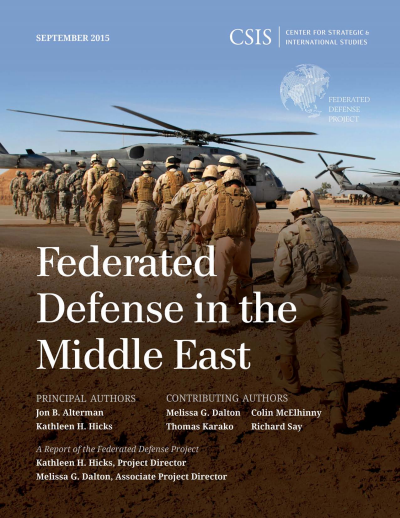
Federated Defense in the Middle East
Authors:
|
Publisher:
2015
Summary
This study examines the potential for a “federated defense” approach to U.S. action in the Middle East, the constraints to closer military cooperation in the region, and specific capability areas that would benefit from federated defense. Stabilizing the Middle East requires continued attention and investment from the United States and its global allies and partners. Federated defense involves building partner capabilities in a way that shares the burden of providing security in a more effective and efficient manner. Federated defense would, over time, create partner capabilities that augment and complement U.S. capabilities. Doing so requires identifying discrete areas of cooperation between the United States and its allies and partners that would leverage partner capabilities in pursuing common security objectives.
Search publication
Bibliographic data
Edition
1/2015
Copyright Year
2015
ISBN-Print
978-1-4422-5880-8
ISBN-Online
978-1-4422-5881-5
Publisher
Rowman & Littlefield, Lanham
Language
English
Pages
72
Product Type
Monograph
Table of contents
ChapterPages
Contents No access
Acknowledgments No access
1. Introduction No access Pages 1 - 5
2. Strategic Context No access Pages 6 - 9
3. Toward a New Regional Security Framework No access Pages 10 - 13
4. Focus Areas for Federated Defense No access Pages 14 - 41
5. Constraints to a Federated Approach No access Pages 42 - 56
6. Conclusion and Policy Recommendations No access Pages 57 - 64
Appendix. U.S., Allied, and Partner Forces, Bases, and Agreements No access Pages 65 - 69