, to see if you have full access to this publication.
Edited Book No access
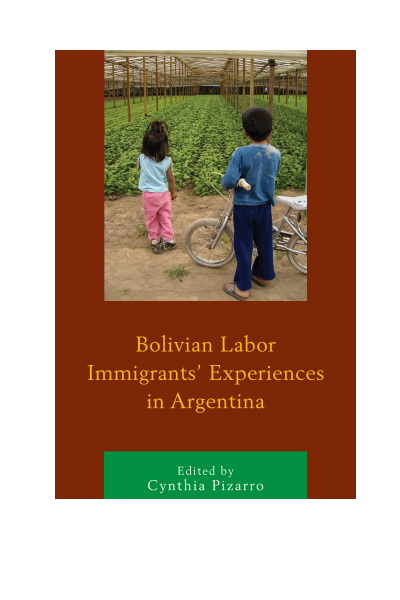
Bolivian Labor Immigrants' Experiences in Argentina
Editors:
Publisher:
2015
Summary
Bolivian Labor Immigrants' Experiences in Argentina examines the projects, trajectories, and everyday lives of Bolivian immigrants. It gathers research results of specialists who have studied the various ways in which these immigrants participate in certain labor markets in different urban and rural areas of Argentina. It covers many aspects, including future prospects, and the influence of the juxtaposition of various inequalities. It highlights the ways in which xenophobic mechanisms naturalize harsh working and living conditions.
The volume opens new horizons regarding novel migratory territories recently built by Bolivian laborers in Argentina. It collects the results of longstanding anthropology studies in different Provinces: Buenos Aires, Córdoba, Mendoza, Río Negro, Salta, and Tierra del Fuego. It refers to the trajectories of some Bolivians who had previously migrated to Spain and returned to Argentina after the European crisis in 2008. It also compares the south-south labor migration from Bolivia to Argentina, with the north-north one from Tajikistan to the Russian Federation.
Bolivian Labor Immigrants' Experiences in Argentina highlights key issues regarding the structural factors that pattern the integration of Bolivian immigrants in certain labor markets segmented by inequalities based on class, gender, “ethny-race”, nationality, and migratory and legal status. It provides ethnographic insights about the various ways in which Bolivian immigrants experience harsh living and working conditions. Finally, it helps to understand that these men and women are capable of dealing with oppressive situations and of performing particular ways of resistance.
The focus on labor migrants does not lead to a reductionist economic analysis of their trajectories, experiences, and prospects for the future. On the contrary, they are studied from a holistic anthropological approach, considering that migrants make sense of their territorial mobility from complex points of view anchored in their life experiences. Therefore, contributors consider that migration is a process that involves economic, social, cultural, and political dimensions
Keywords
Search publication
Bibliographic data
Edition
1/2015
Copyright Year
2015
ISBN-Print
978-1-4985-1416-3
ISBN-Online
978-1-4985-1417-0
Publisher
Lexington, Lanham
Language
English
Pages
147
Product Type
Edited Book
Table of contents
ChapterPages
Contents No access
List of Tables No access
Introduction No access
1 Migration and Labor Market in Horticulture No access Pages 1 - 16
2 Segmented Labor Market and Migratory Identity Constructions in Two Horticultural Areas in the Province of Salta No access Pages 17 - 36
3 Differential Migration Pathways of Bolivian Women Working in Horticultural Fields in Mendoza No access Pages 37 - 50
4 Intersection of Inequalities No access Pages 51 - 66
5 Moving across Argentina No access Pages 67 - 84
6 Practices of Resistance among Young Bolivian Immigrants Working in a Brick Factory in Córdoba No access Pages 85 - 104
7 Practices of Resistance of Latin American Immigrants to “New” Ways of Discrimination Exerted by Authorities and Citizens of Central Countries No access Pages 105 - 124
8 Trajectories and Lives of Labor Migrants in Perspective No access Pages 125 - 138