, to see if you have full access to this publication.
Monograph No access
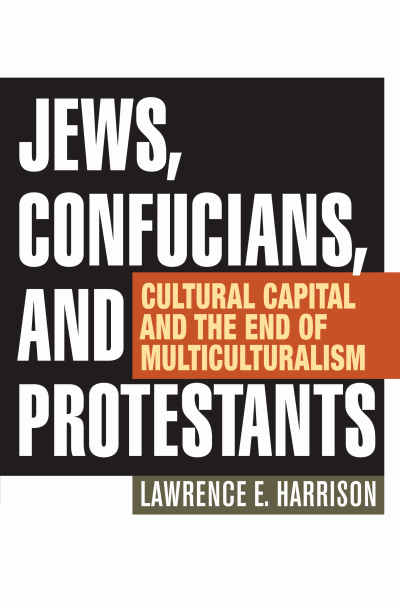
Jews, Confucians, and Protestants
Cultural Capital and the End of Multiculturalism
Authors:
Publisher:
2012
Summary
Multiculturalism—the belief that no culture is better or worse than any other; it is merely different—has come to dominate Western intellectual thought and to serve as a guide to domestic and foreign policy and development aid. But what if multiculturalism itself is flawed? What if some cultures are more prone to progress than others and more successful at creating the cultural capital that encourages democratic governance, social justice for all, and the elimination of poverty? In Jews, Confucians, and Protestants: Cultural Capital and the End of Multiculturalism, Lawrence E. Harrison takes the politically incorrect stand that not all cultures are created equally. Analyzing the performance of 117 countries, grouped by predominant religion, Harrison argues for the superiority of those cultures that emphasize Jewish, Confucian, or Protestant values. A concluding chapter outlines ways in which cultural change can substantially transform societies within a generation.