, to see if you have full access to this publication.
Monograph No access
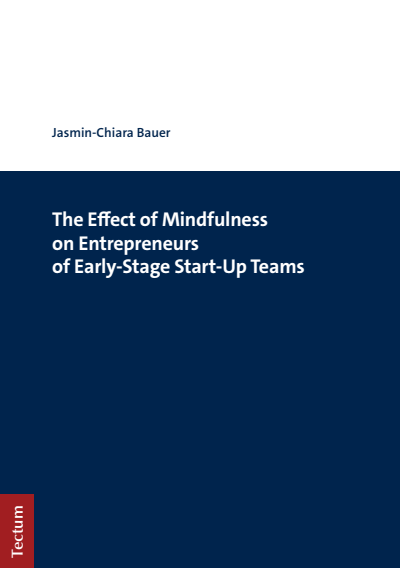
The Effect of Mindfulness on Entrepreneurs of Early-Stage Start-Up Teams
- Authors:
- Publisher:
- 2021
Summary
The concept of mindfulness has been extensively explored. However, it has not yet been associated with the concept of entrepreneurship. This thesis contributes to the literature on the impact of mindfulness meditation on founders. It aims to build on existing work by examining how entrepreneurs benefit from mindfulness practices while engaging in an entrepreneurial team. Hence, this study elaborates: To what extent does mind-fulness affect entrepreneurs in early-stage start-up teams? The analysis and evaluation of the results show that five main benefits of mindfulness meditation positively impact entrepreneurs. Further, it indicates how it can be used as a tool in management.
Keywords
Search publication
Bibliographic data
- Edition
- 1/2021
- Copyright Year
- 2021
- ISBN-Print
- 978-3-8288-4676-0
- ISBN-Online
- 978-3-8288-7757-3
- Publisher
- Tectum, Baden-Baden
- Language
- English
- Pages
- 174
- Product Type
- Monograph
Table of contents
ChapterPages
- Titelei/Inhaltsverzeichnis No access Pages I - XVI
- 1 Introduction No access Pages 1 - 4
- 2.1.1 Mental Health in the Workplace No access
- 2.1.2 Mental Health in Entrepreneurship No access
- 2.1.3 Resilience and Entrepreneurial Teams No access
- 2.2.1 Definition and History No access
- 2.2.2 Mindfulness in Practice No access
- 2.2.3 Mindfulness-based Meditation No access
- 2.2.4 Benefits of Mindfulness No access
- 2.2.5 Mindfulness within Organizations No access
- 2.2.6 App-Based Mindfulness Meditation No access
- 2.3 Mindfulness and Entrepreneurial Teams No access
- 3.1.1 Study Design No access
- 3.1.2 Participant Recruitment No access
- 3.1.3 Sample No access
- 3.2 Data Collection Tools No access
- 3.3 Data Coding and Analysis No access
- 4.1 Being Present No access
- 4.2 Stress Awareness No access
- 4.3 Focus No access
- 4.5 Social Relationships No access
- 4.6 Summary of Findings No access
- 4.7 Participant’s Meditation Patterns No access
- 5.1 Interpretation of Results No access
- 5.2 Limitations No access
- 5.3 Implications for Future Research and Application No access
- 6 Conclusion No access Pages 89 - 92
- 7 References No access Pages 93 - 108
- 8 Appendix A No access Pages 109 - 118
- Appendix B No access Pages 119 - 174
Bibliography (152 entries)
No match found. Try another term.
- 7 References Open Google Scholar DOI: 10.5771/9783828877573
- 7Mind. (2020a). Factsheet 7Mind. Retrieved from https://gallery.mailchimp.com/cfab50d96a04f91bcc0317cad/files/3895b9a9-0c8d-4574-a6c9-cc8b59e9f01e/Factsheet_2020.pdf Open Google Scholar DOI: 10.5771/9783828877573
- 7Mind. (2020b). Krankenkasse. Retrieved from https://www.7mind.de/krankenkasse Open Google Scholar DOI: 10.5771/9783828877573
- 7Mind. (2020c). Magazin. Retrieved from https://www.7mind.de/magazin Open Google Scholar DOI: 10.5771/9783828877573
- 7Mind. (2020d). Podcast. Retrieved from https://www.7mind.de/podcast Open Google Scholar DOI: 10.5771/9783828877573
- 7Mind. (2021). Meditation reinvented. Retrieved from https://www.7mind.de/en Open Google Scholar DOI: 10.5771/9783828877573
- Ahmad, S. Z., & Xavier, S. R. (2010). Stress and coping styles of entrepreneurs: A Malaysian survey. International Journal of Entrepreneurship, 14, 25. Open Google Scholar DOI: 10.5771/9783828877573
- Altman, D. (2010). The mindfulness code: Keys for overcoming stress, anxiety, fear, and unhappiness: New World Library. Open Google Scholar DOI: 10.5771/9783828877573
- Amason, A. C., & Sapienza, H. J. (1997). The effects of top management team size and interaction norms on cognitive and affective conflict. Journal of management, 23(4), 495–516. Open Google Scholar DOI: 10.5771/9783828877573
- Amason, A. C., Shrader, R. C., & Tompson, G. H. (2006). Newness and novelty: Relating top management team composition to new venture performance. Journal of business venturing, 21(1), 125–148. Open Google Scholar DOI: 10.5771/9783828877573
- Baer, R. A. (2003). Mindfulness training as a clinical intervention: A conceptual and empirical review. Clinical psychology: Science and practice, 10(2), 125–143. Open Google Scholar DOI: 10.5771/9783828877573
- Bailey, B. P., & Konstan, J. A. (2006). On the need for attention-aware systems: Measuring effects of interruption on task performance, error rate, and affective state. Computers in human behavior, 22(4), 685–708. Open Google Scholar DOI: 10.5771/9783828877573
- Baren, B. v., & Kohtes, P. J. (2020). Zen for Leadership. Retrieved from https://zenforleadership.com/ Open Google Scholar DOI: 10.5771/9783828877573
- Barlow, D. H. (2007). Principles and practice of stress management: Guilford Press. Open Google Scholar DOI: 10.5771/9783828877573
- Baron, R. A., Franklin, R. J., & Hmieleski, K. M. (2016). Why entrepreneurs often experience low, not high, levels of stress: The joint effects of selection and psychological capital. Journal of management, 42(3), 742–768. Open Google Scholar DOI: 10.5771/9783828877573
- Baumeister, R. F., & Leary, M. R. (1995). The need to belong: desire for interpersonal attachments as a fundamental human motivation. Psychological bulletin, 117(3), 497. Open Google Scholar DOI: 10.5771/9783828877573
- Beck, A. T. (1979). Cognitive therapy of depression: Guilford press. Open Google Scholar DOI: 10.5771/9783828877573
- Benz, M., & Frey, B. S. (2004). Being independent raises happiness at work. Swedish economic policy review, 11(2), 95–134. Open Google Scholar DOI: 10.5771/9783828877573
- Bishop, S. R. (2002). What do we really know about mindfulness-based stress reduction? Psychosomatic medicine, 64(1), 71–83. Open Google Scholar DOI: 10.5771/9783828877573
- Bishop, S. R., Lau, M., Shapiro, S., Carlson, L., Anderson, N. D., Carmody, J., . . . Velting, D. (2004). Mindfulness: A proposed operational definition. Clinical psychology: Science and practice, 11(3), 230–241. Open Google Scholar DOI: 10.5771/9783828877573
- Blatt, R. (2009). Resilience in entrepreneurial teams: Developing the capacity to pull through. Frontiers of Entrepreneurship Research, 29(11), 1. Open Google Scholar DOI: 10.5771/9783828877573
- Block‐Lerner, J., Adair, C., Plumb, J. C., Rhatigan, D. L., & Orsillo, S. M. (2007). The case for mindfulness‐based approaches in the cultivation of empathy: Does nonjudgmental, present‐moment awareness increase capacity for perspective‐taking and empathic concern? Journal of marital and family therapy, 33(4), 501–516. Open Google Scholar DOI: 10.5771/9783828877573
- Bowen, S., Witkiewitz, K., Dillworth, T. M., Chawla, N., Simpson, T. L., Ostafin, B. D., . . . Marlatt, G. A. (2006). Mindfulness meditation and substance use in an incarcerated population. Psychology of addictive behaviors, 20(3), 343. Open Google Scholar DOI: 10.5771/9783828877573
- Brown, K. W., & Ryan, R. M. (2003). The benefits of being present: mindfulness and its role in psychological well-being. Journal of personality and social psychology, 84(4), 822. Open Google Scholar DOI: 10.5771/9783828877573
- Buttner, E. H. (1992). Entrepreneurial stress: is it hazardous to your health? Journal of managerial issues, 223–240. Open Google Scholar DOI: 10.5771/9783828877573
- Carlson, L. E., Speca, M., Patel, K. D., & Goodey, E. (2003). Mindfulness-based stress reduction in relation to quality of life, mood, symptoms of stress, and immune parameters in breast and prostate cancer outpatients. Psychosomatic medicine, 65(4), 571–581. Open Google Scholar DOI: 10.5771/9783828877573
- Carroll, M. (2006). Awake at Work: 35 Practical Buddhist Principles for Discovering Clarity and Balance in the Mids t of Work’s Chaos: Shambhala Publications. Open Google Scholar DOI: 10.5771/9783828877573
- CB Insights. (2019). The Top 20 Reasons Startups Fail. Retrieved from https://www.cbinsights.com/research/startup-failure-reasons-top/ Open Google Scholar DOI: 10.5771/9783828877573
- Center for Mindfulness in Medicine, H. C., and Society, University of Massachusetts, & School., M. (2021). Stress reduction program. Retrieved from https://www.umassmemorialhealthcare.org/umass-memorial-center-mindfulness Open Google Scholar DOI: 10.5771/9783828877573
- Chiesa, A., & Serretti, A. (2009). Mindfulness-based stress reduction for stress management in healthy people: a review and meta-analysis. The journal of alternative and complementary medicine, 15(5), 593–600. Open Google Scholar DOI: 10.5771/9783828877573
- Chiesa, A., & Serretti, A. (2010). A systematic review of neurobiological and clinical features of mindfulness meditations. Psychological medicine, 40(8), 1239. Open Google Scholar DOI: 10.5771/9783828877573
- Chinchilla, A., & Garcia, M. (2017). Social entrepreneurship intention: Mindfulness towards a duality of objectives. Humanistic Management Journal, 1(2), 205–214. Open Google Scholar DOI: 10.5771/9783828877573
- Chryssides, G. D. (2003). Buddhism: Introducing the Buddhist Experience. Donald W. Mitchell. Oxford University Press, New York 2002. xvi, 368 pp.£ 16.99 ISBN 0 19 513952 6. Buddhist Studies Review, 20(2), 217–219. Open Google Scholar DOI: 10.5771/9783828877573
- Cogliser, C. C., & Brigham, K. H. (2004). The intersection of leadership and entrepreneurship: Mutual lessons to be learned. The Leadership Quarterly, 15(6), 771–799. Open Google Scholar DOI: 10.5771/9783828877573
- conference, M. (2020). MIND Conference. Retrieved from http://www.mind-conference.com/ Open Google Scholar DOI: 10.5771/9783828877573
- Converse, S., Cannon-Bowers, J., & Salas, E. (1993). Shared mental models in expert team decision making. Individual and group decision making: Current issues, 221, 221–246. Open Google Scholar DOI: 10.5771/9783828877573
- Cooper, C. L., & Marshall, J. (1976). Occupational sources of stress: A review of the literature relating to coronary heart disease and mental ill health. Journal of occupational psychology, 49(1), 11–28. Open Google Scholar DOI: 10.5771/9783828877573
- Creswell, J. D., Myers, H. F., Cole, S. W., & Irwin, M. R. (2009). Mindfulness meditation training effects on CD4+ T lymphocytes in HIV-1 infected adults: A small randomized controlled trial. Brain, behavior, and immunity, 23(2), 184–188. Open Google Scholar DOI: 10.5771/9783828877573
- Cullen, M. (2011). Mindfulness-based interventions: An emerging phenomenon. Mindfulness, 2(3), 186–193. Open Google Scholar DOI: 10.5771/9783828877573
- Cunningham, J. B., & Lischeron, J. (1991). Defining entrepreneurship. Journal of small business management, 29(1), 45–61. Open Google Scholar DOI: 10.5771/9783828877573
- Dane, E. (2011). Paying attention to mindfulness and its effects on task performance in the workplace. Journal of management, 37(4), 997–1018. Open Google Scholar DOI: 10.5771/9783828877573
- Davids, T. W. R., & Stede, W. (1993). Pali-english dictionary: Motilal Banarsidass Publ. Open Google Scholar DOI: 10.5771/9783828877573
- Davidson, R. J. (2010). Empirical explorations of mindfulness: conceptual and methodological conundrums. Open Google Scholar DOI: 10.5771/9783828877573
- Davis, M. C. (2009). Building emotional resilience to promote health. American Journal of Lifestyle Medicine, 3(1_suppl), 60S–63S. Open Google Scholar DOI: 10.5771/9783828877573
- Davydov, D. M., Stewart, R., Ritchie, K., & Chaudieu, I. (2010). Resilience and mental health. Clinical psychology review, 30(5), 479–495. Open Google Scholar DOI: 10.5771/9783828877573
- Delgado, L. C., Guerra, P., Perakakis, P., Vera, M. N., del Paso, G. R., & Vila, J. (2010). Treating chronic worry: Psychological and physiological effects of a training programme based on mindfulness. Behaviour research and therapy, 48(9), 873–882. Open Google Scholar DOI: 10.5771/9783828877573
- Delmonte, M. M. (1990). The relevance of meditation to clinical practice: An overview. Applied Psychology, 39(3), 331–354. Open Google Scholar DOI: 10.5771/9783828877573
- Edmondson, A. C., & McManus, S. E. (2007). Methodological fit in management field research. Academy of management Review, 32(4), 1246–1264. Open Google Scholar DOI: 10.5771/9783828877573
- Eisenhardt, K. M. (1989). Building theories from case study research. Academy of management Review, 14(4), 532–550. Open Google Scholar DOI: 10.5771/9783828877573
- Eisenhardt, K. M., & Graebner, M. E. (2007). Theory building from cases: Opportunities and challenges. Academy of management journal, 50(1), 25–32. Open Google Scholar DOI: 10.5771/9783828877573
- Ellis, A., & Dryden, W. (2007). The practice of rational emotive behavior therapy: Springer publishing company. Open Google Scholar DOI: 10.5771/9783828877573
- Falkenström, F., Solbakken, O. A., Möller, C., Lech, B., Sandell, R., & Holmqvist, R. (2014). Reflective functioning, affect consciousness, and mindfulness: Are these different functions? Psychoanalytic psychology, 31(1), 26. Open Google Scholar DOI: 10.5771/9783828877573
- Feagin, J. R., Orum, A. M., & Sjoberg, G. (1991). A case for the case study: UNC Press Books. Open Google Scholar DOI: 10.5771/9783828877573
- Fernet, C., Torrès, O., Austin, S., & St-Pierre, J. (2016). The psychological costs of owning and managing an SME: Linking job stressors, occupational loneliness, entrepreneurial orientation, and burnout. Burnout Research, 3(2), 45–53. Open Google Scholar DOI: 10.5771/9783828877573
- Frese, M., & Gielnik, M. M. (2014). The psychology of entrepreneurship. Annu. Rev. Organ. Psychol. Organ. Behav., 1(1), 413–438. Open Google Scholar DOI: 10.5771/9783828877573
- Gioia, D. A., Corley, K. G., & Hamilton, A. L. (2013). Seeking qualitative rigor in inductive research: Notes on the Gioia methodology. Organizational research methods, 16(1), 15–31. Open Google Scholar DOI: 10.5771/9783828877573
- Glaser, B. G., & Strauss, A. L. (1967). The discovery of grounded theory: strategies for qualitative theory. New Brunswick: Aldine Transaction. Open Google Scholar DOI: 10.5771/9783828877573
- Glaser, B. G., & Strauss, A. L. (2017). Discovery of grounded theory: Strategies for qualitative research: Routledge. Open Google Scholar DOI: 10.5771/9783828877573
- Glomb, T. M., Duffy, M. K., Bono, J. E., & Yang, T. (2011). Mindfulness at work. In Research in personnel and human resources management: Emerald Group Publishing Limited. Open Google Scholar DOI: 10.5771/9783828877573
- Goleman, D., & Davidson, R. (2017). The science of meditation: How to change your brain, mind and body: Penguin UK. Open Google Scholar DOI: 10.5771/9783828877573
- Google. (2021). mindfulness. Retrieved from https://www.google.de/search?sxsrf=ALeKk01-v2YwLVzONj2S87bb8GWwZ3S_3Q%3A1615241139637&ei=s59GYOC4JoaX8gLwr5WICg&q=mindfulness Open Google Scholar DOI: 10.5771/9783828877573
- Groesbeck, R., & Van Aken Eileen, M. (2001). Enabling team wellness: monitoring and maintaining teams after start‐up. Team Performance Management: An International Journal, 7(1/2), 11–20. Open Google Scholar DOI: 10.5771/9783828877573
- Grossman, P., Niemann, L., Schmidt, S., & Walach, H. (2004). Mindfulness-based stress reduction and health benefits: A meta-analysis. Journal of psychosomatic research, 57(1), 35–43. Open Google Scholar DOI: 10.5771/9783828877573
- Grünert, A. (2020). Die 10 besten Meditationsapps. Retrieved from https://dickerbuddha.de/meditation/meditation-app/ Open Google Scholar DOI: 10.5771/9783828877573
- Gunaratana, H. (2012). The four foundations of mindfulness in plain English: Simon and Schuster. Open Google Scholar DOI: 10.5771/9783828877573
- Harper, D. A. (2008). Towards a theory of entrepreneurial teams. Journal of business venturing, 23(6), 613–626. Open Google Scholar DOI: 10.5771/9783828877573
- Harrison, R. (1985). The person-environment fit model and the study of job stress. Human stress and cognition in organization: An integrated perspective. Open Google Scholar DOI: 10.5771/9783828877573
- Hartfort, T. (2020). Early Stage Startup. Retrieved from https://www.thehartford.com/business-insurance/strategy/how-to-start-a-business/early-stage-startup Open Google Scholar DOI: 10.5771/9783828877573
- Häusser, J. A., Mojzisch, A., Niesel, M., & Schulz-Hardt, S. (2010). Ten years on: A review of recent research on the Job Demand–Control (-Support) model and psychological well-being. Work & Stress, 24(1), 1–35. Open Google Scholar DOI: 10.5771/9783828877573
- Hedden, S. L., Kennet, J., Lipari, R., Medley, G., & Tice, P. (2014). Behavioral Health Trends in the United States: Results from the 2014 National Survey on Drug Use and Health. Open Google Scholar DOI: 10.5771/9783828877573
- Hermann, C. (2020). Meditation am Arbeitsplatz – Welche Effekte hat die achtsamkeitsbasierte Meditationsapp „7Mind“ bei Berufstätigen in Hinblick auf ihr Stresserleben und ihre Arbeitszufriedenheit? (Bachelor). Hochschule Hamm-Lippstadt Open Google Scholar DOI: 10.5771/9783828877573
- Hölzel, B. K., Carmody, J., Vangel, M., Congleton, C., Yerramsetti, S. M., Gard, T., & Lazar, S. W. (2011). Mindfulness practice leads to increases in regional brain gray matter density. Psychiatry research: neuroimaging, 191(1), 36–43. Open Google Scholar DOI: 10.5771/9783828877573
- House, J. S., Wells, J. A., Landerman, L. R., McMichael, A. J., & Kaplan, B. H. (1979). Occupational stress and health among factory workers. Journal of Health and Social Behavior, 139–160. Open Google Scholar DOI: 10.5771/9783828877573
- Hülsheger, U. R., Alberts, H. J., Feinholdt, A., & Lang, J. W. (2013). Benefits of mindfulness at work: the role of mindfulness in emotion regulation, emotional exhaustion, and job satisfaction. Journal of applied psychology, 98(2), 310. Open Google Scholar DOI: 10.5771/9783828877573
- Hunt, E. (2021). Headspace Guide to Meditation: can Netflix deliver enlightenment in 20 minutes? Retrieved from https://www.theguardian.com/tv-and-radio/2021/jan/08/headspace-guide-to-meditation-netflix-mindfulness Open Google Scholar DOI: 10.5771/9783828877573
- Insel, T. R. (2008). Assessing the economic costs of serious mental illness. In: Am Psychiatric Assoc. Open Google Scholar DOI: 10.5771/9783828877573
- Institute, S. I. Y. L. (2021). Our Story. Retrieved from https://siyli.org/about Open Google Scholar DOI: 10.5771/9783828877573
- Intel. (2013). Better Engineering through Meditation? Retrieved from https://newsroom.intel.com/editorials/better-engineering-through-meditation-mindfulness/#gs.9b4w68 Open Google Scholar DOI: 10.5771/9783828877573
- Jackson, S. E., Brett, J. F., Sessa, V. I., Cooper, D. M., Julin, J. A., & Peyronnin, K. (1991). Some differences make a difference: Individual dissimilarity and group heterogeneity as correlates of recruitment, promotions, and turnover. Journal of applied psychology, 76(5), 675. Open Google Scholar DOI: 10.5771/9783828877573
- Jain, S., Shapiro, S. L., Swanick, S., Roesch, S. C., Mills, P. J., Bell, I., & Schwartz, G. E. (2007). A randomized controlled trial of mindfulness meditation versus relaxation training: effects on distress, positive states of mind, rumination, and distraction. Annals of behavioral medicine, 33(1), 11–21. Open Google Scholar DOI: 10.5771/9783828877573
- Kabat-Zinn, J. (1982). An outpatient program in behavioral medicine for chronic pain patients based on the practice of mindfulness meditation: Theoretical considerations and preliminary results. General hospital psychiatry, 4(1), 33–47. Open Google Scholar DOI: 10.5771/9783828877573
- Kabat-Zinn, J. (1994). Where you go, there you are: Mindfulness meditation in everyday life. New York, NY: Hyperion. Laranjo, J., Bernier, A., & Meins, E.(2008). Associations between maternal mind-mindedness and infant attachment security: Investigating the mediating role of maternal sensitivity. Infant Behavior and Development, 31, 688–695. Open Google Scholar DOI: 10.5771/9783828877573
- Kabat-Zinn, J. (2012). Mindfulness for beginners: Reclaiming the present moment—and your life: Sounds True. Open Google Scholar DOI: 10.5771/9783828877573
- Kabat-Zinn, J. (2013). Gesund durch Meditation: das große Buch der Selbstheilung mit MBSR: OW Barth eBook. Open Google Scholar DOI: 10.5771/9783828877573
- Kabat-Zinn, J., & Hanh, T. N. (2009). Full catastrophe living: Using the wisdom of your body and mind to face stress, pain, and illness: Delta. Open Google Scholar DOI: 10.5771/9783828877573
- Kahn, R. L., Wolfe, D. M., Quinn, R. P., Snoek, J. D., & Rosenthal, R. A. (1964). Organizational stress: Studies in role conflict and ambiguity. Open Google Scholar DOI: 10.5771/9783828877573
- Kaluza, G. (2014). Stress und Stressbewältigung. Erfahrungsheilkunde, 63(05), 261–267. Open Google Scholar DOI: 10.5771/9783828877573
- Kamm, J. B., Shuman, J. C., Seeger, J. A., & Nurick, A. J. (1990). Entrepreneurial teams in new venture creation: A research agenda. Entrepreneurship theory and practice, 14(4), 7–17. Open Google Scholar DOI: 10.5771/9783828877573
- Kreitzer, M. J., Gross, C. R., Ye, X., Russas, V., & Treesak, C. (2005). Longitudinal impact of mindfulness meditation on illness burden in solid-organ transplant recipients. Progress in Transplantation, 15(2), 166–172. Open Google Scholar DOI: 10.5771/9783828877573
- Kristeller, J. L., Baer, R. A., & Quillian-Wolever, R. (2006). Mindfulness-based approaches to eating disorders. Mindfulness-based treatment approaches: Clinician’s guide to evidence base and applications, 75. Open Google Scholar DOI: 10.5771/9783828877573
- Kuckertz, A., Berger, E. S., & Prochotta, A. (2020). Misperception of entrepreneurship and its consequences for the perception of entrepreneurial failure–the German case. International Journal of Entrepreneurial Behavior & Research. Open Google Scholar DOI: 10.5771/9783828877573
- Kuntze, E. (2018). Stress am Arbeitsplatz: Die große Studie zum Thema Stress. Open Google Scholar DOI: 10.5771/9783828877573
- Lazarus, R. S., & Folkman, S. (1984). Stress, appraisal, and coping: Springer publishing company. Open Google Scholar DOI: 10.5771/9783828877573
- Leadership, I. f. M. (2020). Institute for Mindful Leadership – Research. Retrieved from https://instituteformindfulleadership.org/research/ Open Google Scholar DOI: 10.5771/9783828877573
- Levy, D. M., Wobbrock, J. O., Kaszniak, A. W., & Ostergren, M. (2012). The effects of mindfulness meditation training on multitasking in a high-stress information environment. In Proceedings of Graphics Interface 2012 (pp. 45–52). Open Google Scholar DOI: 10.5771/9783828877573
- Loucks, E. B., Britton, W. B., Howe, C. J., Eaton, C. B., & Buka, S. L. (2015). Positive associations of dispositional mindfulness with cardiovascular health: The New England Family Study. International journal of behavioral medicine, 22(4), 540–550. Open Google Scholar DOI: 10.5771/9783828877573
- Masten, A. S., & Reed, M.-G. J. (2002). Resilience in development. Handbook of positive psychology, 74, 88. Open Google Scholar DOI: 10.5771/9783828877573
- McCraty, R., & Childre, D. (2010). Coherence: bridging personal, social, and global health. Altern Ther Health Med, 16(4), 10–24. Open Google Scholar DOI: 10.5771/9783828877573
- Mezirow, J. (1990). How critical reflection triggers transformative learning. Fostering critical reflection in adulthood, 1(20), 1–6. Open Google Scholar DOI: 10.5771/9783828877573
- Miles, M. B., & Huberman, A. M. (1994). Qualitative data analysis: An expanded sourcebook: sage. Open Google Scholar DOI: 10.5771/9783828877573
- Möltner, H., Leve, J., & Esch, T. (2018). Burnout-Prävention und mobile Achtsamkeit: Evaluation eines appbasierten Gesundheitstrainings bei Berufstätigen. Das Gesundheitswesen, 57(03), 295–300. Open Google Scholar DOI: 10.5771/9783828877573
- Nguyen, H., & Sawang, S. (2016). Juggling or struggling? Work and family interface and its buffers among small business owners. Entrepreneurship Research Journal, 6(2), 207–246. Open Google Scholar DOI: 10.5771/9783828877573
- NIH. (2020). Mental Illness. Retrieved from https://www.nimh.nih.gov/health/statistics/mental-illness.shtml Open Google Scholar DOI: 10.5771/9783828877573
- Nyanaponika, T. (1971). The power of mindfulness: Buddhist publication society. Open Google Scholar DOI: 10.5771/9783828877573
- Pandey, A., Chandwani, R., & Navare, A. (2018). How can mindfulness enhance moral reasoning? An examination using business school students. Business Ethics: A European Review, 27(1), 56–71. Open Google Scholar DOI: 10.5771/9783828877573
- Patton, M. (1990). Purposeful sampling. Qualitative evaluation and research methods, 2, 169–186. Open Google Scholar DOI: 10.5771/9783828877573
- Piet, J., & Hougaard, E. (2011). The effect of mindfulness-based cognitive therapy for prevention of relapse in recurrent major depressive disorder: a systematic review and meta-analysis. Clinical psychology review, 31(6), 1032–040. Open Google Scholar DOI: 10.5771/9783828877573
- Plaza, I., Demarzo, M. M. P., Herrera-Mercadal, P., & García-Campayo, J. (2013). Mindfulness-based mobile applications: literature review and analysis of current features. JMIR mHealth and uHealth, 1(2), e24. Open Google Scholar DOI: 10.5771/9783828877573
- Podsakoff, N. P., LePine, J. A., & LePine, M. A. (2007). Differential challenge stressor-hindrance stressor relationships with job attitudes, turnover intentions, turnover, and withdrawal behavior: a meta-analysis. Journal of applied psychology, 92(2), 438. Open Google Scholar DOI: 10.5771/9783828877573
- Purser, R., & Loy, D. (2013). Beyond mcmindfulness. Huffington post, 1(7), 13. Open Google Scholar DOI: 10.5771/9783828877573
- Quick, J. C., & Quick, J. D. (1984). Organizational stress and preventive management: McGraw-Hill College. Open Google Scholar DOI: 10.5771/9783828877573
- Rieken, B., Schar, M., Shapiro, S., Gilmartin, S., & Sheppard, S. (2017). Exploring the relationship between mindfulness and innovation in engineering students. Paper presented at the Proceedings of the American Society for Engineering Education Annual Conference, June 25–28. Columbus, OH. Open Google Scholar DOI: 10.5771/9783828877573
- Rieken, B., Shapiro, S., Gilmartin, S., & Sheppard, S. (2019). How Mindfulness Can Help Engineers Solve Problems. Harvard Business Review. Harvard business review. Open Google Scholar DOI: 10.5771/9783828877573
- Rizzo, J. R., House, R. J., & Lirtzman, S. I. (1970). Role conflict and ambiguity in complex organizations. Administrative science quarterly, 150–163. Open Google Scholar DOI: 10.5771/9783828877573
- Ronnefeldt, M., Leve, J., & 7Mind. (2018). Von Null auf Omm: Achtsamkeitsübungen für weniger Stress und mehr Gelassenheit: Das Buch zu Deutschlands erfolgreichster Meditations-App: mvg Verlag. Open Google Scholar DOI: 10.5771/9783828877573
- Ruef, M., Aldrich, H. E., & Carter, N. M. (2003). The structure of founding teams: Homophily, strong ties, and isolation among US entrepreneurs. American sociological review, 195–222. Open Google Scholar DOI: 10.5771/9783828877573
- Saillard, E. K. (2011). Systematic versus interpretive analysis with two CAQDAS packages: NVivo and MAXQDA. Paper presented at the Forum Qualitative Sozialforschung/Forum: Qualitative Social Research. Open Google Scholar DOI: 10.5771/9783828877573
- Sajjad, A., & Shahbaz, W. (2020). Mindfulness and social sustainability: An integrative review. Social Indicators Research, 1–22. Open Google Scholar DOI: 10.5771/9783828877573
- Salovey, P., & Mayer, J. D. (1990). Emotional intelligence. Imagination, cognition and personality, 9(3), 185–211. Open Google Scholar DOI: 10.5771/9783828877573
- SAP. (2016). Das Achtsamkeitstraining Search Inside Yourself hilft Mitarbeitern, auch unter Stress den Blick für das Wesentliche nicht zu verlieren. Retrieved from https://news.sap.com/germany/2016/07/klar-im-kopf/ Open Google Scholar DOI: 10.5771/9783828877573
- Sarasvathy, S. D. (2001). Causation and effectuation: Toward a theoretical shift from economic inevitability to entrepreneurial contingency. Academy of management Review, 26(2), 243–263. Open Google Scholar DOI: 10.5771/9783828877573
- Schnall, P. L., Dobson, M., Rosskam, E., & Elling, R. H. (2018). Unhealthy work: Causes, consequences, cures: Routledge. Open Google Scholar DOI: 10.5771/9783828877573
- Segal, Z. V., Williams, M., & Teasdale, J. (2018). Mindfulness-based cognitive therapy for depression: Guilford Publications. Open Google Scholar DOI: 10.5771/9783828877573
- Selye, H. (1950). Stress. Montreal: Acta, 1955. Open Google Scholar DOI: 10.5771/9783828877573
- Selye, H. (1976). Stress without distress. In Psychopathology of human adaptation (pp. 137–146): Springer. Open Google Scholar DOI: 10.5771/9783828877573
- Shapiro, S. L., Carlson, L. E., Astin, J. A., & Freedman, B. (2006). Mechanisms of mindfulness. Journal of clinical psychology, 62(3), 373–386. Open Google Scholar DOI: 10.5771/9783828877573
- Shepherd, D. A., Wiklund, J., & Haynie, J. M. (2009). Moving forward: Balancing the financial and emotional costs of business failure. Journal of business venturing, 24(2), 134–148. Open Google Scholar DOI: 10.5771/9783828877573
- Shonin, E., Van Gordon, W., & Griffiths, M. (2013). Mindfulness-based interventions: Towards mindful clinical integration. Frontiers in Psychology, 4, 194. Open Google Scholar DOI: 10.5771/9783828877573
- Siegel, R. D. (2009). The mindfulness solution: Everyday practices for everyday problems: Guilford Press. Open Google Scholar DOI: 10.5771/9783828877573
- Smallwood, J., & Schooler, J. W. (2006). The restless mind. Psychological bulletin, 132(6), 946. Open Google Scholar DOI: 10.5771/9783828877573
- Statista. (2020). Statistiken zum Thema Stress. Retrieved from https://de.statista.com/themen/236/stress/ Open Google Scholar DOI: 10.5771/9783828877573
- Stephan, U. (2018). Entrepreneurs’ mental health and well-being: A review and research agenda. Academy of Management Perspectives, 32(3), 290–322. Open Google Scholar DOI: 10.5771/9783828877573
- Stephan, U., & Roesler, U. (2010). Health of entrepreneurs versus employees in a national representative sample. Journal of occupational and organizational psychology, 83(3), 717–738. Open Google Scholar DOI: 10.5771/9783828877573
- Strauss, A., & Corbin, J. (1998). Basics of qualitative research: Procedures and techniques for developing grounded theory. In: Thousand Oaks, CA: Sage. Open Google Scholar DOI: 10.5771/9783828877573
- Suddaby, R. (2006). From the editors: What grounded theory is not. In: Academy of Management Briarcliff Manor, NY 10510. Open Google Scholar DOI: 10.5771/9783828877573
- Sullivan, M. J., Wood, L., Terry, J., Brantley, J., Charles, A., McGee, V., . . . Bosworth, H. B. (2009). The Support, Education, and Research in Chronic Heart Failure Study (SEARCH): a mindfulness-based psychoeducational intervention improves depression and clinical symptoms in patients with chronic heart failure. American heart journal, 157(1), 84–90. Open Google Scholar DOI: 10.5771/9783828877573
- Sullivan, R. (2000). Entrepreneurial learning and mentoring. International Journal of Entrepreneurial Behavior & Research. Open Google Scholar DOI: 10.5771/9783828877573
- Tan, C., Goleman, D., & Kabat-Zinn, J. (2012). Search Inside Yourself: The Unexpected Path to Achieving Success. Happiness (and World Peace): HarperCollins. Open Google Scholar DOI: 10.5771/9783828877573
- Taris, T. W., Geurts, S. A., Schaufeli, W. B., Blonk, R. W., & Lagerveld, S. E. (2008). All day and all of the night: The relative contribution of two dimensions of workaholism to well-being in self-employed workers. Work & Stress, 22(2), 153–165. Open Google Scholar DOI: 10.5771/9783828877573
- Teasdale, J. D., Moore, R. G., Hayhurst, H., Pope, M., Williams, S., & Segal, Z. V. (2002). Metacognitive awareness and prevention of relapse in depression: empirical evidence. Journal of consulting and clinical psychology, 70(2), 275. Open Google Scholar DOI: 10.5771/9783828877573
- Thomas, D. R. (2006). A general inductive approach for analyzing qualitative evaluation data. American journal of evaluation, 27(2), 237–246. Open Google Scholar DOI: 10.5771/9783828877573
- UnternehmerTUM. (2020). Business Plan Basic Seminar Retrieved from https://www.techtalents.io/business-plan-basic-seminar/ Open Google Scholar DOI: 10.5771/9783828877573
- Walsh, J. J., Balint, M. G., SJ, D. R. S., Fredericksen, L. K., & Madsen, S. (2009). Predicting individual differences in mindfulness: The role of trait anxiety, attachment anxiety and attentional control. Personality and Individual Differences, 46(2), 94–99. Open Google Scholar DOI: 10.5771/9783828877573
- Way, B. M., Creswell, J. D., Eisenberger, N. I., & Lieberman, M. D. (2010). Dispositional mindfulness and depressive symptomatology: Correlations with limbic and self-referential neural activity during rest. Emotion, 10(1), 12. Open Google Scholar DOI: 10.5771/9783828877573
- Weber, R. P. (1990). Basic content analysis: Sage. Open Google Scholar DOI: 10.5771/9783828877573
- Weick, K. E. (1993). The collapse of sensemaking in organizations: The Mann Gulch disaster. Administrative science quarterly, 628–652. Open Google Scholar DOI: 10.5771/9783828877573
- Weick, K. E., & Sutcliffe, K. M. (2006). Mindfulness and the quality of organizational attention. Organization science, 17(4), 514–524. Open Google Scholar DOI: 10.5771/9783828877573
- WHO, W. H. O. (2018). Mental health: strengthening our response. Retrieved from https://www.who.int/news-room/fact-sheets/detail/mental-health-strengthening-our-response Open Google Scholar DOI: 10.5771/9783828877573
- Wilson, T. D., Centerbar, D. B., Kermer, D. A., & Gilbert, D. T. (2005). The pleasures of uncertainty: prolonging positive moods in ways people do not anticipate. Journal of personality and social psychology, 88(1), 5. Open Google Scholar DOI: 10.5771/9783828877573
- Witek-Janusek, L., Albuquerque, K., Chroniak, K. R., Chroniak, C., Durazo-Arvizu, R., & Mathews, H. L. (2008). Effect of mindfulness based stress reduction on immune function, quality of life and coping in women newly diagnosed with early stage breast cancer. Brain, behavior, and immunity, 22(6), 969–981. Open Google Scholar DOI: 10.5771/9783828877573
- Wright, K. (2018). How companies are learning to talk about mental health, and how your company can too. Mental Health in the workplace Retrieved from https://www.headspace.com/blog/2018/04/11/mental-health-in-the-workplace/ Open Google Scholar DOI: 10.5771/9783828877573
- Zimbardo, P. G., & Gerrig, R. J. (2004). Psychologie (16. Aufl.). München, Boston u. a: Pearson. Open Google Scholar DOI: 10.5771/9783828877573