, to see if you have full access to this publication.
Monograph No access
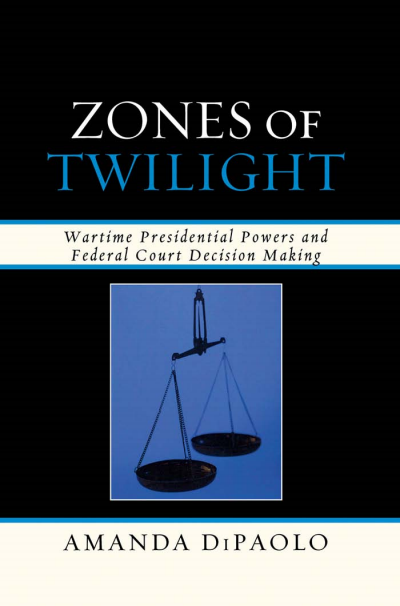
Zones of Twilight
Wartime Presidential Powers and Federal Court Decision Making
Authors:
Publisher:
2009
Summary
The Bill of Rights was designed to protect the American public from encroachments of liberty by the federal government. During times of war, the president often spearheads efforts to limit rights in the name of national security. When these cases make their way through the federal courts system, it is expected that the judiciary would use rights-based language in their adjudication of cases dealing with such rights-based claims. Zones of Twilight shows that the courts actually use the separation of powers to decide these cases. In other words, the courts look to see if Congress has authorized the president to limit the liberties in question. More often than not, if Congress is on board, so are the federal courts. Although the common conception is that the courts give the president a blank check during war, it is in fact Congress that has received that blank check. Zones of Twilight looks at four reoccurring issues during times of war where the courts have had to decide cases where the executive has limited individual freedoms: military detentions, warrantless electronic surveillance, emergency economic powers, and free speech.
Search publication
Bibliographic data
Edition
1/2009
Copyright Year
2009
ISBN-Print
978-0-7391-3833-5
ISBN-Online
978-0-7391-3835-9
Publisher
Lexington, Lanham
Language
English
Pages
249
Product Type
Monograph
Table of contents
ChapterPages
Contents No access
Preface No access
Chapter One Introduction No access Pages 1 - 18
Chapter Two Guiding War Powers Judicial Decision Making No access Pages 19 - 44
Chapter Three Military Detentions No access Pages 45 - 86
Chapter Four Warrantless Electronic Surveillance No access Pages 87 - 126
Chapter Five Economic Property Rights No access Pages 127 - 160
Chapter Six Free Speech No access Pages 161 - 198
Conclusion No access Pages 199 - 216
Cases No access Pages 217 - 224
Bibliography No access Pages 225 - 242
Index No access Pages 243 - 248
About the Author No access Pages 249 - 249
Similar publications
from the topics "Recht allgemein, Übergreifende Werke und Sammlungen"