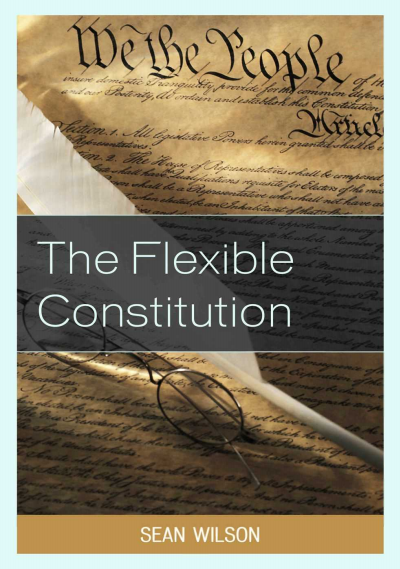
The Flexible Constitution
- Authors:
- Publisher:
- 2012
Summary
This is an ambitious work on constitutional theory. Influenced by the views of Ludwig Wittgenstein, Sean Wilson tackles the problem of how a judge can obey a document written in ordinary, flexible language. He argues that whether something is “constitutional” is not an historical fact, but is an artisan judgment. Criteria are set forth showing why some judgments represent superior connoisseurship and why others do not. Along the way, Wilson offers a potent critique of originalism. He not only explains this belief system, but shows why it is inherently incompatible with the American legal system. His conclusion is that originalism can only be understood as a legal ideology, not a meaningful contribution to philosophy of law. The ways of thinking about constitutional interpretation provided in the book end up challenging the scholarship of Ronald Dworkin and numerous law professors. And the findings also challenge the way that professors of politics often think about whether a judge has “followed law.”
Keywords
Search publication
Bibliographic data
- Edition
- 1/2012
- Copyright Year
- 2012
- ISBN-Print
- 978-0-7391-7815-7
- ISBN-Online
- 978-0-7391-7816-4
- Publisher
- Lexington, Lanham
- Language
- English
- Pages
- 209
- Product Type
- Monograph
Table of contents
- Table of Contents No access
- Citation Abbreviations No access
- Citation Form and Style No access
- Preface No access
- Acknowledgments No access
- The Conclusion No access
- Introduction No access
- (a) John Brigham No access
- (b) Postmodern Scholars No access
- (c) Format and Innovation No access
- (d) Beyond Skepticism No access
- § 2. Originalism No access
- Notes No access
- (a) Conceptual Analysis No access
- (b) Criterial Analysis No access
- (c) Instantiation No access
- (a) Interrelation No access
- (a) Three Levels of Analysis No access
- (b) Conclusion No access
- Notes No access
- § 1. The Baptismal Thesis No access
- § 2. Language Rigidity No access
- § 3. History as Law? No access
- (a) Dworkinians No access
- (b) Example: “Unreasonable” Searches No access
- § 5. Original Meaning? No access
- Notes No access
- (a) Majority Preference? No access
- (b) Historical Stereotypes/Archetypes No access
- (c) Aggregated Historical Behavior No access
- § 2. Family-Resemblance—Wittgenstein No access
- § 3. Family-Resemblance—Pinker No access
- § 4. Sharp Boundaries No access
- § 5. Technicality No access
- Notes No access
- (a) “The Army” No access
- (b) “Citizen” No access
- (c) “Age” No access
- § 2. Many Ways to Follow No access
- § 3. Interpretation v. Construction No access
- § 4. Cooperative Talking No access
- Notes No access
- § 1. Structuralism No access
- § 2. Culturally Appropriate No access
- (a) Definition No access
- (b) Significance No access
- (c) Legal Examples No access
- (d) Not Originalism! No access
- § 4. Assertability Conditions No access
- Notes No access
- § 1. ConnoisseurJudgment No access
- § 2. Relationship of Law to Art No access
- (a) Taxonomical Question No access
- (b) Qualitative Issues No access
- (c) Conservatives and Beyond No access
- Notes No access
- § 1. The Role of Text No access
- § 2. Temporal Issues No access
- (a) The Memory Pensieve No access
- (b) Specificity in Belief No access
- (c) Confusion? No access
- § 4. Imaginary Personification No access
- Notes No access
- (a) Who are “the Framers?” No access
- (b) Which Mental States? No access
- (c) Skepticism No access
- (a) Knotted Grammar No access
- (b) Textualism No access
- (c) The New Unit of Analysis No access
- (d) Beyond Speaker’s Meaning No access
- Notes No access
- (a) Authorial Intent? No access
- § 2. Bystander-Textualism No access
- (a) Judging Language? No access
- Notes No access
- (a) Aggregating Philosophy No access
- (b) Qualitative Factors No access
- (a) Social Learning No access
- (b) Presentism No access
- (c) Wrong Unit of Analysis No access
- (d) Domination Isn’t Special No access
- Notes No access
- (a) Mystery Rights No access
- (b) Past Populism No access
- (c) Past Culture No access
- (d) Perspectival Views No access
- § 2. Cultural Development No access
- Notes No access
- (a) Does Law Speak for Itself? No access
- (b) Positivism and Natural Law No access
- (c) History and Living Constitutionalism No access
- § 2. Legal Behavior? No access
- § 3. New and Old Originalism No access
- § 4. Not So Original No access
- Notes No access
- The Central Problem No access
- Discussion No access
- Notes No access
- Index No access Pages 203 - 208
- About the Author No access Pages 209 - 209