, to see if you have full access to this publication.
Edited Book No access
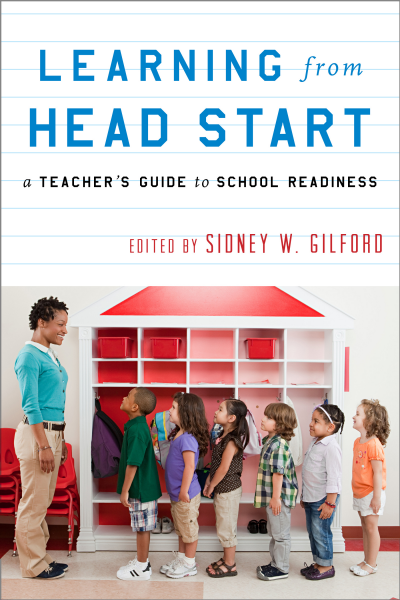
Learning from Head Start
A Teacher's Guide to School Readiness
Editors:
Publisher:
2013
Summary
Often referred to as a laboratory from which the general early childhood education community can learn, Head Start has benefited from more than 45 years of experience. Its unique blend of early childhood practices, assessments, and monitoring, along with a social service style approach, contribute to Head Start standing out as a premiere early childhood program.
This book is designed to be a teaching tool for workshops and courses as well as an on-site resource for current and future Head Start teaching staff and others in early childhood education.
By presenting background information, vignettes, research, and classroom activities, this book on school readiness combines best practices in early childhood education with relevant applications. Topics, written by experts in their fields, include:
Approaches to learning and teaching strategies
Assessments
Behavior management
Classroom set up
Curriculum and lesson plans
Early language, literacy, math, science, social studies, and creative arts
Physical health and development (gross and fine motor skills)
Social and emotional development
Teaching young children with disabilities and dual language learners
Tips for involving parents in their children’s education
Search publication
Bibliographic data
Edition
1/2013
Copyright Year
2013
ISBN-Print
978-1-4758-0056-2
ISBN-Online
978-1-4758-0057-9
Publisher
Rowman & Littlefield, Lanham
Language
English
Pages
288
Product Type
Edited Book
Table of contents
ChapterPages
Contents No access
Acknowledgments No access
Introduction No access
CHAPTER 1. A Typical Day as a Head Start Teacher No access
CHAPTER 2. Parent Involvement No access
CHAPTER 3. Head Start History and Structure No access
CHAPTER 4. Ensuring Quality: Regulations, Monitoring, Support, and Resources No access
CHAPTER 5. School Readiness No access
CHAPTER 6. Head Start Child Development and Early Learning Framework No access
CHAPTER 7. Child Assessment and Program Evaluation in Head Start No access
CHAPTER 8. Early Language Development and Literacy No access
CHAPTER 9. Early Mathematics No access
CHAPTER 10. Science in the Early Childhood Classroom No access
CHAPTER 11. Social Studies No access
CHAPTER 12. Creative Arts No access
CHAPTER 13. Physical Health and Development: Gross and Fine Motor Skills No access
CHAPTER 14. Social and Emotional Development No access
CHAPTER 15. Positive Approaches to Learning and Cognitive Skills No access
CHAPTER 16. Curriculum, Lesson Plans, and Individualization No access
CHAPTER 17. Teaching Young Children with Disabilities No access
CHAPTER 18. Increasing English Language Skills of Dual Language Learners No access
CHAPTER 19. Classroom Management No access
CHAPTER 20. How to Set Up and Arrange a Head Start Classroom No access
WRAP-UP. Sidney W. Gilford No access Pages 275 - 276
APPENDIX I. Resources No access Pages 277 - 284
APPENDIX II. Titles and Affiliations of Contributing Authors No access Pages 285 - 286
About the Editor No access Pages 287 - 288
Similar publications
from the topics "Bildung allgemein"
Edited Book Full access
Christoph T. Burmeister, Thorsten Hertel, Sophia Richter