, to see if you have full access to this publication.
Edited Book No access
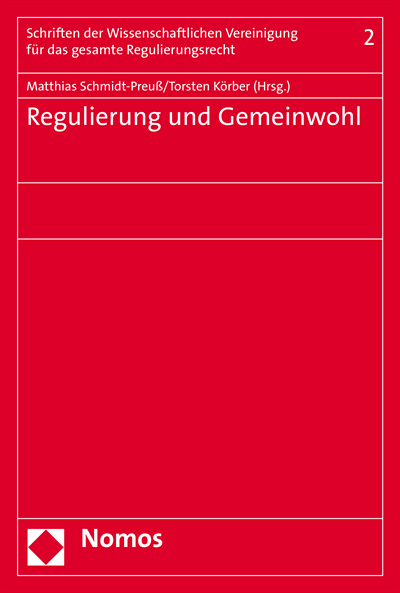
Regulierung und Gemeinwohl
Vorträge auf dem Bonner Symposium der Wissenschaftlichen Vereinigung für das gesamte Regulierungsrecht am 18./19. Juni 2015- Editors:
- |
- Publisher:
- 2016
Search publication
Bibliographic data
- Edition
- 1/2016
- Copyright Year
- 2016
- ISBN-Print
- 978-3-8487-3227-2
- ISBN-Online
- 978-3-8452-7587-1
- Publisher
- Nomos, Baden-Baden
- Series
- Schriften der Wissenschaftlichen Vereinigung für das gesamte Regulierungsrecht
- Volume
- 2
- Language
- German
- Pages
- 360
- Product Type
- Edited Book
Table of contents
ChapterPages
- Titelei/Inhaltsverzeichnis No access Pages 1 - 12
- Authors:
- I. Einführung No accessAuthors:
- Authors:
- 1. Ausgangspunkt No accessAuthors:
- 2. Natürliches Monopol No accessAuthors:
- 3. Wettbewerbliche Gefahren und Ineffizienzen im Monopol No accessAuthors:
- Authors:
- 1. Schaffung und Absicherung funktionsfähigen Wettbewerbs No accessAuthors:
- 2. Ex ante- versus ex post-Regulierung No accessAuthors:
- 3. Netzzugangs- und Netzentgeltregulierung No accessAuthors:
- 4. Entflechtungsmaßnahmen No accessAuthors:
- Authors:
- 1. Kostenbasierte Regulierungsansätze No accessAuthors:
- 2. Renditeregulierung No accessAuthors:
- 3. Festlegung einer Preisobergrenze (price cap-Regulierung) No accessAuthors:
- Authors:
- 1. Überblick No accessAuthors:
- Authors:
- a) Grundsätze der Entgeltregulierung für die Nutzung von Eisenbahninfrastruktur No accessAuthors:
- b) Übereinstimmung mit europarechtlichen Vorgaben No accessAuthors:
- Authors:
- a) Überblick No accessAuthors:
- b) Argumente Pro und Contra No accessAuthors:
- c) Abwägung und Ergebnis No accessAuthors:
- V. Thesen No accessAuthors:
- Authors:
- I. Einführung No accessAuthors:
- Authors:
- 1. Effizienz und Verbraucherwohlfahrt durch Wettbewerb No accessAuthors:
- 2. Limitationen dieses Konzepts No accessAuthors:
- Authors:
- 1. Gründe und Reichweite von Marktversagen No accessAuthors:
- 2. Wettbewerbsschaffende Regulierungsinstrumente No accessAuthors:
- Authors:
- 1. Wettbewerb als Mittel, nicht als (End-)Ziel No accessAuthors:
- 2. Konsequenzen für ein modifiziertes Effizienzverständnis No accessAuthors:
- V. Fazit No accessAuthors:
- Authors:
- I. Einleitung No accessAuthors:
- II. Sozialpolitische Bezüge im geltenden Regulierungsrecht No accessAuthors:
- Authors:
- Authors:
- a) Der Wettbewerbsbezug des Regulierungsrechts No accessAuthors:
- b) Das „Wesen“ des Wettbewerbs No accessAuthors:
- 2. Die Frage nach entgegenstehendem höherrangigen Recht No accessAuthors:
- IV. Bestimmtheit der Ermächtigung No accessAuthors:
- V. Rechtspolitische Risiken No accessAuthors:
- VI. Schluss No accessAuthors:
- Authors:
- Authors:
- 1. Der Fall S-Bahn Nürnberg No accessAuthors:
- 2. Der Fall Sachsen-Magistrale No accessAuthors:
- 3. Das Regulierungsrecht vor seiner zweiten, der sozialpolitischen Phase No accessAuthors:
- Authors:
- 1. Bisherige Standards No accessAuthors:
- 2. Die neue Unionsteleologie seit Lissabon No accessAuthors:
- 3. Neue Vergaberechtsrichtlinien No accessAuthors:
- 4. Sozialpolitischer Anpassungsdruck im deutschen Regulierungsrecht No accessAuthors:
- Authors:
- 1. Die Neuinterpretation der Rechtslage durch BGH, BKartA und BNA No accessAuthors:
- 2. Die Einbeziehung i.w.S. sozialpolitischer Kriterien No accessAuthors:
- 3. Finale Normstruktur und Entscheidungsspielräume No accessAuthors:
- 4. Zuständigkeit der Gemeinde und Art. 28 Abs. 2 GG No accessAuthors:
- 5. Zum Systemwettbewerb von Wettbewerbsrecht und Regulierungsrecht No accessAuthors:
- Authors:
- 1. Die Auslegung des § 46 EnWG als Ausdruck unterschiedlicher Regelungsstrategien No accessAuthors:
- 2. Die Abhängigkeiten zwischen materiellem Recht, Verfahrensrecht und Zuständigkeiten No accessAuthors:
- 3. Übertragung auf Wegerechtskonzessionen No accessAuthors:
- V. Ausblick: Die Stromrebellen vom Titisee No accessAuthors:
- Authors:
- Authors:
- 1. Die subjektive Dimension: Rechte der Regulierten? No accessAuthors:
- 2. Die objektive Dimension: Die Kategorie der investitionsbezogenen Maßnahmen im Regulierungskontext No accessAuthors:
- Authors:
- Authors:
- a) Unter dem Grundgesetz No accessAuthors:
- b) Im Anwendungsbereich der Grundrechte-Charta No accessAuthors:
- 2. Konsequenz: Wachsende und differenziertere Rechtfertigungsbedürftigkeit No accessAuthors:
- III. Veränderungen im Koordinatensystem der Gemeinwohlziele No accessAuthors:
- Authors:
- Authors:
- a) Im Energiesektor: Erlösobergrenzen und Investitionsmaßnahmen No accessAuthors:
- b) Im Telekommunikationssektor: Anreize zum Aufbau moderner Breitbandnetze No accessAuthors:
- Authors:
- a) Vorhaltung einer Kraftwerksreserve No accessAuthors:
- b) Netzausbaupflichten gegenüber den Übertragungsnetzbetreibern No accessAuthors:
- c) Netzausbaupflicht qua Zugangsverpflichtung im Telekommunikationssektor No accessAuthors:
- V. Fazit und Reformperspektiven No accessAuthors:
- Authors:
- Authors:
- I. Daten zum Investitionsbedarf No accessAuthors:
- II. Finanzierung No accessAuthors:
- Authors:
- I. Grundkonzept No accessAuthors:
- II. System der Anreizregulierungsverordnung No accessAuthors:
- III. Ausgewählte Diskussionspunkte No accessAuthors:
- IV. Zwischenfazit No accessAuthors:
- Authors:
- Authors:
- 1. Kostenermittlung No accessAuthors:
- 2. Effizienzvorgaben No accessAuthors:
- 3. Gewinnmarge No accessAuthors:
- Authors:
- 1. Kostenermittlung No accessAuthors:
- 2. Effizienzprüfung No accessAuthors:
- 3. Kalkulatorische Eigenkapitalverzinsung No accessAuthors:
- 4. Zwischenfazit No accessAuthors:
- Authors:
- I. Grundgedanke No accessAuthors:
- II. Maßnahmen zur Investitionsförderung No accessAuthors:
- Authors:
- I. Hintergrund: Staatliche Gewährleistungsverantwortung für Energieleitungen No accessAuthors:
- Authors:
- 1. Versorgungsniveau bzgl. Leitungskapazitäten No accessAuthors:
- 2. Ermittlung und Durchsetzung des Netzausbaubedarfs No accessAuthors:
- 3. Auswahl der Trassenkorridore No accessAuthors:
- Authors:
- 1. Netzausbaupflicht No accessAuthors:
- 2. Vorgaben zur Technologieauswahl No accessAuthors:
- 3. Prüfung alternativer Trassenkorridore No accessAuthors:
- IV. Zwischenfazit No accessAuthors:
- F. Fazit No accessAuthors:
- Authors:
- A. Einleitung No accessAuthors:
- Authors:
- I. Regulierungsbedarf aufgrund von Monopolsituationen No accessAuthors:
- Authors:
- 1. Gefahr überhöhter Preise (Monopolrenditen) No accessAuthors:
- 2. Diskriminierungsgefahr bei vertikaler Integration No accessAuthors:
- 3. Verzerrung des Wettbewerbs durch die öffentliche Hand aufgrund einer Kostenverlagerung von Wettbewerbs- zu Monopolbereichen No accessAuthors:
- Authors:
- 1. Regulierungskonzeption bei möglichem Infrastrukturwettbewerb No accessAuthors:
- 2. Regulierungskonzeption bei nicht möglichem Infrastrukturwettbewerb (natürliches Monopol) No accessAuthors:
- Authors:
- Authors:
- 1. Maßstäbe No accessAuthors:
- 2. Methoden No accessAuthors:
- 3. Zuständigkeit No accessAuthors:
- Authors:
- 1. Maßstäbe No accessAuthors:
- 2. Methoden No accessAuthors:
- 3. Zuständigkeit No accessAuthors:
- Authors:
- Authors:
- a) Kostendeckungsprinzip No accessAuthors:
- b) Wirtschaftlichkeitsprinzip No accessAuthors:
- Authors:
- (1) Sedes materiae No accessAuthors:
- (2) Inhalt No accessAuthors:
- d) Kardinalfrage: Umlagefähigkeit von Ineffizienzkosten? No accessAuthors:
- 2. Methoden No accessAuthors:
- 3. Zuständigkeit No accessAuthors:
- Authors:
- a) Offenheit des Gebührenrechts für Zielbündel und Effizienzmaßstab No accessAuthors:
- b) Befugnis des Gesetzgebers zur Typisierung und Prognosespielraum der Verwaltung No accessAuthors:
- c) Kommunale Selbstverwaltungsgarantie des Art. 28 Abs. 2 GG No accessAuthors:
- 5. Fazit No accessAuthors:
- D. Verfassungsmäßigkeit des § 130 Abs. 1 Satz 2 GWB? No accessAuthors:
- Authors:
- I. Der jeweilige Status Quo als Ausgangspunkt No accessAuthors:
- II. Das Ziel der Effizienz No accessAuthors:
- Authors:
- 1. Das Problem der Anreizkompatibilität No accessAuthors:
- 2. Das Prinzip der Generalkompensation No accessAuthors:
- IV. Soziale Marktwirtschaft und Generalkompensation No accessAuthors:
- V. Effizienzvermutung der Vertragsfreiheit No accessAuthors:
- Authors:
- 1. Einleitung No accessAuthors:
- Authors:
- a) Vergütung von Solarstrom No accessAuthors:
- b) Preisansagepflicht und Call-by-Call-Anbieter No accessAuthors:
- 3. EEG-Umlage und Verfassungsrecht No accessAuthors:
- 4. Ålands-Windkraft-Entscheidung des EuGH No accessAuthors:
- 5. Schlussbemerkung No accessAuthors:
- Authors:
- I. Einleitung, Gegenstand der Untersuchung No accessAuthors:
- Authors:
- 1. Paradigmenwechsel in der Energiewirtschaft No accessAuthors:
- 2. Bedürfnis nach Versorgungssicherheit No accessAuthors:
- 3. Ökonomische Diskussion No accessAuthors:
- 4. Grundmodelle des Kapazitätsmarktes und ihre wesentlichen Modifikationen No accessAuthors:
- Authors:
- 1. Vorgaben des europäischen Sekundärrechts No accessAuthors:
- Authors:
- a) Beihilferechtliche Relevanz No accessAuthors:
- b) Dienstleistung von allgemeinwirtschaftlichem Interesse No accessAuthors:
- c) Beihilferechtliche Genehmigung No accessAuthors:
- d) Vereinbarkeit mit der Warenverkehrsfreiheit No accessAuthors:
- IV. Resümee No accessAuthors:
- Authors:
- Authors:
- 1. Internationalisierung und Regulierung No accessAuthors:
- 2. Internationalisierte Regulierung bzw. regulierungsvölkerrechtliche Bestimmungen No accessAuthors:
- Authors:
- 1. Verwaltungsunionen (ITU, UPU, OTIF) als Spezifikum No accessAuthors:
- 2. Telekommunikation No accessAuthors:
- Authors:
- Authors:
- (1) GATS-Anlage zur Telekommunikation No accessAuthors:
- (2) Das Vierte GATS-Protokoll (WTO Basic Agreement on Telecommunications Services, “BATS”) No accessAuthors:
- (3) Das Referenzpapier („Reference Paper on Basic Telecommunications“) von 1996 No accessAuthors:
- c) Zwischenbilanz – und ein Ausblick auf das TiSA No accessAuthors:
- 3. Internetzugang: ICANN als „globalisiertes Selbstregulierungskonglomerat“ No accessAuthors:
- III. Fazit und Ausblick: Chancen für ein „Regulierungsvölkerrecht“? No accessAuthors:
- Authors:
- I. Einleitung: Motive einer Internationalisierung der Netzregulierung No accessAuthors:
- Authors:
- 1. Besonderheiten im Energiesektor No accessAuthors:
- Authors:
- a) Der Ausbauzustand des Energiebinnenmarktes No accessAuthors:
- b) Internationalisierung und EU-Entflechtungsvorgaben No accessAuthors:
- c) Einbindung von Drittstaaten in die Regulierungs-Institutionen No accessAuthors:
- Authors:
- Authors:
- a) Entstehung und Stand No accessAuthors:
- b) Das Kapitel des Investitionsschutzes No accessAuthors:
- c) Ein neuer Aufschwung durch die Internationale Energiecharta? No accessAuthors:
- Authors:
- a) Entstehung und Strukturen No accessAuthors:
- b) Die Unterschiede zum EU-Rahmen No accessAuthors:
- c) Perspektiven No accessAuthors:
- IV. Ergebnisse No accessAuthors:
- Authors: |
- I. Einleitung No accessAuthors: |
- Authors: |
- 1. Vorträge No accessAuthors: |
- 2. Diskussion No accessAuthors: |
- 3. Fazit No accessAuthors: |
- Authors: |
- 1. Vorträge No accessAuthors: |
- 2. Diskussion No accessAuthors: |
- 3. Fazit No accessAuthors: |
- Authors: |
- 1. Vorträge No accessAuthors: |
- 2. Diskussion No accessAuthors: |
- 3. Fazit No accessAuthors: |
- Authors: |
- 1. Vorträge No accessAuthors: |
- 2. Diskussion No accessAuthors: |
- 3. Fazit No accessAuthors: |
- VI. After Dinner Speech von Prof. Dr. Carl Christian von Weizsäcker über „Demokratie und Marktwirtschaft“ No accessAuthors: |
- Authors: |
- 1. Vortrag No accessAuthors: |
- 2. Diskussion No accessAuthors: |
- 3. Fazit No accessAuthors: |
- Authors: |
- 1. Vorträge No accessAuthors: |
- 2. Diskussion No accessAuthors: |
- 3. Fazit No accessAuthors: |
- IX. Schluss und Ausblick No accessAuthors: |
- No access
- No access
- Wissenschaftliche Vereinigung für das gesamte Regulierungsrecht No access
- No access
- No access
- No access
- No access
- No access
- No access
- No access
- No access
- No access
- No access
- No access