, to see if you have full access to this publication.
Edited Book No access
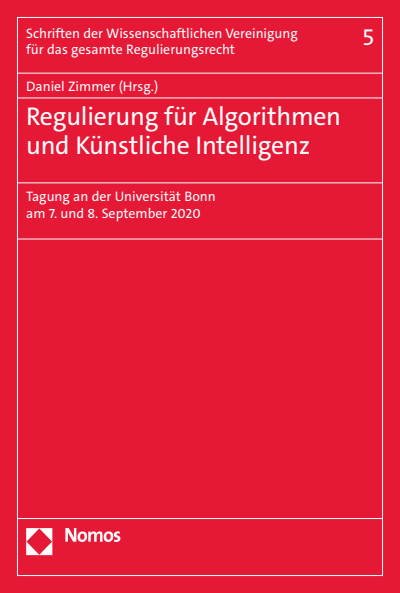
Regulierung für Algorithmen und Künstliche Intelligenz
Tagung an der Universität Bonn am 7. und 8. September 2020- Editors:
- Publisher:
- 2021
Keywords
Search publication
Bibliographic data
- Edition
- 1/2021
- Copyright Year
- 2021
- ISBN-Print
- 978-3-8487-8423-3
- ISBN-Online
- 978-3-7489-2799-0
- Publisher
- Nomos, Baden-Baden
- Series
- Schriften der Wissenschaftlichen Vereinigung für das gesamte Regulierungsrecht
- Volume
- 5
- Language
- German
- Pages
- 384
- Product Type
- Edited Book
Table of contents
ChapterPages
- Titelei/Inhaltsverzeichnis No access Pages 1 - 8
- Authors:
- I. Aktuelle rechtspolitische Diskussion No accessAuthors:
- II. Status quo No accessAuthors:
- III. Regulierungsbedarf und Regelungsvorschläge No accessAuthors:
- Authors:
- 1.) Verbote bestimmter Praktiken im Bereich der Künstlichen Intelligenz (Titel II) No accessAuthors:
- 2.) Hochrisiko-KI-Systeme (Titel III) No accessAuthors:
- 3.) Transparenzpflichten (Titel IV) No accessAuthors:
- V. Notwendigkeit einer gesellschaftlichen Debatte No accessAuthors:
- VI. Programm dieses Buches No accessAuthors:
- Authors:
- I. Zur Ontologie der K.I. No accessAuthors:
- II. Ethik der K.I. und der humane Kontext No accessAuthors:
- III. Ethik der K.I. als Heuristik No accessAuthors:
- Authors:
- I. Einleitung No accessAuthors:
- Authors:
- 1. Durch Algorithmen gestützte Kartelle No accessAuthors:
- Authors:
- a) Personalisierte Preise No accessAuthors:
- b) Dynamische Preisbildung No accessAuthors:
- 3. Fazit No accessAuthors:
- III. Daten als kritische Ressource für Algorithmen No accessAuthors:
- IV. Algorithmen und Informationsverzerrungen No accessAuthors:
- V. Algorithmen und Diskriminierung No accessAuthors:
- VI. Fazit No accessAuthors:
- Authors:
- I. Einleitung No accessAuthors:
- Authors:
- Authors:
- a) Filterblasen No accessAuthors:
- b) Echokammern No accessAuthors:
- c) Das Gefahrenszenario No accessAuthors:
- Authors:
- a) Filterblasen No accessAuthors:
- b) Echokammern No accessAuthors:
- c) Fazit No accessAuthors:
- Authors:
- 1. Kein voreiliger Ruf nach Intervention No accessAuthors:
- 2. Keine verfassungsrechtliche Pflicht zur Regulierung No accessAuthors:
- 3. Gefahren für die Freiheitlichkeit der Meinungsbildung No accessAuthors:
- IV. Ausblick No accessAuthors:
- Authors:
- Authors:
- 1. Der Aufstieg der Medienintermediäre als Treiber der regulatorischen Debatte No accessAuthors:
- 2. Algorithmengetriebene Inhalteverbreitung: Filterblasen, Hassrede und Falschnachrichten? No accessAuthors:
- 3. Struktur des Beitrags No accessAuthors:
- Authors:
- Authors:
- a) Einsatz von Algorithmen — Nutzen und Schaden No accessAuthors:
- b) Abschottungsbefördernde Algorithmen bei Facebook, Instagram, TikTok und Twitter No accessAuthors:
- c) Eher „klassische“ massenmediale Filtermechanismen bei YouTube No accessAuthors:
- Authors:
- a) Allgemein: Marktversagen und Regulierungserfordernis No accessAuthors:
- b) Informationsasymmetrien und externe Effekte aufgrund von Vielfaltsmängeln beim Einsatz von Algorithmen? No accessAuthors:
- Authors:
- 1. Allgemeine strukturelle Probleme der Medienintermediäre No accessAuthors:
- 2. Schlaglicht: grundrechtliche Gestaltungsvorgaben im Grundgesetz No accessAuthors:
- Authors:
- a) Verrohung des öffentliches Diskussionsraums als regulierungsbegründender Ausgangspunkt No accessAuthors:
- b) Die Etablierung des Netzwerkdurchsetzungsgesetzes als erster Schritt einer Intermediärs-Verantwortlichkeit No accessAuthors:
- c) Notwendige Weiterentwicklung des Gesetzes trotz erster positiver Erfahrungen No accessAuthors:
- d) Richtige Impulse in der jüngsten Novelle des Netzwerkdurchsetzungsgesetzes No accessAuthors:
- Authors:
- aa) Überzeugende Leitlinien in der Rechtsprechung – praktische Konkordanz konfligierender Grundrechtspositionen No accessAuthors:
- bb) Legislative (Nach-)Steuerung gleichwohl sinnvoll No accessAuthors:
- Authors:
- aa) Vorschlag der Kommission zum Digital Services Act zur Ergänzung der E-Commerce-Richtlinie No accessAuthors:
- bb) Anwendungsbereich: Internet-Intermediärsdienste No accessAuthors:
- cc) Haftungsfreistellung und materiell-rechtliche Kernvorgaben; umfassender Grundrechtsschutz No accessAuthors:
- dd) „Notice-and-take-down“-Verfahren für Online-Plattformen No accessAuthors:
- ee) Besondere prozedurale und institutionelle Pflichten für große Online-Plattformen No accessAuthors:
- ff) Institutionelles Zusammenspiel im Mehrebenensystem; Sanktionen No accessAuthors:
- gg) Verhältnis zum bisherigen nationalen Recht; Vergleich der Effektivität No accessAuthors:
- g) Zwischenfazit No accessAuthors:
- Authors:
- a) Einsatz von Social Bots und Fake News No accessAuthors:
- b) Kennzeichnungspflichten für Social Bots im MStV sowie Deepfakes in einer künftigen EU-Verordnung für künstliche Intelligenz No accessAuthors:
- c) Bekämpfung von Fake News No accessAuthors:
- Authors:
- a) Bislang begrenztes Problem in Deutschland No accessAuthors:
- b) Regulatorischer Handlungsbedarf? No accessAuthors:
- Authors:
- 1. Verantwortungsteilung zwischen Staat und Medienintermediären No accessAuthors:
- Authors:
- a) Transparenzpflicht (§ 93 MStV) No accessAuthors:
- b) Diskriminierungsverbot (§ 94 MStV) No accessAuthors:
- c) Sinnvolle Ergänzung und Fortführung des Ansatzes des MStV im DSA No accessAuthors:
- Authors:
- a) Gegenwärtig kein Zwang zu vielfaltsorientiertem Zusatzangebot No accessAuthors:
- b) „Binnenpluralismus“-Modell als Verschärfung des Problems No accessAuthors:
- c) „Must-be-found“-Regulierung wenig zielführend No accessAuthors:
- d) Stattdessen: Stärkung der Qualitätsinhalte als Gebot der Stunde No accessAuthors:
- V. Fazit No accessAuthors:
- Authors:
- I. Einleitung: Regulierung von Algorithmen No accessAuthors:
- Authors:
- 1. Haftungsregime No accessAuthors:
- 2. Transparenzanforderungen No accessAuthors:
- Authors:
- 1. Ein undefinierter Begriff No accessAuthors:
- 2. Abgrenzung des Begriffes No accessAuthors:
- Authors:
- 1. Transparenz No accessAuthors:
- 2. Erklärbare Algorithmen: Realisierbare Transparenz No accessAuthors:
- 3. Haftungsfragen: Nützliche Transparenz No accessAuthors:
- V. Ausblick No accessAuthors:
- Authors: | |
- I. Einleitung No accessAuthors: | |
- II. Verwandte Ansätze No accessAuthors: | |
- Authors: | |
- 1. Fairness und Nichtdiskriminierung No accessAuthors: | |
- 2. Autonomie und Kontrolle No accessAuthors: | |
- 3. Transparenz und Nachvollziehbarkeit No accessAuthors: | |
- 4. Verlässlichkeit No accessAuthors: | |
- 5. Sicherheit No accessAuthors: | |
- 6. Datenschutz No accessAuthors: | |
- Authors: | |
- 1. Herangehensweise No accessAuthors: | |
- 2. Vorprüfung No accessAuthors: | |
- 3. Schutzbedarfsanalyse No accessAuthors: | |
- Authors: | |
- a) Risikoanalyse No accessAuthors: | |
- b) Kriterien zur Zielerreichung No accessAuthors: | |
- c) Maßnahmen zur Zielerreichung No accessAuthors: | |
- d) Beurteilung des Handlungsfeldes No accessAuthors: | |
- 5. Abschließende Gesamtbewertung No accessAuthors: | |
- V. Zusammenfassung und Ausblick No accessAuthors: | |
- VI. Appendix: Beispielfragebogen zur Spezifikation des Prüfgegenstandes No accessAuthors: | |
- Darstellung der Risikogebiete No accessAuthors: | |
- Authors:
- I. Einleitung No accessAuthors:
- Authors:
- 1. Der Begriff der algorithmischen Systeme No accessAuthors:
- Authors:
- a) Menschenzentriertes Design No accessAuthors:
- b) Vereinbarkeit mit gesellschaftlichen Grundwerten / Verfassung No accessAuthors:
- c) Transparenz, Erklärbarkeit und Nachvollziehbarkeit No accessAuthors:
- 3. Risikobasierter Ansatz – Systemkritikalität No accessAuthors:
- 4. Umsetzung No accessAuthors:
- Authors:
- Authors:
- 1. Algorithmenbasiertes Trading No accessAuthors:
- 2. Hochfrequenzhandel No accessAuthors:
- Authors:
- 1. Ein Beispielsfall: Der „flash crash“ No accessAuthors:
- Authors:
- a) Programmierfehler: „rogue algorithms“ No accessAuthors:
- b) AT als Katalysator von Krisen No accessAuthors:
- c) Strukturelle Risiken für die Finanzmarktstabilität No accessAuthors:
- Authors:
- a) Verbesserung der Preisbildung, Marktliquidität und -qualität? No accessAuthors:
- b) Andere positive Wirkungen No accessAuthors:
- 4. Abschließende Einschätzung No accessAuthors:
- Authors:
- Authors:
- a) Untersagung von AT oder HFT No accessAuthors:
- b) Bindung an Order No accessAuthors:
- c) Mindestverhältnis von Order zu Transaktion No accessAuthors:
- Authors:
- a) Speed bumps No accessAuthors:
- b) Batch auctions No accessAuthors:
- c) Tick Size No accessAuthors:
- Authors:
- a) Transaction tax No accessAuthors:
- b) Cancellation fee No accessAuthors:
- Authors:
- a) Gleicher Informationszugang No accessAuthors:
- b) Kollokationsdienste No accessAuthors:
- Authors:
- a) Erlaubniserfordernis No accessAuthors:
- b) Organisationsanforderungen No accessAuthors:
- c) Circuit breaker No accessAuthors:
- d) Regelung des direkten elektronischen Zugangs No accessAuthors:
- e) Market Maker Verpflichtung No accessAuthors:
- f) Einbindung der Handelsplätze No accessAuthors:
- IV. Schlussfolgerung No accessAuthors:
- Authors:
- I. Predictive policing und retrospective policing als Verfahren der automatisierten Verdachtsgewinnung No accessAuthors:
- Authors:
- 1. Intelligente Videoüberwachung No accessAuthors:
- 2. „Risikomanagement“ durch die Steuerbehörden No accessAuthors:
- 3. Fluggastdatenabgleich durch das BKA No accessAuthors:
- 4. Exkurs: Kommunikationskontrolle durch Filtertechnologien No accessAuthors:
- Authors:
- 1. Fehlerhaft! No accessAuthors:
- Authors:
- a) Das Schutzkonzept des BVerfG: Rechtschaffenheitsvermutung und Anlass-Dogmatik No accessAuthors:
- b) Dogmatische Anmerkungen: Zur Tragfähigkeit der Anlass-Dogmatik No accessAuthors:
- c) Rechtsphilosophische Anmerkungen: Zur Tragfähigkeit der Rechtschaffenheitsvermutung No accessAuthors:
- 3. Diskriminierend! No accessAuthors:
- IV. Ausblick: Überwachungsgesamtrechnung und Überwachungsbalance No accessAuthors:
- Authors:
- I. Die 'machinery question' No accessAuthors:
- Authors:
- 1. Die Poster-Fälle No accessAuthors:
- 2. Einordnung No accessAuthors:
- Authors:
- a) Uber No accessAuthors:
- b) Webtaxi Luxemburg No accessAuthors:
- 4. Eturas No accessAuthors:
- Authors:
- 1. Preissoftware No accessAuthors:
- 2. Stillschweigende Kollusion No accessAuthors:
- 3. Künstliche Intelligenz No accessAuthors:
- 4. Ausweg: Beobachtungs- und Interventionspflichten No accessAuthors:
- IV. Fazit No accessAuthors:
- Authors:
- I. Einleitung und Problemstellung No accessAuthors:
- II. Kollusion durch Algorithmen als Marktphänomen No accessAuthors:
- III. Zur Reichweite des Kartellverbots im Lichte der traditionellen Auslegung No accessAuthors:
- Authors:
- 1. Zur Frage einer Personifizierung des Algorithmus No accessAuthors:
- 2. Zur Frage des Verbots stillschweigender Koordinierung No accessAuthors:
- Authors:
- a) Konzeptionelle Überlegungen No accessAuthors:
- b) Mögliche Einwände No accessAuthors:
- V. Zusammenfassung No accessAuthors:
- Authors:
- I. Eingrenzung und Einordnung der Fragestellung No accessAuthors:
- Authors:
- 1. Verweigerung des Datenzugangs No accessAuthors:
- 2. Art und Weise der Nutzung von Daten No accessAuthors:
- Authors:
- a) Ausbeutung No accessAuthors:
- b) Keine kontraproduktive oder systemwidrige Marktergebniskontrolle No accessAuthors:
- c) Fazit No accessAuthors:
- Authors:
- 1. Envelopment-Strategien No accessAuthors:
- 2. Ausbeutung No accessAuthors:
- 3. Behinderung No accessAuthors:
- 4. Fazit No accessAuthors:
- Authors:
- 1. Schnelligkeit No accessAuthors:
- 2. Intransparenz No accessAuthors:
- 3. Fazit No accessAuthors:
- Authors:
- 1. Ausbeutung (Preishöhenmissbrauch) No accessAuthors:
- 2. Kampfpreise No accessAuthors:
- 3. Fazit No accessAuthors:
- Authors:
- 1. Preisdifferenzierung durch Algorithmen No accessAuthors:
- 2. Wettbewerb und Preisdifferenzierung 1. Grades No accessAuthors:
- 3. Preisdifferenzierung 1. Grades als Machtmissbrauch No accessAuthors:
- 4. Fazit No accessAuthors:
- VII. Ergebnis No accessAuthors:
- Authors:
- I. Problemstellung No accessAuthors:
- II. Besonderheiten algorithmisch gesteuerten Marktverhaltens No accessAuthors:
- Authors:
- 1. Grundlagen No accessAuthors:
- 2. Empirische Evidenz und Reaktionsmöglichkeiten No accessAuthors:
- 3. Algorithmische Preissetzung als abgestimmte Verhaltensweise No accessAuthors:
- Authors:
- 1. Modellgeprägte Wirklichkeit No accessAuthors:
- 2. Technische Voraussetzungen für Marktteilnehmer No accessAuthors:
- 3. Integration des Menschen in eine digitalisierte Technostruktur No accessAuthors:
- V. Fazit No accessAuthors:
- Authors: | |
- Authors: | |
- 1. Referat No accessAuthors: | |
- 2. Diskussion No accessAuthors: | |
- Authors: | |
- 1. Referat No accessAuthors: | |
- 2. Diskussion No accessAuthors: | |
- Authors: | |
- 1. Referat No accessAuthors: | |
- 2. Kommentar von Prof. Dr. Jürgen Kühling No accessAuthors: | |
- 3. Diskussion No accessAuthors: | |
- Authors: | |
- 1. Referat No accessAuthors: | |
- 2. Diskussion No accessAuthors: | |
- Authors: | |
- 1. Referat No accessAuthors: | |
- 2. Diskussion No accessAuthors: | |
- Authors: | |
- 1. Referat No accessAuthors: | |
- 2. Diskussion No accessAuthors: | |
- Authors: | |
- 1. Referat No accessAuthors: | |
- 2. Diskussion No accessAuthors: | |
- Authors: | |
- 1. Referat No accessAuthors: | |
- 2. Diskussion No accessAuthors: | |
- IX. Vortrag von Prof. Dr. Andreas Heinemann No accessAuthors: | |
- X. Vortrag von Prof. Dr. Petra Pohlmann No accessAuthors: | |
- XI. Erkenntnisse der Panel-Diskussion No accessAuthors: | |