, to see if you have full access to this publication.
Edited Book No access
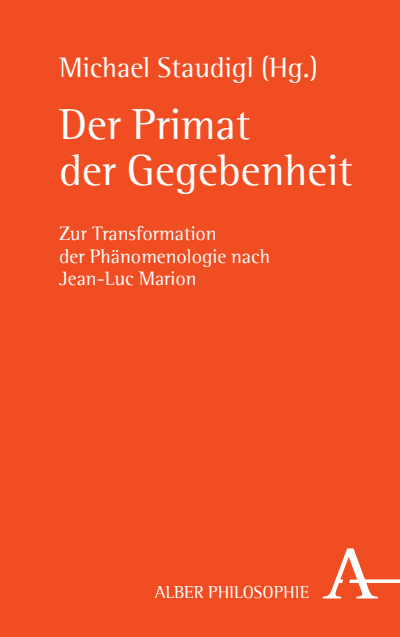
Der Primat der Gegebenheit
Zur Transformation der Phänomenologie nach Jean-Luc Marion- Editors:
- Publisher:
- 2021
Keywords
Search publication
Bibliographic data
- Copyright Year
- 2021
- ISBN-Print
- 978-3-495-48708-2
- ISBN-Online
- 978-3-495-82373-6
- Publisher
- Karl Alber, Baden-Baden
- Language
- German
- Pages
- 470
- Product Type
- Edited Book
Table of contents
ChapterPages
- Titelei/Inhaltsverzeichnis No access Pages 1 - 8
- Zwischen Häresie und Transformation. No access Pages 9 - 28Authors:
- Authors:
- 1. No accessAuthors:
- 2. No accessAuthors:
- Authors:
- 1. Zum Kontext der Descartes-Studien Marions No accessAuthors:
- Authors:
- 1.1. Eine Wissenschaft- und Seinslehre – der Ausgangspunkt von Marions Doktorarbeit No accessAuthors:
- 2.2. Wissenschaft unter dem Joch des menschlichen Geistes (mens) No accessAuthors:
- 2.3. Herstellung und Ausdehnung von Gewissheit No accessAuthors:
- 2.4. Die Einbindung des Seins in die einfache Natur No accessAuthors:
- 2.5. Was bedeutet »graue Ontologie«? No accessAuthors:
- Authors:
- 3.1. Die Lehre von der Schöpfung der ewigen Wahrheiten – ein zweifacher Durchbruch No accessAuthors:
- 3.2. Analogia und univocitas – mittelalterliches Gottdenken und neuzeitliche Zersetzung No accessAuthors:
- 3.3. Schöpfung nach Descartes’ nicht-univoker Theologie No accessAuthors:
- Authors:
- 1. Das cogito-Argument von Kant und Descartes No accessAuthors:
- 2. Der »neue« Descartes No accessAuthors:
- 3. Der »neue« Kant No accessAuthors:
- 4. Kant und über Kant hinaus: Das Bewusstsein des Selbst No accessAuthors:
- 5. Die Antwort Kants No accessAuthors:
- 6. Ein Blick zurück auf Descartes No accessAuthors:
- Authors:
- 1. Gegen das transzendentale Subjekt No accessAuthors:
- 2. Die gesättigten Phänomene und die Umkehrung der Intentionalität No accessAuthors:
- 3. Die Subjektivität im Dativ No accessAuthors:
- 4. Schlussreflexion No accessAuthors:
- Umkehrung der Intentionalität No access Pages 133 - 145
- Authors:
- 1. Einleitende Bemerkungen No accessAuthors:
- 2. Von Husserl zu Marion I: Transzendenz und Selbstgegebenheit No accessAuthors:
- Authors:
- 3.1 Ausgangspunkt: Eine Phänomenologie ohne Einstellung und eine Phänomenologie in natürlicher Einstellung No accessAuthors:
- 3.2 Husserls operative Einstellungslehre No accessAuthors:
- 2.3 Das zweideutige Verhältnis zur Einstellung in Marions Phänomenologie der Gegebenheit No accessAuthors:
- Authors:
- I. Können Naturphänomene als gesättigt gegeben werden? No accessAuthors:
- II. Der hermeneutische Kontext von Naturphänomenen No accessAuthors:
- III. Implikationen der Interpretation von Naturphänomenen als gesättigt No accessAuthors:
- IV. Das gesättigte Phänomen des Leibes No accessAuthors:
- Authors:
- 1. Überraschung als Enttäuschung No accessAuthors:
- 2. Überraschung als Sättigung No accessAuthors:
- 3. Sättigung als Überraschung No accessAuthors:
- 4. Überraschung und Gegen-Erfahrung No accessAuthors:
- 5. Schlussbemerkungen No accessAuthors:
- Authors:
- 1. Das (Ver-)Schweigen der Liebe in der Philosophie No accessAuthors:
- 2. Das Sein unter der schwarzen Sonne der Nichtigkeit No accessAuthors:
- 3. Von der Unmöglichkeit, sich selbst zu lieben No accessAuthors:
- 4. Das durchkreuzte erotische Phänomen No accessAuthors:
- 5. Die erotische Reduktion als radikalisierte Leibwerdung No accessAuthors:
- 6. Wa(h)re Liebe? No accessAuthors:
- 7. Das Adieu – oder der kommende Dritte No accessAuthors:
- Authors:
- Authors:
- Authors:
- 1) Einteilungsprinzip Armut/Reichtum der Anschauung No accessAuthors:
- 2) Phänomenologische Charaktere als Gegensatz oder Überschuss (Exzess) No accessAuthors:
- 2. Inkarnatorische »Sättigung« als Passibilität No accessAuthors:
- 3. Vor-ekstatische »Sättigung« in der »Mich«-Passibilität No accessAuthors:
- Authors:
- 1. Gegebenheit statt Anschauung. No accessAuthors:
- 2. Die Gegebenheit gibt niemals Dinge No accessAuthors:
- 3. Das Gegebene gibt sich niemals unmittelbar No accessAuthors:
- 4. Die Interpretation No accessAuthors:
- 5. Vier hermeneutische Momente in der Gegebenheit No accessAuthors:
- Authors:
- 1. Von der donation zur interdonation – Das deplatzierte Subjekt No accessAuthors:
- 2. Die Phänomenalität interpersonaler Begegnungen – Einander begegnen, einander lieben, einander einen Platz geben No accessAuthors:
- 3. Eine weitere Entfaltung: Erfüllung der Phänomenologie der donation als interdonation und ›Inter-Explikation‹ No accessAuthors:
- Authors:
- Authors:
- 1.1. Die Reduktion auf den reinen Anruf: nur formell? No accessAuthors:
- 1.2. Eine Reduktion des Ich: widersprüchlich? No accessAuthors:
- Authors:
- 2.1. Die Gegebenheit und die Frage der Welt No accessAuthors:
- 2.2. Wie viel Épochè, so viel Gegebenheit No accessAuthors:
- Authors:
- 3.1. Die Verwandlung des Subjekts zum Hingegebenen No accessAuthors:
- 3.2. Die Welt gibt, der Hingegebene manifestiert No accessAuthors:
- V. Der Primat der Gegebenheit und die Frage des inter-religiösen und inter-konfessionellen Diskurses No access Pages 353 - 354
- Authors:
- 1. Vom Tausch zur Gabe No accessAuthors:
- 2. Reziprozität und ihre Aufhebung No accessAuthors:
- 3. Ohne Götter No accessAuthors:
- 4. »Ohne Furcht« (abhaya) No accessAuthors:
- 5. »Gabe des Selbst« (ātmadāna) No accessAuthors:
- 6. »Preisgabe des Selbst« (ātmanikṣepa) No accessAuthors:
- Fazit No accessAuthors:
- Authors:
- Authors:
- a) Eine gemeinsame Bezugnahme auf Nietzsches Wort »Gott ist tot« (Die fröhliche Wissenschaft, §125) No accessAuthors:
- b) Der gemeinsame Rahmen von Heideggers Kritik der Onto-theologie No accessAuthors:
- c) Nietzsche mit Heidegger erhellt – Eine gemeinsame Deutung No accessAuthors:
- d) Dionysius Aeropagita als gemeinsamer Schlüsselstützpunkt No accessAuthors:
- II. Der Unterschied zwischen negativer Theologie und Apophatizismus und dessen Wirkung auf die Transformation der Phänomenologie No accessAuthors:
- III. Zum Schluss: Einige wesentliche Treffpunkte No accessAuthors:
- Authors:
- 1. Einleitung No accessAuthors:
- 2. Jean-Luc Marions Äußerungen über »den Islam« No accessAuthors:
- 3. Das gesättigte Phänomen und die Universalität von Gegebenheit No accessAuthors:
- 4. Blickwechsel: Die Möglichkeit anderer Offenbarungen No accessAuthors:
- 5. Zusammenfassung No accessAuthors:
- Authors:
- 1. No accessAuthors:
- 2. No accessAuthors:
- 3. No accessAuthors:
- 4. No accessAuthors:
- 5. No accessAuthors:
- 7. No accessAuthors:
- 8. No accessAuthors: