, to see if you have full access to this publication.
Monograph No access
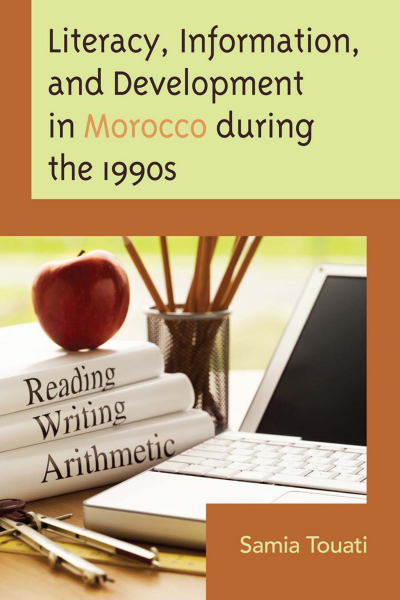
Literacy, Information, and Development in Morocco During The 1990s
Authors:
Publisher:
2012
Summary
Literacy, Information, and Development in Morocco during the 1990s offers readers a two-level investigation of the culture of literacy. A handful of researchers approach literacy either through theory or through practice in general; however, this is the first study in the African context that tries to investigate the issue of literacy from both perspectives.
At the first level, Touati provides an evaluation of the state policy towards literacy during the 1990s. She places a particular emphasis on the motives and assumptions behind policy-makers' increasing interest in literacy. Since 1990, the state has adopted a participatory approach which is based on a cross-sector strategy that encourages both public and private institutions to take part in the dissemination of literacy. This text explores the working factors that motivate Moroccan decision-makers to support the campaign for greater literacy. Such factors are founded on the assumption that providing literacy programs, training, and education are a means of furthering the country's development. Morrocan officials also base their support for higher literacy rates on the belief that literacy is useful for both the individual and the society.
At the second level, Touati offers an examination of the presumed benefits of literacy in Morocco. Literacy has been found to engender many personal, social, and economic benefits, but only when certain conditions are met. These conditions include the political will to disseminate literacy, the acknowledgement of the need for literacy in one's everyday life, the availability of job opportunities, and the eradication of poverty.
Search publication
Bibliographic data
Edition
1/2012
Copyright Year
2012
ISBN-Print
978-0-7618-5350-3
ISBN-Online
978-0-7618-5351-0
Publisher
Hamilton Books, Lanham
Language
English
Pages
214
Product Type
Monograph
Table of contents
ChapterPages
Contents No access
List of Figures No access
List of Tables No access
Acknowledgments No access
Abstract (English) No access
Abstract (Arabic) No access
0.0. The Statement of the Problem No access
0.1. Object of the Study No access
0.2. Research Questions No access
0.3. Rationale and Methodology No access
0.4. Organisation of the Thesis No access
1.0. Introduction No access
1.1. Part One: Survey of the Literature No access
1.2. Part Two: The Linguistic and Social Profile of Morocco No access
1.3. Conclusion No access
2.0. Introduction No access
2.1. Research Design and Procedures No access
2.2. Methods Used in Evaluation No access
2.3. Field Research Accounts No access
3.0. Introduction No access
3.1. Shift of Official Attitudes towards Literacy since 1990 No access
3.2. Educational Policy and Agendas during the 1990s No access
3.3. Literacy and Education in the National Press No access
3.4. Situation Analysis: Motives and Assumptions towards Literacy No access
3.5. Conclusion No access
4.0. Introduction No access
4.1. The Personal Characteristics of the Subjects No access
4.2. Agents and Effects of Literacy Acquisition No access
4.3. Types of Literacy Acquired No access
4.4. Degrees of Literacy Achievement No access
4.5. Subjects and Access to the Information Sought No access
4.6. Subjects and the Use of Media No access
4.7. The Personal, Social, and Economic Consequences of Literacy No access
4.8. Conclusion No access
5.0. Research Questions, Hypotheses and Instruments No access