, to see if you have full access to this publication.
Edited Book No access
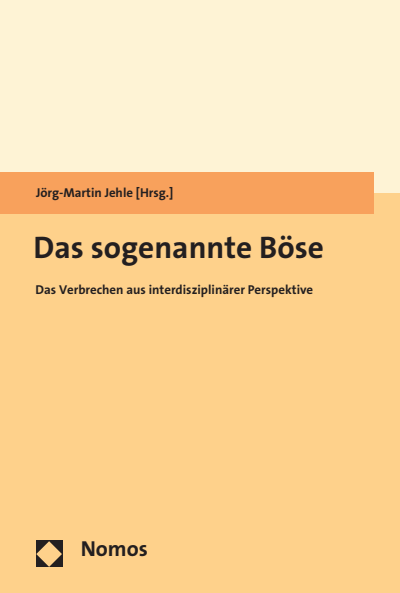
Das sogenannte Böse
Das Verbrechen aus interdisziplinärer Perspektive- Editors:
- Publisher:
- 2020
Search publication
Bibliographic data
- Edition
- 1/2020
- Copyright Year
- 2020
- ISBN-Print
- 978-3-8487-7815-7
- ISBN-Online
- 978-3-7489-2218-6
- Publisher
- Nomos, Baden-Baden
- Language
- German
- Pages
- 342
- Product Type
- Edited Book
Table of contents
ChapterPages
- Titelei/Inhaltsverzeichnis No access Pages 1 - 10
- Authors:
- I. Das Verbrechen ist allgegenwärtig No accessAuthors:
- II. Was ist das Verbrechen? Womit beschäftigt sich Kriminologie? No accessAuthors:
- III. Die Suche nach den Ursachen des Verbrechens No accessAuthors:
- IV. Ist Kriminalität normal? Wie verbreitet ist Kriminalität? No accessAuthors:
- Authors:
- 1. Die Entwicklung vor 2015 No accessAuthors:
- 2. Jüngste Entwicklung und Folgen der Zuwanderung No accessAuthors:
- 3. Fazit No accessAuthors:
- Authors:
- 1. Primäre Prävention No accessAuthors:
- Authors:
- 2.1. Abschreckung tatbereiter Personen No accessAuthors:
- 2.2. Interventionen bei gefährdeten Kindern und Jugendlichen No accessAuthors:
- 2. 3. Situationsbezogene und opferorientierte Prävention No accessAuthors:
- 3. Tertiäre Prävention No accessAuthors:
- 4. Fazit No accessAuthors:
- VII. Schlussbemerkung No accessAuthors:
- Authors:
- I. Gibt es unter Tieren „Verbrechen“? No accessAuthors:
- Authors:
- These 1: Aggression ist der auf Artgenossen gerichtete Kampftrieb No accessAuthors:
- These 2: Aggression dient der Erhaltung der Art No accessAuthors:
- Untersuchungsebenen No accessAuthors:
- Ökonomie der Aggression No accessAuthors:
- Eskalation und Deeskalation No accessAuthors:
- Verhaltenskontexte No accessAuthors:
- These 3: Aggression wird durch angeborene Hemmungen begrenzt No accessAuthors:
- Beschwichtigung und Versöhnung No accessAuthors:
- These 4: Beim Menschen greifen die Hemmungsmechanismen nicht No accessAuthors:
- Authors:
- Zum Schluss ein Wort zur Mahnung No accessAuthors:
- Literatur No accessAuthors:
- Authors:
- I. Von der Erbsünde No accessAuthors:
- II. Umgang mit Sündern und Verbrechern in der frühen Christenheit und im Mittelalter No accessAuthors:
- III. Die Trennung von weltlichem und geistlichem Regiment No accessAuthors:
- IV. Luthers christlicher Ethos im Umgang mit Betrug und Verbrechen No accessAuthors:
- V. Beispiel: Die kursächsische Visitationsordnung No accessAuthors:
- VI. Spruchpraxis theologischer Fakultäten No accessAuthors:
- Fazit No accessAuthors:
- Authors:
- Der Birnendiebstahl in Augustinus‘ Confessiones No accessAuthors:
- Das gebändigte Böse in Dantes Göttlicher Komödie No accessAuthors:
- Die Lust am Bösen – Giovanni Boccaccios Cepparello im Decameron No accessAuthors:
- Edgar Allan Poe und der ‚Geist der Verkehrtheit‘ No accessAuthors:
- Das Böse im 20. Jahrhundert bei Hannah Arendt und Primo Levi No accessAuthors:
- Bibliographie No accessAuthors:
- Authors:
- I. Einführung No accessAuthors:
- II. Maßregelvollzug im Lichte rechtlicher Entscheidungen No accessAuthors:
- III. Medizinische Zwangsbehandlung No accessAuthors:
- Authors:
- Therapie, Strafe und Gefährlichkeit No accessAuthors:
- V. Behandlungsstandards in der forensischen Psychiatrie: No accessAuthors:
- VI. Novellierung des Rechts der Unterbringung im psychiatrischen Krankenhaus No accessAuthors:
- VII. Risikobeurteilung No accessAuthors:
- VIII. Forschung im Maßregelvollzug No accessAuthors:
- IX. Fazit No accessAuthors:
- Literaturverzeichnis No accessAuthors:
- Authors:
- I. Einleitung No accessAuthors:
- II. Fragestellung No accessAuthors:
- Authors:
- III.1. Genetische und biologische Faktoren No accessAuthors:
- III.2. Familiäre Konflikte, Erziehungsdefizite. No accessAuthors:
- III.3. Multiproblem-Milieu No accessAuthors:
- III.4. Verzerrte Informationsverarbeitung No accessAuthors:
- IV. Wechselwirkungen No accessAuthors:
- V. Schutzfaktoren No accessAuthors:
- VI. Zusammenfassung No accessAuthors:
- Authors:
- 1. Einleitung No accessAuthors:
- 2. Die Kriminalitätstheorie von Durkheim No accessAuthors:
- Authors:
- 3.1 Theorien No accessAuthors:
- 3.2 Empirische Studien zu Anomietheorien No accessAuthors:
- Authors:
- Authors:
- 4.1.1 Theoretischer Ansatz No accessAuthors:
- 4.1.2 Empirie No accessAuthors:
- Authors:
- 4.2.1 Theoretischer Ansatz No accessAuthors:
- 4.2.2 Empirie No accessAuthors:
- 5. Fazit No accessAuthors:
- Literatur No accessAuthors:
- Authors: |
- I. Einleitung No accessAuthors: |
- Authors: |
- 1. Historischer Rückblick – Klassische Schule der Kriminologie und Positivismus No accessAuthors: |
- 2. Wiederentdeckung der ökonomischen Perspektive durch Gary S. Becker No accessAuthors: |
- III. Zur Notwendigkeit einer kriminologischen Handlungstheorie No accessAuthors: |
- IV. Relevante Einschränkungen des Rational-Choice-Ansatzes No accessAuthors: |
- Authors: |
- 1. Der Ansatz der Frame-Selektion als allgemeine soziologische Handlungstheorie No accessAuthors: |
- 2. Die Situational Action Theory als aktuelle kriminologische Handlungstheorie No accessAuthors: |
- VI. Fazit No accessAuthors: |
- Literatur No accessAuthors: |
- Authors:
- I. Wechselbad No accessAuthors:
- II. Störfall No accessAuthors:
- III. Fundstück No accessAuthors:
- Authors:
- 1. Der egoistische Störenfried No accessAuthors:
- 2. Der exzentrische Störenfried No accessAuthors:
- 3. Der nomozentrische Störenfried No accessAuthors:
- 4. Der massive Störenfried No accessAuthors:
- V. Ausblick No accessAuthors:
- Authors:
- 1. Einführung No accessAuthors:
- Authors:
- 2.1. Zum Begriff des „Bösen“ No accessAuthors:
- 2.2. Psychologie des Bösen im Experiment No accessAuthors:
- 2.3. Das „Böse“ in der Kriminologie No accessAuthors:
- Authors:
- 3.1. Frauen in der Polizeilichen Kriminalstatistik No accessAuthors:
- 3.2. Theorien zur Erklärung von Frauenkriminalität No accessAuthors:
- 3.3. Das ideale Opfer und der ideale Täter No accessAuthors:
- 3.4. Victim-Offender-Overlap No accessAuthors:
- Authors:
- 4.1. Täterinnen im Strafvollzug No accessAuthors:
- 4.2. Ergebnisse aus Interviews mit Frauen im Strafvollzug No accessAuthors:
- 5. Fazit No accessAuthors:
- Authors:
- I. Fragestellung No accessAuthors:
- II. Wer konsumiert Gewalt in den Medien, und wie präsent ist sie? No accessAuthors:
- III. Wirkung von Mediengewalt No accessAuthors:
- Authors:
- IV.1. Korrelative Zusammenhänge No accessAuthors:
- IV.2. Wirkrichtung No accessAuthors:
- IV.3. Psychologische Erklärungen No accessAuthors:
- IV.4. Ein Interventionsprogramm No accessAuthors:
- V. Zusammenfassung No accessAuthors:
- Literatur No accessAuthors:
- Authors:
- Fragestellung No accessAuthors:
- Ausgangspunkt: Freiheit des Willens No accessAuthors:
- Determinismus – Indeterminismus, Kompatibilismus – Inkompatibilismus No accessAuthors:
- Prävention No accessAuthors:
- Präventionstheorie der Strafe No accessAuthors:
- Retribution No accessAuthors:
- Freiheit des Anders-Handeln-Könnens No accessAuthors:
- Ist die Freiheit, die wir für Zurechnung und Retribution voraussetzen müssen, mit den Ergebnissen der modernen Wissenschaften vereinbar? No accessAuthors:
- Das Dilemma der Leugnung der Willensfreiheit No accessAuthors:
- Obsolete Vorstellungen des Determinismus No accessAuthors:
- Kennzeichen moderner experimenteller Wissenschaften No accessAuthors:
- Fiktion einer determinierten Welt als Ganzer No accessAuthors:
- Konsequenzen für die Freiheitstheorie No accessAuthors:
- Schlussfolgerungen für die Freiheitsfrage No accessAuthors:
- Pragmatische Annahme der Freiheit als Voraussetzung der Strafe No accessAuthors:
- Literaturhinweise No accessAuthors:
- Authors:
- I. Einleitung No accessAuthors:
- Authors:
- 1. Absolute Theorien: Vergeltung/Schuldausgleich No accessAuthors:
- Authors:
- a) Spezialprävention No accessAuthors:
- b) Negative Generalprävention No accessAuthors:
- c) Positive Generalprävention No accessAuthors:
- 3. Vergeltende Vereinigungstheorie No accessAuthors:
- III. Schluss No accessAuthors:
- Autorinnen und Autoren No access Pages 341 - 342