, to see if you have full access to this publication.
Edited Book No access
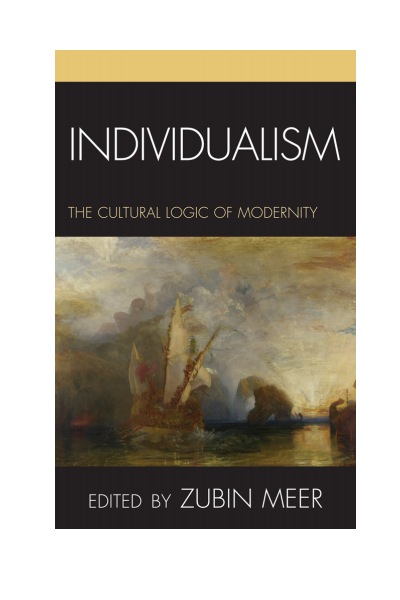
Individualism
The Cultural Logic of Modernity
Editors:
Publisher:
2011
Summary
Individualism: The Cultural Logic of Modernity explores ideas of the modern sovereign individual in the western cultural tradition. Divided into two sections, this volume surveys the history of western individualism in both its early and later forms: chiefly from the sixteenth to the eighteenth centuries, and then individualism in the twentieth century. These essays boldly challenge not only the exclusionary framework and self-assured teleology, but also the metaphysical certainty of that remarkably tenacious narrative on 'the rise of the individual.' Some essays question the correlation of realist characterization to the eighteenth-century British novel, while others champion the continuing political relevance of selfhood in modernist fiction over and against postmodern nihilism. Yet others move to the foreground underappreciated topics, such as the role of courtly cultures in the development of individualism. Taken together, the essays provocatively revise and enrich our understanding of individualism as the generative premise of modernity itself. Authors especially considered include Locke, Defoe, Freud, and Adorno. The essays in this volume first began as papers presented at a conference of the American Comparative Literature Association held at Princeton University. Among the contributors are Nancy Armstrong, Deborah Cook, James Cruise, David Jenemann, Lucy McNeece, Vivasvan Soni, Frederick Turner, and Philip Weinstein.
Search publication
Bibliographic data
Edition
1/2011
Copyright Year
2011
ISBN-Print
978-0-7391-2264-8
ISBN-Online
978-0-7391-6587-4
Publisher
Lexington, Lanham
Language
English
Pages
272
Product Type
Edited Book
Table of contents
ChapterPages
Contents No access
Acknowledgments No access
Introduction: Individualism Revisited No access Pages 1 - 30
1 A Silence in the Family Tree: The Genealogical Subject in Heldris of Cornwall’s Silence No access
2 Shakespeare’s Polycentric Marketplace: Why the Individual and the Community Need Not Be at Odds No access
3 “A World of My Own Creating”: Private Worlds and Social Selves in Margaret Cavendish’s Blazing World No access
4 Secrecy and Spies: London, 1650–1800 No access
5 Infectious Fictions in A Journal of the Plague Year: Defoe and the Empirical Self No access
6 The Other Side of Modern Individualism: Locke and Defoe No access
7 Locke’s Disciplined Self: A Postcolonial Perspective No access
8 The Tragedies of Sentimentalism: Privatizing Happiness in the Eighteenth Century No access
9 Unknowing: The Work of Modernist Fiction No access
10 Lukács, Bakhtin, and the Apocalypse of Self in the Modern Novel No access
11 Camouflage Work: Precisionist Painting and the Hidden Subject of Modernism No access
12 The Precarious Subject of Late Capitalism: Rereading Adorno on the “Liquidation” of Individuality No access
13 The Encrypted Individual in Dialectic of Enlightenment No access
14 The Rise and Decline of the Individual in Adorno: Exit Hamlet, Enter Hamm No access
15 The Individual as Cheshire Cat in Reading “Lolita” in Tehran No access
16 Re-Orienting the Human: The Esoteric Self No access
Index No access Pages 257 - 268
About the Contributors No access Pages 269 - 272
Similar publications
from the topics "Soziologie allgemein"
Edited Book Full access
Christoph T. Burmeister, Thorsten Hertel, Sophia Richter