, to see if you have full access to this publication.
Monograph No access
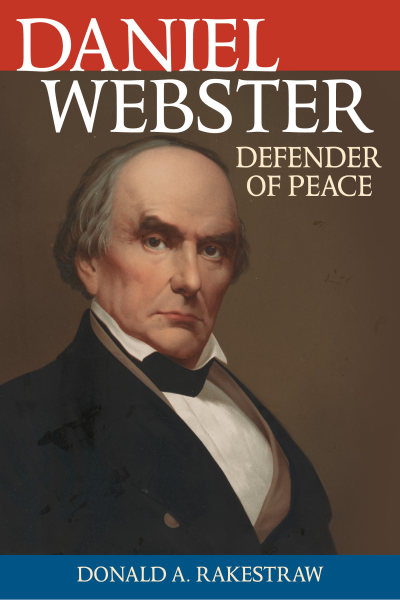
Daniel Webster
Defender of Peace
Authors:
Publisher:
2021
Summary
Few names in American history are more recognizable than that of Daniel Webster. No one would deny that Webster’s substantive domestic achievements assured his prominent place in American history and that his virtual embodiment of nation and union guaranteed his rank among the most significant personalities of the Jacksonian era. It can, however, be argued that his domestic resumé that garnered him the title “Defender of the Constitution” is rivaled by an impressive international one that yielded far-reaching results for a nation still struggling to find a respectable position among the Atlantic powers. In fact, his adroit handling of his signature accomplishment with Lord Ashburton earned him the additional title of “Defender of Peace.” Webster’s foreign policy achievements are too often given short shrift, falling victim to the textbook author’s inclination to hold Webster to the dominant domestic narrative that would ultimately see the nation fractured. Donald A. Rakestraw focuses on Webster’s critical diplomatic efforts--efforts that produced a legacy that ranges from the delineation of America’s northeastern boundary with Canada to the prevention of a serious rupture with Britain; from the advancement of national commercial expansion in the Pacific and East Asia to the establishment of a long-lived model for U.S. extradition policy; from his successful intervention on behalf of the so-called “Santa Fe prisoners” in Mexico to his role in promoting a crucial Anglo-American rapprochement.
Keywords
Search publication
Bibliographic data
Copyright Year
2021
ISBN-Print
978-1-4422-4994-3
ISBN-Online
978-1-4422-4995-0
Publisher
Rowman & Littlefield, Lanham
Language
English
Pages
210
Product Type
Monograph
Table of contents
ChapterPages
Contents No access
Preface No access
Acknowledgments No access
Chapter 1. From the Valley to the Hill, 1782–1823 No access Pages 1 - 24
Chapter 2. Taking the National Stage, 1823–1839 No access Pages 25 - 46
Chapter 3. Taking the International Stage, 1839–1842 No access Pages 47 - 74
Chapter 4. From Webster-Ashburton to Wanghia, 1842–1843 No access Pages 75 - 100
Chapter 5. From State to the Senate and Back Again, 1843–1850 No access Pages 101 - 124
Chapter 6. Last Turn at the “Old High Table,” 1850–1852 No access Pages 125 - 154
Epilogue No access Pages 155 - 160
Chronology No access Pages 161 - 166
Notes No access Pages 167 - 190
Bibliographical Essay No access Pages 191 - 196
Index No access Pages 197 - 208
About the Author No access Pages 209 - 210
Similar publications
from the topics "Bildung allgemein"
Edited Book Full access
Christoph T. Burmeister, Thorsten Hertel, Sophia Richter