, to see if you have full access to this publication.
Monograph No access
Shanghai Gone
Domicide and Defiance in a Chinese Megacity
Authors:
Publisher:
2013
Summary
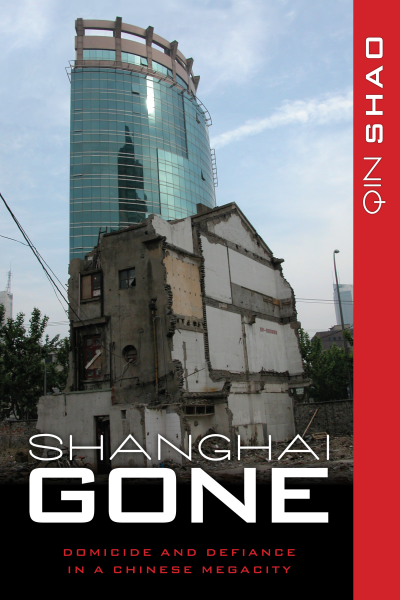
Shanghai has been demolished and rebuilt into a gleaming megacity in recent decades, now ranking with New York and London as a hub of global finance. But that transformation has come at a grave human cost. This compelling book is the first to apply the concept of domicide—the eradication of a home against the will of its dwellers—to the sweeping destruction of neighborhoods, families, and life patterns to make way for the new Shanghai. Here we find the holdouts and protesters, men and women who have stubbornly resisted domicide and demanded justice. Qin Shao follows, among others, a reticent kindergarten teacher turned diehard petitioner; a descendant of gangsters and squatters who has become an amateur lawyer for evictees; and a Chinese Muslim who has struggled to recover his ancestral home in Xintiandi, an infamous site of gentrification dominated by a well-connected Hong Kong real estate tycoon. Highlighting the wrenching changes spawned by China’s reform era, Shao vividly portrays the relentless pursuit of growth and profit by the combined forces of corrupt power and money, the personal wreckage it has left behind, and the enduring human spirit it has unleashed.
To see the author's blog post on Asia Society, please click here.
Keywords
Search publication
Bibliographic data
Copyright Year
2013
ISBN-Print
978-1-4422-1132-2
ISBN-Online
978-1-4422-1133-9
Publisher
Rowman & Littlefield, Lanham
Language
English
Pages
308
Product Type
Monograph
Table of contents
ChapterPages
Contents No access
Illustrations No access
Preface No access
Introduction No access Pages 1 - 38
Chapter One. The Woman of a Thousand-and-one Petitions No access Pages 39 - 90
Chapter Two. Nightmares: Old and New No access Pages 91 - 144
Chapter Three. Waving the Red Flag No access Pages 145 - 188
Chapter Four. A Barrack-room Lawyer No access Pages 189 - 228
Chapter Five. Mr. Lincoln’s Lane No access Pages 229 - 274