, to see if you have full access to this publication.
Monograph No access
Early Islam and the Birth of Capitalism
Authors:
Publisher:
2014
Summary
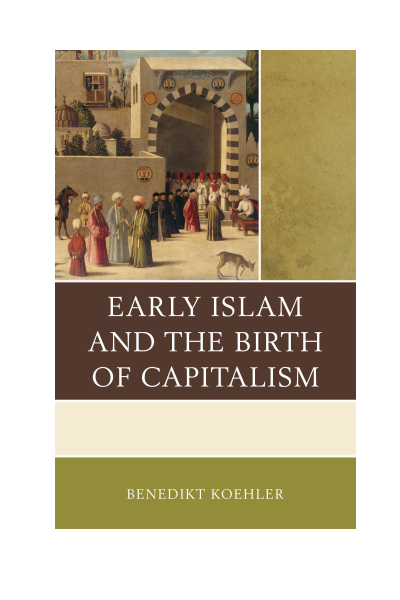
Early Islam and the Birth of Capitalism proposes a strikingly original thesis—that capitalism first emerged in Arabia, not in late medieval Italian city states as is commonly assumed.
Early Islam made a seminal but largely unrecognized contribution to the history of economic thought; it is the only religion founded by an entrepreneur. Descending from an elite dynasty of religious, civil, and commercial leaders, Muhammad was a successful businessman before founding Islam. As such, the new religion had much to say on trade, consumer protection, business ethics, and property. As Islam rapidly spread across the region so did the economic teachings of early Islam, which eventually made their way to Europe.
Early Islam and the Birth of Capitalism demonstrates how Islamic institutions and business practices were adopted and adapted in Venice and Genoa. These financial innovations include the invention of the corporation, business management techniques, commercial arithmetic, and monetary reform. There were other Islamic institutions assimilated in Europe: charities, the waqf, inspired trusts, and institutions of higher learning; the madrasas were models for the oldest colleges of Oxford and Cambridge. As such, it can be rightfully said that these essential aspects of capitalist thought all have Islamic roots.
Keywords
Search publication
Bibliographic data
Edition
1/2014
Copyright Year
2014
ISBN-Print
978-0-7391-8882-8
ISBN-Online
978-0-7391-8883-5
Publisher
Lexington, Lanham
Language
English
Pages
231
Product Type
Monograph
Table of contents
ChapterPages
Contents No access
1 The Richest Man in Arabia No access Pages 1 - 14
2 Markets without Government No access Pages 15 - 24
3 Family Matters No access Pages 25 - 36
4 A Mosque, a Market, and a War No access Pages 37 - 46
5 Muhammad’s Household Finances No access Pages 47 - 54
6 Muhammad’s Executive Office No access Pages 55 - 58
7 Muhammadan Taxation No access Pages 59 - 62
8 Succession No access Pages 63 - 66
9 Rise of the Rashidun Caliphs No access Pages 67 - 76
10 Decline of the Rashidun Caliphs No access Pages 77 - 88
11 Journey to Jerusalem No access Pages 89 - 96
12 Islamic Gold Currency No access Pages 97 - 104
13 Bankers of Baghdad No access Pages 105 - 116
14 Islamic Philanthropy: Waqfs No access Pages 117 - 122