, to see if you have full access to this publication.
Monograph No access
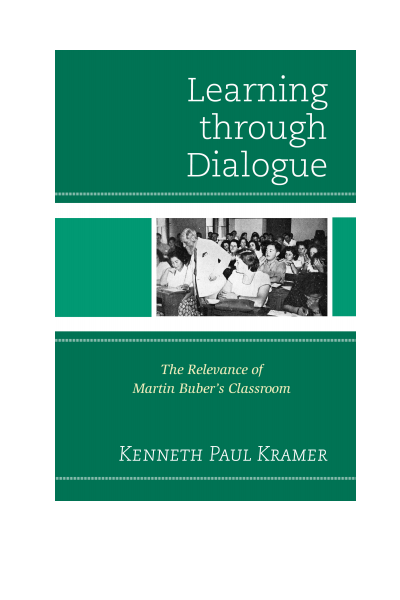
Learning Through Dialogue
The Relevance of Martin Buber's Classroom
Authors:
Publisher:
2013
Summary
Educational practice today often fails to make the crucial distinction between learning as an accumulation of information and learning as a dialogical interaction that elicits one’s personal response to the material. Learning Through Dialogue offers an alternative approach to teaching and learning, which utilizes Martin Buber’s dialogical principles: turning toward, addressing affirmatively, listening attentively, and responding responsibly. The book first presents Buber’s educational theory and method and second presents specific examples of how Buber’s dialogical philosophy can be applied in the classroom. Rather than imposing one’s own views, this approach enables teachers and students to develop course content in uniquely appropriate ways. If you are a teacher, a student, an educator at any level, or anyone interested in furthering his or her ability to engage more meaningfully with the educational process, this book will challenge you with fresh perspectives.
Search publication
Bibliographic data
Edition
1/2013
Copyright Year
2013
ISBN-Print
978-1-4758-0439-3
ISBN-Online
978-1-4758-0440-9
Publisher
Rowman & Littlefield, Lanham
Language
English
Pages
95
Product Type
Monograph
Table of contents
ChapterPages
Contents No access
Foreword No access
Preface No access
Acknowledgments No access
Introduction No access
1 Buber’s Two Ways of Learning No access
2 Buber’s Method of Inclusion No access
3 Teaching as Unteaching No access
4 The Broadest Frame: Dialogue as Meta-Methodology No access