, to see if you have full access to this publication.
Monograph No access
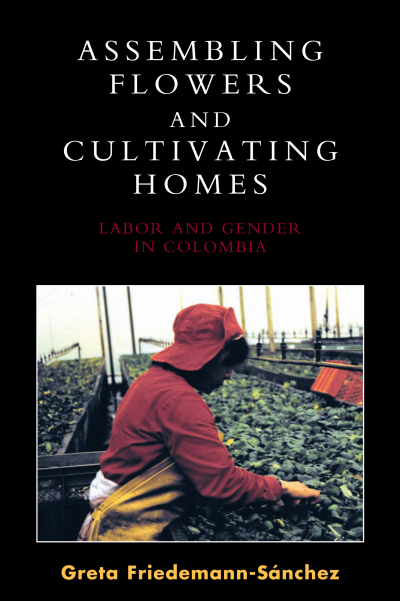
Assembling Flowers and Cultivating Homes
Labor and Gender in Colombia
Authors:
Publisher:
2006
Summary
Colombia is a major exporter of fresh-cut flowers. As in other global assembly line industries, women constitute a majority of Colombia's floriculture workforce. This ethnographic study explores the links between agro-industrial employment in the context of economic adjustment programs and the individual experience of employment and economic change at the household level. Author Greta Friedemann-Sánchez's challenges the current academic consensus that transnational assembly line industries reinforce patriarchal ideologies of reproduction and the exploitation of women. What from a global perspective may be perceived as exploitation can be seen from the local perspective as an opportunity within the community. Specifically, the study focuses on how the interrelated factors of formal employment, wage income, property ownership, social capital, and self-esteem articulate with women's resistance to male dominated households and domestic violence. Expertly combining qualitative and quantitative methodologies, Assembling Flowers and Cultivating Homes contributes greatly to the study of gender and power, household economics and structure, and Latin American society.
Search publication
Bibliographic data
Edition
1/2006
Copyright Year
2006
ISBN-Print
978-0-7391-0979-3
ISBN-Online
978-0-7391-3297-5
Publisher
Lexington, Lanham
Language
English
Pages
208
Product Type
Monograph
Table of contents
ChapterPages
Contents No access
List of Figures No access
List of Tables No access
List of Maps No access
Foreword No access
Acknowledgments No access
Chapter 01. Introduction No access Pages 1 - 36
Chapter 02. Flowers in the Global Assembly Line No access Pages 37 - 70
Chapter 03. Assembling Flowers No access Pages 71 - 86
Chapter 04. Disciplined Labor, Identity, and Gender No access Pages 87 - 110
Chapter 05. Land, Housing, Money, and Social Networks No access Pages 111 - 144
Chapter 06. Cultivating Homes No access Pages 145 - 174
Epilogue: Gendered Development No access Pages 175 - 182