, to see if you have full access to this publication.
Monograph No access
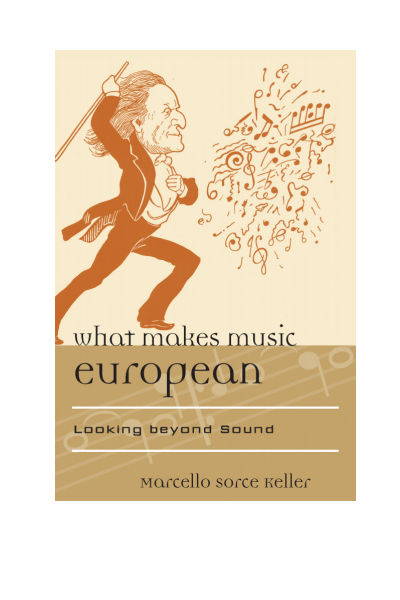
What Makes Music European
Looking beyond Sound
Authors:
Publisher:
2011
Summary
We seldom consider how much we mistakenly presume in hewing to definitions of music that differ dramatically from the standpoint of other cultures. In What Makes Music European, Marcello Sorce Keller examines the limitations of accepted wisdom about the concept of music in Euro-Western culture. His investigations of the conclusions reached by music researchers of the past several decades considerably upsets the concepts relied upon by the concert-going public. Sorce Keller insightfully asks: Who makes the music? Should music be original, and how much can it be? Why do people identify with songs, pieces, styles, and repertoire? Why is music so ideological? Why do we misunderstand the music of different times and places, and why do we enjoy doing so? He also explores the juxtaposition of economy, society, and music making, as well as the concept of "illegal harmonies."
In What Makes Music European, Sorce Keller addresses the little-discussed matters that are essential to an understanding of how music intersects with the life of so many people. Readers are offered an approach for thinking about music that depends as much on its history as on the concepts and attitudes of the social sciences. What Makes Music European concisely demonstrates, to those familiar with Western music, how peculiar Euro-Western concepts of music appear from a cross-cultural perspective. At the same time, it encourages ethnomusicologists to apply their knowledge to Western music and explain to its public how much of what listeners take for granted is, at the very least, highly debatable.
Search publication
Bibliographic data
Edition
1/2011
Copyright Year
2011
ISBN-Print
978-0-8108-7671-2
ISBN-Online
978-0-8108-7673-6
Publisher
Rowman & Littlefield, Lanham
Language
English
Pages
305
Product Type
Monograph
Table of contents
ChapterPages
Contents No access
Series Editors’ Foreword No access
Preface No access
Introduction No access
1 Composing as We Think of It, Composing as We Do It No access
2 Oral Transmission No access
3 Improvisation and the Collective Dimension No access
4 When “We” Get the Music No access
5 Should Music Be Original, and How Original Can It Be No access
6 Why People Identify with Organized Sound No access
7 Why Is Music So Ideological No access
8 How Can We Face So Many Different Musics No access
9 Why Do We Misunderstand the Music of All Times and Places No access
10 How Much of a Good Thing No access
11 Musical Gardens and Greenhouses versus Woods and Prairies No access