, to see if you have full access to this publication.
Monograph No access
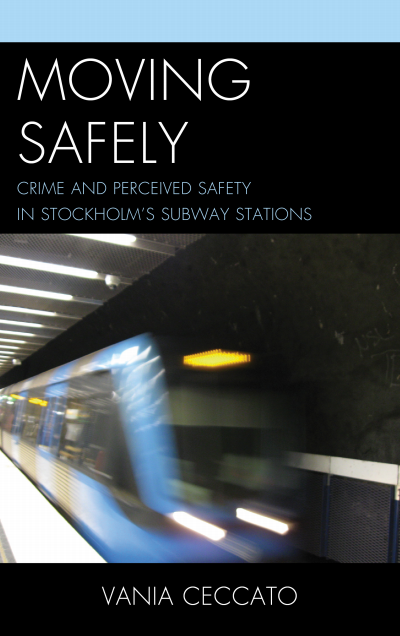
Moving Safely
Crime and Perceived Safety in Stockholm's Subway Stations
Authors:
Publisher:
2013
Summary
A sustainable city enables the fulfillment of the mobility needs of its citizens via accessible, reliable and safe transportation systems. Safety is one of many factors influencing the mobility of individuals in urban environments. Moving Safely: Crime and Perceived Safety in Stockholm’s Subway Stations aims to provide both theoretical and empirical perspectives on safety conditions at subway stations. The book adopts an approach that is place-centered, looking upon those who travel through the system and who may become a victim of crime. Safety at transportation nodes is not a field for one science only; it demands the combination of cross-disciplinary theories (urban criminology, architecture, geography, transportation and urban planning) as well as integrated methods that are capable of dealing with an ever-increasing volume of data. Adopting a whole journey approach to safety, the book offers suggestions on how to plan safety at subway stations with a variety of passengers’ needs. Although these suggestions are not the first ones in the literature, certainly they are new in terms of relying on findings from hypothesis testing and spatial data from a Scandinavian city. Moving Safely is relevant for experts in safety and transportation research, including criminologists, planners, transportation engineers, architects as well as professionals dealing directly with safety interventions.
Search publication
Bibliographic data
Edition
1/2013
Copyright Year
2013
ISBN-Print
978-0-7391-7760-0
ISBN-Online
978-0-7391-7761-7
Publisher
Lexington, Lanham
Language
English
Pages
202
Product Type
Monograph
Table of contents
ChapterPages
Contents No access
List of Figures No access
List of Tables No access
Acknowledgments No access
Chapter 1. Introduction No access Pages 1 - 6
Chapter 2. Mobility and Safety No access Pages 7 - 20
Chapter 3. Transportation Nodes and the City No access Pages 21 - 28
Chapter 4. Safety at Transportation Nodes: Its Emergence in Criminology No access Pages 29 - 36
Chapter 5. A Conceptual Framework for Safety at Subway Stations No access Pages 37 - 60
Chapter 6. The Stockholm Subway Stations No access Pages 61 - 76
Chapter 7. Crime and the Environment at Stockholm’s Subway Stations No access Pages 77 - 92
Chapter 8. Patterns of Perceived Safety at Stockholm’s Subway Stations No access Pages 93 - 116
Chapter 9. The Rhythms of Crime at Stockholm’s Subway Stations No access Pages 117 - 128
Chapter 10. Lessons from Stockholm’s Subway Stations No access Pages 129 - 142
Chapter 11. Making Transportation Nodes Safer No access Pages 143 - 160
Chapter 12. A Research Agenda for Safety at Transportation Nodes No access Pages 161 - 168
Appendix A. Template Used in the Stakeholder Interviews No access Pages 169 - 170
Appendix B. Selected Offences and Corresponding Codes from the 2008 Swedish Police Records No access Pages 171 - 172