, to see if you have full access to this publication.
Monograph No access
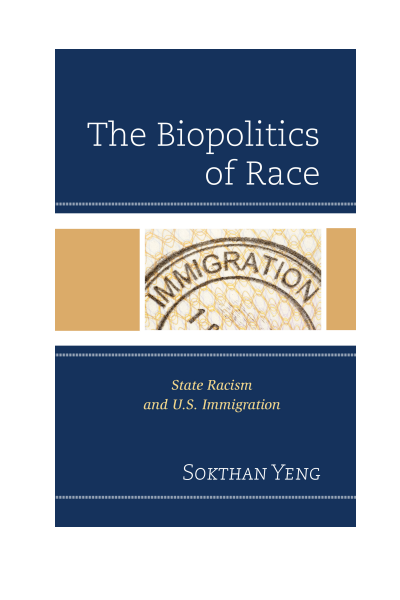
The Biopolitics of Race
State Racism and U.S. Immigration
Authors:
Publisher:
2013
Summary
Many political figures insist that their anti-immigration sentiments have nothing to do with race and racism. Americans seem largely unconvinced, which is why politicians must protest so loudly and often. In order to deflect accusations of racism, public figures evoke the neo-liberal principle that calls for protection of state health and resources. Yet contemporary philosophers such as Hanna Arendt, Michel Foucault, and Giorgio Agamben argue that neo-liberal ideology is racist. Sokthan Yeng applies their analysis to the debate over immigration policies to show that neo-liberalism not only recodes traditional racist rhetoric but also expands systemic racism. Politicians can say that their anti-immigration policies are meant to protect the nation’s economy and strength. It is no coincidence, however, that the populations most affected by these regulations are ethnic and cultural minorities such as Mexican and Muslim immigrants.
The analysis presented in The Biopolitics of Race will be valuable to philosophers and other scholars or students interested in critical race theory, feminism, and queer theory. It also has implications for anyone working in public health, bioethics, or migration studies.
Search publication
Bibliographic data
Edition
1/2013
Copyright Year
2013
ISBN-Print
978-0-7391-8223-9
ISBN-Online
978-0-7391-8224-6
Publisher
Lexington, Lanham
Language
English
Pages
181
Product Type
Monograph
Table of contents
ChapterPages
Contents No access
Introduction No access Pages 1 - 20
Chapter One: Immigration and the Modern Political State No access Pages 21 - 42
Chapter Two: The Problem of Immigration in the United States No access Pages 43 - 60
Chapter Three: State Racism and Neoliberal Immigration Policies No access Pages 61 - 82
Chapter Four: Biologizing the Race of Terror No access Pages 83 - 102
Chapter Five: The Race of Sexual Degenerates No access Pages 103 - 124
Chapter Six: Racing Gender No access Pages 125 - 148