, to see if you have full access to this publication.
Monograph No access
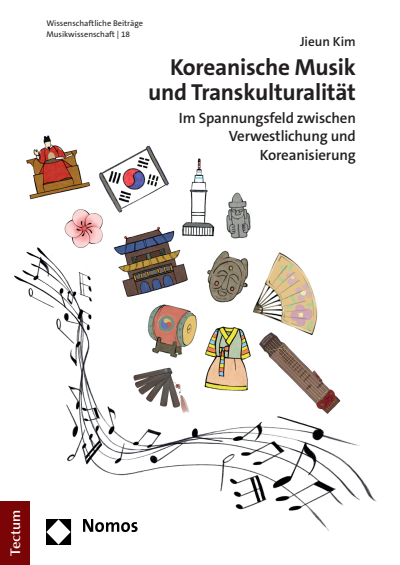
Koreanische Musik und Transkulturalität
Im Spannungsfeld zwischen Verwestlichung und Koreanisierung- Authors:
- Series:
- Wissenschaftliche Beiträge aus dem Tectum Verlag: Musikwissenschaft, Volume 18
- Publisher:
- 2022
Keywords
Search publication
Bibliographic data
- Copyright Year
- 2022
- ISBN-Print
- 978-3-8288-4746-0
- ISBN-Online
- 978-3-8288-7846-4
- Publisher
- Nomos, Baden-Baden
- Series
- Wissenschaftliche Beiträge aus dem Tectum Verlag: Musikwissenschaft
- Volume
- 18
- Language
- German
- Pages
- 372
- Product Type
- Monograph
Table of contents
ChapterPages
- Titelei/Inhaltsverzeichnis No access Pages I - XIV
- 1.1 Motivation der Forschung No access
- 1.2 Probleme in den Studien zu koreanischer Musik No access
- 1.3 Das Konzept der Transkulturalität nach Wolfgang Welsch No access
- 1.4.1 Biografische Forschung als Mikroebene No access
- 1.4.2 Historische Forschung als Makroebene No access
- 1.5 Zielsetzung und Aufbau der vorliegenden Studie No access
- 1.6 Forschungsmethoden, Forschungsstand und Quelle No access
- 2.1 Drei Musikbereiche in Korea: Yangak, Gugak und Daejungeumak No access
- 2.2.1 Erster Schritt: Bestimmung der musikanalytischen Methodik No access
- 2.2.2 Zweiter Schritt: Analyse der kulturellen Einflüsse No access
- 2.2.3 Dritter Schritt: Individualisierung, Differenzierung und Einordnung No access
- 2.3.1 Anlass und Ziel No access
- 2.3.2 Überblick No access
- 2.3.3 Erste Kategorie: Integration von (traditionellen) musikalischen Elementen No access
- 2.3.4 Zweite Kategorie: Integration von Künsten und Kultur No access
- 2.3.5 Dritte Kategorie: Integration von sinnbildlichen bzw. symbolischen koreanischen Elementen No access
- 2.4 Schlussfolgerung No access
- Exkurs: Einführung westlicher Musik in Korea No access
- 3.1.1 Mangelhafte Übersetzungen durch die Missionare im Chanyangga (1894) No access
- 3.1.2 Nogaba (Umdichtung): Vorstufe zu den Anfängen koreanischer Komposition No access
- 3.2.1 Entstehungsgeschichte No access
- 3.2.2 Pressemeldungen und verschiedene spätere Aegukgas No access
- 3.2.3 Noten und Text No access
- 3.3.1 Entstehungsgeschichte und Pressemeldungen No access
- 3.3.2 Korea No access
- 3.3.3 Independence No access
- 3.3.4 March No access
- 3.4 Schlussfolgerung No access
- 4.1 Allgemeine Angabe No access
- 4.2 Zweck von Aegukchangga No access
- 4.3 Zielgruppe von Aegukchangga No access
- 4.4.1 Aegukga: Lied über die Liebe zum Land No access
- 4.4.2 Geogukga: Musik und Text von Koreanern No access
- 4.4.3 Gukmunga: Text zur Melodie des koreanischen Volksliedes No access
- 4.4.4 Texte zum amerikanischen Militärlied Marching Through Georgia No access
- 4.4.5 Honinchangga: Text zum evangelischen Lied O happy day that fixed my choice No access
- 4.4.6 Youngungchoodo: Text zum Kaiserlied von Joseph Haydn No access
- 4.4.7 Aegukga: Text zu Auld Lang Syne No access
- 4.4.8 Gukminga: Text zu Die Wacht am Rhein No access
- 4.4.9 Umdichtung des japanischen Liedes Tetsudō shōka 鉄道唱歌 (Eisenbahnlied) No access
- 4.4.10 Überblick über sämtliche Lieder des Aegukchangga No access
- 4.5 Schlussfolgerung No access
- 5.1 Allgemeine Angaben No access
- 5.2.1 Annie Laurie Baird No access
- 5.2.2 Louise Becker No access
- 5.2.3 Jakyung Choi No access
- 5.2.4 Paul L. Grove No access
- 5.3.1 Pädagogische Sicht No access
- 5.3.2 Vorwort von Chyanggajip No access
- 5.3.3 Chyanggajip und die Akzeptanz westlicher Musik durch Koreaner No access
- 5.4.1 Text No access
- 5.4.2 Musik No access
- 5.4.3 Bilder No access
- 5.5 Schlussfolgerung: Kulturelle Bedeutung von Chyanggajip No access
- 6.1.1 Verfasser und Verlag No access
- 6.1.2 Titel und Umfang No access
- 6.1.3 Singen oder rezitieren No access
- 6.1.4 Vorwort No access
- 6.1.5 Layout und Aufbau No access
- 6.2.1 Biografie No access
- 6.2.2 Kirche für alle sozialen Schichten: Status der Musiker in Korea in den 1900er Jahren No access
- 6.2.3 Bibel für alle sozialen Schichten No access
- 6.2.4 Gales Versuch einer koreanischen Kirchenmusik No access
- 6.3.1 Bisherige Forschungen No access
- 6.3.2 Überschrift: Byeolgok No access
- 6.3.3 Perspektive von Erzähler und Ratgeber No access
- 6.3.4 Wiederholungen und Abkürzungen No access
- 6.3.5 Verwendung von Pansori-Redewendungen No access
- 6.4 Schlussfolgerung No access
- Exkurs: Biografie von Young Jo Lee No access
- 7.1 Einleitung No access
- 7.2.1 Unyong La No access
- 7.2.2 Charles Hartwell Bonesteel III No access
- 7.2.3 Carl Orff No access
- 7.3.1 Allgemeine Angabe No access
- 7.3.2 Entstehung der Musik: Überlegungen zur Komposition No access
- 7.3.3 Besetzung und Gesamtübersicht No access
- 7.3.4 Buddhistische Texte und Textdisposition No access
- 7.4 Analyse No access
- 7.5.1 Probleme vor der Uraufführung No access
- 7.5.2 Auseinandersetzungen zwischen evangelischen und buddhistischen Gläubigen in Korea No access
- 7.5.3 Thematisierung des Buddhismus als kulturelles Symbol Koreas No access
- 7.5.4 Durch das Fremde das Eigene finden und stärken No access
- 7.5.5 Koreanisches als Kompositionsidee: traditionelle Musik und kulturelles Erbe No access
- 7.6 Schlussfolgerung No access
- 8.1 Einleitung No access
- 8.2.1 Titel und Herkunft der Texte No access
- 8.2.2 Soziokultureller Hintergrund der Kombination verschiedener Religionen No access
- 8.2.3 Kombination verschiedener Religionen aus evangelischer Perspektive No access
- 8.3.1 Seulpeun sori (Trauriger Klang; Lamentation) No access
- 8.3.2 Bureuneun sori (Rufender Klang, Invitation of spirit) No access
- 8.3.3 Wiroui norae (Lied des Trosts, Comfort) No access
- 3.4 Gwigeorae (Heimkehr, Returning to heaven) No access
- 8.4.1 Sakrale Klänge, aber keine religiöse Musik No access
- 8.4.2 Lees Interesse an nicht christlichen Religionen No access
- 8.4.3 Werk für den interreligiösen Dialog? No access
- 8.5 Schlussfolgerung No access
- 9.1 Einleitung No access
- 9.2.1 Bearbeitung koreanischer Volkslieder No access
- 9.2.2 Kombination von Kinderliedern No access
- 9.2.3 Bearbeitung nicht koreanischer Volkslieder No access
- 9.2.4 Lees mehrsprachige Volksliedbearbeitungen No access
- 9.3.1 Zweisprachiger Chor No access
- 9.3.2 Satzstruktur als Mittel des musikalischen Kontrasts No access
- 9.3.3 Tail Catching Melody (Melodie-Verbindungstechnik) No access
- 9.4.1 A Wild Rose on the Arirang Hill (2011): Kombination aus koreanischem und deutschem Volkslied No access
- 9.4.2 Arirang Morihua Sakura (2012): Kombination von Liedern aus Korea, China und Japan No access
- 9.5 Schlussfolgerung No access
- 10.1 Einleitung No access
- 10.2.1 Koreanische Handlung mit westlicher Besetzung No access
- 10.2.2 Finanzielle Unterstützung für koreanische Opern No access
- 10.3.1 Entstehung No access
- 10.3.2 Handlung No access
- 10.3.3 Musik No access
- 10.3.4 Inszenierung und Kostüme: Koexistenz von Vergangenheit und Gegenwart Koreas No access
- 10.4 Schlussfolgerung: Betrachtung von Tcheoyong mit transkulturellem Ansatz No access
- Zusammenfassung No access
- Ausblick No access
- Epilog No access
- Primärquellen No access
- Sekundärquellen No access
- Persönliche Interviews No access
- Verzeichnis der koreanischen Termini No access Pages 355 - 356
- Abbildungsverzeichnis No access Pages 357 - 358
- Tabellenverzeichnis No access Pages 359 - 360
- Verzeichnis der Notenbeispiele No access Pages 361 - 366
- Stichwortverzeichnis No access Pages 367 - 372
Bibliography (97 entries)
No match found. Try another term.
- Ahn, Kiyeong/Young, Mary E.: The Chosun Folk Song Choir Collection, Seoul: Akyangsa Music Publishing House, 1931, S. 38–40 Open Google Scholar DOI: 10.5771/9783828878464
- Arias, Enrique: „Hangukjeogin mase chansareul. Changjagopera ‘cheoyong’eul bogo [Lob des koreanischen Geschmacks. Nach Besuch der neu geschaffenen Oper TcheoYong]“, in: Pianoeumak (Jan. 1988), S. 15–16 Open Google Scholar DOI: 10.5771/9783828878464
- „Baeteonaganda 나가는곡됴 [Abfahrt des Bootes]“, in: Gidoksinbo (20. Juni 1917), vierstimmige Noten Open Google Scholar DOI: 10.5771/9783828878464
- Baird, Annie Laurie Adams und Louise Becker: Chyanggajip 챵가집 [Book of songs for social and other occasions], Pjöngjang/Kyongsung: Yasokyoseowon/Joseonyasokyoseohoe, 1915 Open Google Scholar DOI: 10.5771/9783828878464
- Chi, Hyung Joo: „Daseot gaeui chum 다섯 개의 춤 [Fünf Tänze]“, in: Lee Young Jo Umak, hrsg. von Jung Soo Hong, Seoul: Taesung, 2012, S. 161–192 Open Google Scholar DOI: 10.5771/9783828878464
- Cho, Sookja/Myungja Cho: Hymnology, Seoul: PCTS Press, 1981 Open Google Scholar DOI: 10.5771/9783828878464
- Choi, Ilnam: „Undonggwon noraewua bakgedoen sarangnorae 운동권 노래와 박제된 사랑노래 [Aktivistenlieder und ausgestopfte Liebeslieder]“, in: Hankyoreh (19. Feb. 1989) Open Google Scholar DOI: 10.5771/9783828878464
- Chou, Ting-chieh/Roy, A. T./Wiant, Bliss: Eleven Original Chinese Hymns selected from Hymns of Universal Praise, Hongkong: Chinese Christian Literature Council Ltd., 1964 Open Google Scholar DOI: 10.5771/9783828878464
- „Daejoseon Seoul yaso gyohoeeseo 대죠션 셔울 야쇼 교회에셔 [In der christlichen Kirche in Seoul, Korea]“, in: Tongnip Sinmun (1. Sep. 1896), hrsg. von Jae-pil Seo Open Google Scholar DOI: 10.5771/9783828878464
- Department, Editional: „His Majesty’s Birthday“, in: The Korean Repository (Sep. 1896), hrsg. von F. Ohlinger, H. G. Appenzeller und G. H. Jones, S. 370–371 Open Google Scholar DOI: 10.5771/9783828878464
- Department, Editional: „The Corner stone of Independence Arch“, in: The Korean Repository (Nov. 1896), hrsg. von F. Ohlinger, H. G. Appenzeller und G. H. Jones, S. 457–458 Open Google Scholar DOI: 10.5771/9783828878464
- Donghaean-Jing, http://www.culturecontent.com, abgerufen am 8. Okt. 2017 Open Google Scholar DOI: 10.5771/9783828878464
- Editorial: „Brife Notice“, in: The Independent (3. Sep. 1896), hrsg. von Jae-pil Seo Open Google Scholar DOI: 10.5771/9783828878464
- Editorial: „To-morrow will be His Majesty’s Birthday“, in: The Independent (1. Sep. 1896), hrsg. von Jae-pil Seo Open Google Scholar DOI: 10.5771/9783828878464
- Eikemeier, Dieter: Ist Yun Isangs Musik koreanisch?, hrsg. von Hanns-Werner Heister und Walter-Wolfgang Sparrer, München: Ed. Text u. Kritik, 1987/1997, S. 29–39 Open Google Scholar DOI: 10.5771/9783828878464
- Freedman, Alisa: Tokyo in Transit: Japanese Culture on the Rails and Road, Stanford: Stanford University Press, 2010 Open Google Scholar DOI: 10.5771/9783828878464
- Gale, James Scarth: „Chanmi 찬미 [Lobgesang]“, in: Chrisdosinmun (9. Mai 1901) Open Google Scholar DOI: 10.5771/9783828878464
- Gale, James Scarth: Korean sketches, New York/Chicago/Toronto: Fleming H. Revell Company, 1898, http://archive.org/details/koreansketches00gale, abgerufen am 2. Aug. 2018 Open Google Scholar DOI: 10.5771/9783828878464
- Gale, James Scarth: Sinyeok Singuakjeonseo 新譯 新舊約全書 [Neue Übersetzung. Altes und Neues Testament], hrsg. von Chi-ho Yun, Seoul, 1925 Open Google Scholar DOI: 10.5771/9783828878464
- Gale, James Scarth: Yeonkyungjwadam 演經坐談. The Gospel as Sung, Seoul: Christian Literature Society of Korea, 1923 Open Google Scholar DOI: 10.5771/9783828878464
- „Gossip“, in: Dong-A Il Bo (12. Apr. 1983) Open Google Scholar DOI: 10.5771/9783828878464
- Grove, Paul L.: „Adequate Song Book“, in: The Korea Mission Field (Apr. 1915), S. 110–113 Open Google Scholar DOI: 10.5771/9783828878464
- Gungniboperadan opera [cheoyong] – LeeYoungJo, YouTube-Video von Young Jo Lee, 2. Juli 2014, https://youtu.be/qnTJB9zPThA, abgerufen am 8. Mai 2017 Open Google Scholar DOI: 10.5771/9783828878464
- Gungyewang eogahaengnyeol mit jeugwisik, Cheorwon Internet News, 10. Okt. 2008, http://www.culturecontent.com, abgerufen am 8. Okt. 2017 Open Google Scholar DOI: 10.5771/9783828878464
- Herder, Johann Gottfried von: Auch eine Philosophie der Geschichte zur Bildung der Menschheit, Riga, 1774, http://www.deutschestextarchiv.de/herder_philosophie_1774/60, abgerufen am 10. Sep. 2019 Open Google Scholar DOI: 10.5771/9783828878464
- Hong, Jung Soo: A history of Korean church music, Seoul: PCTS Press, 2013 Open Google Scholar DOI: 10.5771/9783828878464
- Hong, Jung Soo: „Aesthetic Viewpoints on Korean Music in the Early 20th Century (9): Syncretism“, in: Journal of Society for Music and Korea 36 (2008), S. 61–110 Open Google Scholar DOI: 10.5771/9783828878464
- Hong, Jung Soo: „Byeonghaengbeobgwa Kungdeobag [Parallele und Kung Deo Bak]“, in: Lee Young Jo Umak [Young Jo Lees Musik], hrsg. von dems., Seoul: Taesung, 2012, S. 77–96 Open Google Scholar DOI: 10.5771/9783828878464
- Hong, Jung Soo: „Jungsimeum Umak“, in: Lee Young Jo Umak [Young Jo Lees Musik], hrsg. von dems., Seoul: Taesung, 2012, S. 25–52 Open Google Scholar DOI: 10.5771/9783828878464
- Hong, Jung Soo: „Jungsimgwa Jubyeon [Hauptsache und Nebensache]“, in: Lee Young Jo Umak [Young Jo Lees Musik], hrsg. von dems., Seoul: Taesung, 2012, S. 53–76 Open Google Scholar DOI: 10.5771/9783828878464
- Hong, Jung Soo: „Teukjip: hangugeumak 20segi (11): hangugeowa eumak (3): kungdeobak norae. Eumakgwa minjok“, in: Journal of Society for Music and Korea 38 (2009), S. 101–139 Open Google Scholar DOI: 10.5771/9783828878464
- Hong, Jung Soo: „The Aesthetic Points of View of the Korean Music of the Early 20th Century: Familiarization, Koreanization and Modernization (1)“, in: Journal of Society for Music and Korea 32 (2006), S. 9–53 Open Google Scholar DOI: 10.5771/9783828878464
- Hur, Kyoung-Jin: „[Parts of Christianity Appearing in Korean Classical Literature 06] The First Pansori Type Translation Bible ,Yeonkyeongjwadam‘“, in: The Christian Literature Society of Korea (2017), S. 174–186. Open Google Scholar DOI: 10.5771/9783828878464
- Hwaum Museum, http://www.hwaum.org/info/mu.php, abgerufen am 2. Dez. 2019 Open Google Scholar DOI: 10.5771/9783828878464
- Jang, Miseong: „A Story of Evelyn Becker McCune in Korea“, in: The korean christianity culture (2015), S. 113–158 Open Google Scholar DOI: 10.5771/9783828878464
- Ji, Youngsun: „I sidaeeui julyeomalhagi 이 시대의 줄여말하기 [Abkürzung dieser Zeit]“, in: Hankyoreh (14. Mai 1989) Open Google Scholar DOI: 10.5771/9783828878464
- Jung, Hoyeon: „Operaindeul danhapae sae geukjangsiseutem maryeonhago gongnipgwa mingan sangsaeng haeya [Opernleute müssen sich zu einem neuen Theatersystem zusammenschließen und öffentliche und private Opernkompanien koexistieren]“, in: Seoul culture Today (19. Nov. 2017), http://www.sctoday.co.kr/news/articleView.html?idxno=25330, abgerufen am 9. Aug. 2018 Open Google Scholar DOI: 10.5771/9783828878464
- Kim, Jin-Ah: „Migration im Wandel. Isang Yun, Younghi Pagh-Paan und Unsuk Chin“, in: Neue Zeitschrift für Musik 6/2018, S. 12–15 Open Google Scholar DOI: 10.5771/9783828878464
- Kim, Jin-Ah: „Erinnerte Heimat und Transkulturalität. Zur Korrelation von Person und musikalischem Schaffen“, in: Auf dem Weg zur musikalischen Symbiose. Die Komponistin Younghi Pagh-Paan, hrsg. von Claudia Zenck, Mainz 2020, S. 43–53 Open Google Scholar DOI: 10.5771/9783828878464
- Kim, Eunah: Studie zu den Gesungenen Evangelien Yeonkyeongjwadam, Masterarbeit, Presbyterian College and Theological Seminary, 2003 Open Google Scholar DOI: 10.5771/9783828878464
- Kim, Hyun Tae: „Chansongga murui igiseon daegusiripapchangdan jihwija jajinsatoe“, in: Beopbosinmun (20. Okt. 2014), http://www.beopbo.com/news/articleView.html?idxno=84080, abgerufen am 5. Okt. 2016 Open Google Scholar DOI: 10.5771/9783828878464
- Kim, Jieun: „Jukeun jareul wuihan negaeeui norae [Vier Lieder für die Toten]“, in: Lee Young Jo Umak [Young Jo Lees Musik], hrsg. von Jung Soo Hong, Seoul: Taesung, 2012, S. 213–242 Open Google Scholar DOI: 10.5771/9783828878464
- Kim, Sa Rang: „Sound of ,Civilization‘, Music Education ,For‘ Korean: Study on Changgazip (Song- Book) Made by Foreign Missionaries in the 1910s“, in: Journal of Ewha Music Research Institute 17(2) (2013), S. 35–64 Open Google Scholar DOI: 10.5771/9783828878464
- Kim, Sehan: Pai Chai Palsibneyonsa 배재80년사 [80 Jahre Geschichte der Pa Chai Schule], Seoul: Paichai-hakdang, 1965 Open Google Scholar DOI: 10.5771/9783828878464
- Kim, Yeongab: „Doknibmun Jeongchosikeui Sihnhwha 독립문 정초식 신화 [Mythe der Zeremonie zur Grundsteinlegung des Unabhängigkeitsbogens]“, in: Woorimunhwasinmun (5. Feb. 2015), http: //www.koya-culture.com/news/article.html?no=98725, abgerufen am 20. Juni 2018 Open Google Scholar DOI: 10.5771/9783828878464
- Klaus, Engelhardt/Hoeffel, Michel/Pfeiffer, Antoine (Hrsg.):, Evangelisches Gesangbuch: Ausgabe für die Evangelische Landeskirche in Baden, Karlsruhe/Strasbourg: Evangelischer Presseverband für Baden e.V., Karlsruhe, 1995 Open Google Scholar DOI: 10.5771/9783828878464
- Ko, Chunseob: Yeondong-gyohoe 100nyeonsa: 1894–1994 연동교회 100년사 [100 Jahre Geschichte der Yeondong Gemeinde: 1894–1994], Seoul: Presbyterian Church of Korea Yeongdong Church 1995, S. 196–197 Open Google Scholar DOI: 10.5771/9783828878464
- La, Unyong: Hyeondaehwaseonglon 현대화성론 [Moderne Harmonielehre], Seoul: Sekwang, 1982, S. 130–166 Open Google Scholar DOI: 10.5771/9783828878464
- Lee, Jaehoon: „Silla, Cheong, wenn er 2013 nach Apgujeong kommt? … Die neue Oper Tcheoyong“, in: Joongangilbo (22. Mai 2013), https://news.joins.com/article/11589038, abgerufen am 16. Feb. 2016 Open Google Scholar DOI: 10.5771/9783828878464
- Lee, Kyong Pun: „Review on the 2001 Conference of Korean Musicological Society“, in: Music and Culture 6 (2002), S. 165–172 Open Google Scholar DOI: 10.5771/9783828878464
- Lee, Yeonjae: „Jeontong Sojae Changjak Opera Poongsung 전통 소재 창작 오페라 풍성 [Die reichhaltige Zahl von den neu produzierten Opern mit traditionellen Themen]“, in: Kyunghyang Sinmun (3. Juli 1986) Open Google Scholar DOI: 10.5771/9783828878464
- Lee, Young Jo: A Wild Rose on the Arirang Hill, Notenmaterial, Seoul: 20 Trillion Production, 2011 Open Google Scholar DOI: 10.5771/9783828878464
- Lee, Young Jo: Arirang Morihua Sakura, Notenmaterial, Seoul: 20 Trillion Production, 2012 Open Google Scholar DOI: 10.5771/9783828878464
- Lee, Young Jo: „Kompositorische Analyse der Oper Tcheoyong“, in: Yeosulnonmunsip 38 (2012), S. 184–225 Open Google Scholar DOI: 10.5771/9783828878464
- Lee, Young Jo: Korean Requiem, Notenmaterial, Seoul: 20 Trillion Production, 2004 Open Google Scholar DOI: 10.5771/9783828878464
- Lee, Young Jo: Kyung, Notenmaterial, Seoul: 20 Trillion Production, 1975 Open Google Scholar DOI: 10.5771/9783828878464
- Lee, Young Jo: Arirang, Notenmaterial, Seoul: 20 Trillion Production, 1994 Open Google Scholar DOI: 10.5771/9783828878464
- Lee, Young Jo: Arirang Rasasayang, Notenmaterial, Seoul: 20 Trillion Production, 2011 Open Google Scholar DOI: 10.5771/9783828878464
- Lee, Young Jo: Magyar Arirang, Notenmaterial, Seoul: 20 Trillion Production, 2014 Open Google Scholar DOI: 10.5771/9783828878464
- Lee, Young Jo: Oseonji Wie Sseun Iryeokseo: Jakgokga Lee Young Jo 오선지 위에 쓴 이력서: 작곡가 이영조 [Lebenslauf auf dem Notenpapier: Komponist Young Jo Lee], Seoul: Jakeunwoori, 2002 Open Google Scholar DOI: 10.5771/9783828878464
- Lee, Young Jo: Pondang Pongdang Variation, Notenmaterial, Seoul: 20 Trillion Production, 1997 Open Google Scholar DOI: 10.5771/9783828878464
- Lee, Young Jo: Tcheoyong, Notenmaterial, Seoul: 20 Trillion Production, 2013 Open Google Scholar DOI: 10.5771/9783828878464
- Lee, Young Jo: Tcheo Yong, Programmheft, Seoul, 2013 Open Google Scholar DOI: 10.5771/9783828878464
- Lee, Yugi: „A Study on Aegukka Published at Hawaii in 1910’s“, in: Dong-ak Society of Language and Literature 51 (2008), S. 139–173 Open Google Scholar DOI: 10.5771/9783828878464
- Liu, Timothy Ting-Fang: Pu tian song zan普天颂赞 [Hymns of universal praise], Shanghai: Christian Literature Society for China, 1936 Open Google Scholar DOI: 10.5771/9783828878464
- Min, Hyunsik/Kwan, Mijeong: Ganchurin saemunangyohoe yoksaiyagi 간추린 새문안교회 역사이 야기 [Kurze Geschichte der Saemunan Kirche], hrsg. von Sanghak Lee, E-Book, Seoul: Saemunan Presbiterian Church, 2019, http://www.saemoonan.org/ebook2016/ecatalog5.asp?Dir=217, abgerufen am 10. Feb. 2020 Open Google Scholar DOI: 10.5771/9783828878464
- Ministry of Culture, Sports and Tourism & Korea Arts Management Sevice (Hrsg.): 2018 Gongyeonye- sulsiltaejosa 2017 Gijun [2018 Survey on the performing art (Kriterium 2017)], Seoul, 2018 Open Google Scholar DOI: 10.5771/9783828878464
- Mittler, Barbara: „Wider den ,nationalen Stil‘: Individuelles und Internationales in Chians Neuer Musik“, in: Musik und kulturelle Identität, hrsg. von Detlef Altenburg und Rainer Bayreuther, Kassel/Basel [u. a.]: Bärenreiter, 2012, S. 603–607 Open Google Scholar DOI: 10.5771/9783828878464
- Mudang, Nr. cp0444paa027, http://culturecontent.com, abgerufen am 8. Mai 2017 Open Google Scholar DOI: 10.5771/9783828878464
- Mudangbangul, http://museum.gunsan.go.kr/content/sub02/02_list.do?act=decnt&Id=71, abgerufen am 20. Aug. 2017 Open Google Scholar DOI: 10.5771/9783828878464
- Nam, Aeri: Ullil ttaemada gaseumbeokchan gamdong, Aegukga 울릴 때마다 가슴벅찬 감동, 애국가 [Jedes Mal mit großen Begeisterung, Aegukga], Homepage des National Archives of Korea, http://theme.archives.go.kr/next/koreaOfRecord/natlAnthem.do, abgerufen am 5. Sep. 2019 Open Google Scholar DOI: 10.5771/9783828878464
- No, Dongeun: Hangilumak 330gokjip 항일음악 330곡집 [330 Anti-japanische Lieder], Seoul: The Center for Historical Truth und Justice, 2017 Open Google Scholar DOI: 10.5771/9783828878464
- No, Dongeun, „Nodongeuneui urinara umaksa gyosil I 노동은의 우리나라 음악사 교실 1 [Klasse der koreanischen Musikgeschichte 1 ]“, in: Nangmanumak 15 (1992), S. 87–108 Open Google Scholar DOI: 10.5771/9783828878464
- OAK, https://hymnary.org/tune/oak_mason?extended=true, abgerufen am 10. Dez. 2019 Open Google Scholar DOI: 10.5771/9783828878464
- Park, Bokyoung: „A Study on Annie L. Baird’s Life and Mission“, in: KPJT 49 (2017), S. 283–308 Open Google Scholar DOI: 10.5771/9783828878464
- Park, Sinok: „hanguksik changjagopera tekcheoyongtem gongyeon“, in: Joongang Ilbo (30. Okt. 1987) Open Google Scholar DOI: 10.5771/9783828878464
- Park, Yongwan: „Oper Tcheoyong, Komponist Young Jo Lee“, in: Gaekseok (Juli 2013), https://m.post. naver.com/viewer/postView.nhn?volumeNo=16251017 %5C&memberNo=42430508, abgerufen am 28. Juni 2017 Open Google Scholar DOI: 10.5771/9783828878464
- Preisträgerkonzert des 3rd Younghi Pagh-Paan Composition Prize 2018, https://kulturkorea.org/de/veranstaltungen/preistraegerkonzert-des-3rd-younghi-pagh-paan-composition-prize-2018, abgerufen am 4. Jan. 2022 Open Google Scholar DOI: 10.5771/9783828878464
- Putuoshan Mountain – Attractions, Location, Transportation, Map, https://www.chinadiscovery.com/ zhejiang/putuoshan-mountain.html, abgerufen am 2. Sep. 2019 Open Google Scholar DOI: 10.5771/9783828878464
- Rutt, Richard: „A Biography of James Scarth Gale“, in: James Scarth Gale and his History of the Korean People, hrsg. von Richard Rutt, Michigan: Royal Asiatic Society, Korea Branch, 1972, S. 1–88 Open Google Scholar DOI: 10.5771/9783828878464
- Sangyeo, 19. Okt. 2013, https://blog.naver.com/yes3man/222538270205, abgerufen am 20. Jan. 2022 Open Google Scholar DOI: 10.5771/9783828878464
- „Schoahoechyangga 쇼회챵가 [Boat Song]“, in: Yesugyohoebo (15. Juli 1913) Open Google Scholar DOI: 10.5771/9783828878464
- Seungnyeoui Saenghwal, http://www.culturecontent.com, abgerufen am 8. Okt. 2017 Open Google Scholar DOI: 10.5771/9783828878464
- Shin, Dongjun: „Se jong-gyoga hamkke buleul ,hangyeole changa‘“, in: Hankyoreh (25. Sep. 1988), http://newslibrary.naver.com/viewer/index.nhn?articleId=1988092500289107001&edtNo=2&printCount=1&publishDate=1988-09-25&officeId=00028&pageNo=7&printNo=115&publishType=00010, abgerufen am 3. März 2017 Open Google Scholar DOI: 10.5771/9783828878464
- Sin, Youngsook Sin: „Sajingyeolhoneul han sajin sinbudeul [Fotobräute, die durch Fotos geheiratet haben]“, in: Honingwa yeonaeui pungsogdo [Die Bräuche der Ehe und der Liebe], hrsg. von National Institute of Korean History, Seoul: Doosandonga, 2005, S. 235–236 Open Google Scholar DOI: 10.5771/9783828878464
- Sohn, Soo yeon: A Study on the Development of Korean Contemporary Opera Focusing on comparison of current status and features of Korea, China and Japan, Diss., Seoul: Konkuk University, 2017 Open Google Scholar DOI: 10.5771/9783828878464
- Son, Gijun: „Yong ggorijabgi“, in: Gyosaleul wihan yuaui nol-ijido, Seoul: Changjisa, 1993, S. 66 Open Google Scholar DOI: 10.5771/9783828878464
- Unbekannt: Aegukchangga 애국창가, Honolulu, Hawaii, 1916 Open Google Scholar DOI: 10.5771/9783828878464
- Underwood, Horace Grant: Chanyangga 찬양가 [Hymns of praise], Seoul: Trilingual Press, 1894There’ll be no night in heaven, https://hymnary.org/tune/oak_mason?extended=true, abgerufen am 10. Dez. 2019 Open Google Scholar DOI: 10.5771/9783828878464
- Underwood, Lilias Horton/ Egan, Leonora Horton: Fifteen years among the top-knots, engl., 2. Auflage [Nachdr. d. Ausg. 1904], Reprint series / RAS, Royal Asiatic Society, Korea Branch, Seoul: Royal Asiatic Society, Korea Branch, 1987 Open Google Scholar DOI: 10.5771/9783828878464
- Utz, Christian: Neue Musik und Interkulturalität: von John Cage bis Tan Dun, Archiv für Musikwissenschaft, Stuttgart: Steiner, 2002 Open Google Scholar DOI: 10.5771/9783828878464
- Vinton, Cadwallader C.: „Literary Department“, in: The Korean Repository (Sep. 1896), hrsg. von F. Ohlinger, H. G. Appenzeller und G. H. Jones, S. 375–376 Open Google Scholar DOI: 10.5771/9783828878464
- Welsch, Wolfgang: Transkulturalität, Realität – Geschichte – Aufgabe, 1. Auflage, Wien: new academic press, 2017 Open Google Scholar DOI: 10.5771/9783828878464
- Yangpan, http://www.doopedia.co.kr/mo/doopedia/master/master.do?_method=view2&MAS_IDX=101013000700811, abgerufen am 17. Juli 2017 Open Google Scholar DOI: 10.5771/9783828878464
- Yoo, Seok-jae: „Baeknyeon jeon joseonga gasa soken sin dobjianeumyeon nara manghagetne 100년 전 ’朝鮮歌’ 가사 속엔 ’神 돕지 않으면 나라 망하겠네’ [In den Texten von Chosunga vor 100 Jahren: ‚Wenn Gott nicht hilft, wird das Land fallen‘]“, in: Chosunilbo (15. Mai 2013) Open Google Scholar DOI: 10.5771/9783828878464
- Young Jo Lee Homepage, http://www.youngjolee.com/, abgerufen am 2. Nov. 2019 Open Google Scholar DOI: 10.5771/9783828878464
- Younghi Pagh-Paan Homepage, https://www.pagh-paan.com, abgerufen am 2. Nov. 2019 Open Google Scholar DOI: 10.5771/9783828878464